.svg&w=384&q=75 "GoalGist logo")
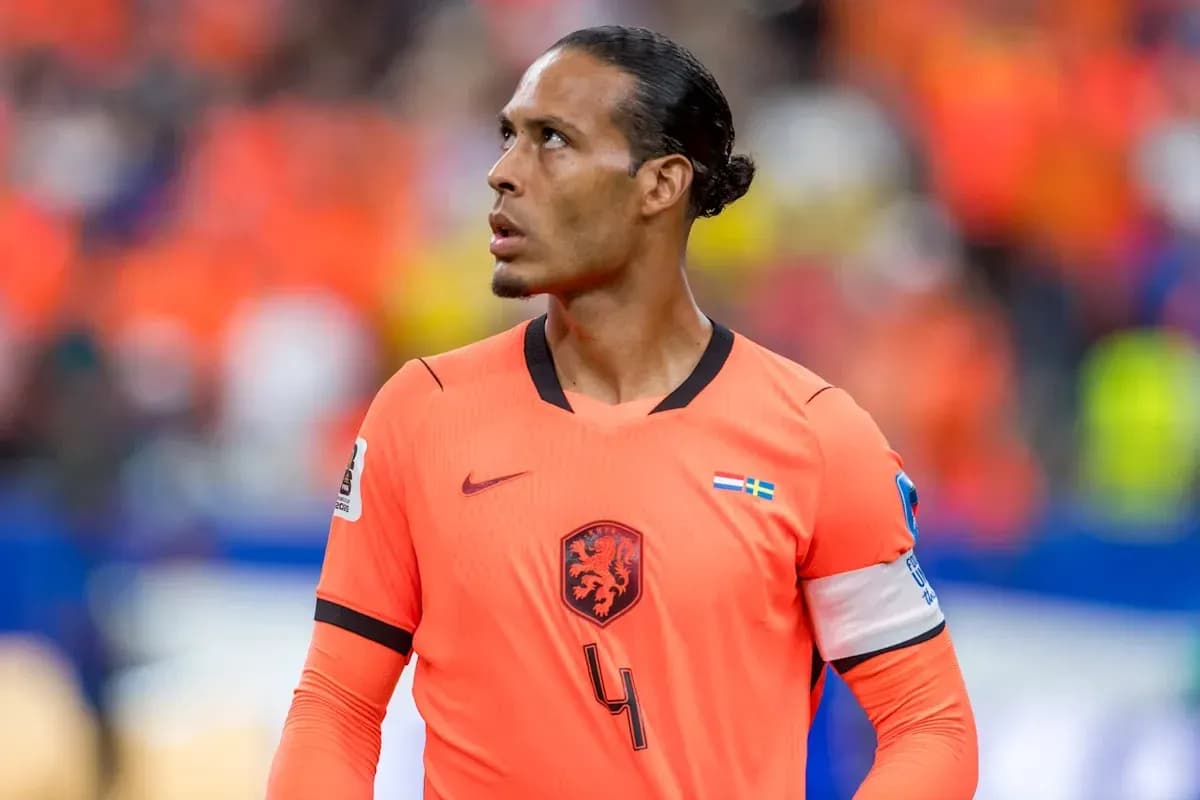
Virgil van Dijk Faces Backlash After Netherlands' World Cup Exit
The Netherlands’ World Cup campaign ended in chaos and disbelief. What has followed back home has been even more unforgiving – with Virgil van Dijk placed squarely in the crosshairs.
Knocked out by Morocco on penalties after conceding a stoppage-time equaliser, the Dutch left the tournament with a sense of opportunity wasted. The inquest was immediate. And brutal.
At the heart of it: their captain.
Driessen’s broadside
De Telegraaf, never shy of a strong opinion, set the tone. Columnist Valentijn Driessen delivered a blistering takedown of both Van Dijk and outgoing head coach Ronald Koeman, accusing the pair of betraying the principles the national team is supposed to represent.
“Ronald Koeman and Virgil van Dijk have betrayed everything our national team stands for,” he wrote, a line that has ricocheted around the Dutch media landscape.
For Driessen, the tactical shift to a back three summed up the problem. He argued the change had been forced by Van Dijk’s inability to properly organise the defence during the group stage, painting the captain not as the solution, but as the reason for compromise. In his view, the Netherlands bent their system around a defender who was no longer delivering the control expected of him.
Then came the equaliser against Morocco – the moment that will haunt this campaign.
Driessen laid the blame squarely at Van Dijk’s feet, accusing him of losing his man and allowing the decisive run into the box that led to the goal. He didn’t stop there, finishing with a stark verdict: Van Dijk’s “time is up.”
For one of the most decorated defenders in Dutch history, it was a stunning, unforgiving appraisal. It also captured the raw frustration of a nation that had believed this squad was capable of going much deeper.
The moment that changed everything
The pictures will be replayed for years. Morocco surging forward in stoppage time, the Dutch retreating, the tension thick in the air. Van Dijk, usually the calmest figure on any pitch, failed to shut down the danger as the cross came in and the run cut through.
For a player who has built his reputation on anticipation, command of the box and near-flawless positioning, it was a rare lapse at the worst possible time.
Yet to reduce the Netherlands’ exit to a single defensive misstep is to ignore the reality of knockout football. The Dutch had earlier chances to kill the game. They didn’t. Morocco stayed alive, grew in belief, and when the chance finally came, they took it. Fine margins, ruthless consequences.
Across the bulk of the contest, Van Dijk still looked like the leader this team leans on: winning aerial duels, clearing danger, marshalling a back line that, for long stretches, kept Morocco at arm’s length. One late moment, though, flipped the entire narrative of his tournament.
Playing through pain
Koeman’s revelation after the match added a layer of context that arrived too late to soften the initial backlash.
The Netherlands coach admitted that Van Dijk had been struggling with a calf problem in the latter stages of the game. The injury, he said, had been “bothering him badly.” Yet the captain stayed on, pushed through extra time, and tried to drag his country into the semi-finals.
For a central defender asked to defend big spaces in the dying minutes of a draining knockout tie, that matters. Calf issues sap acceleration, limit sharp changes of direction, and slow recovery runs – all the things a defender needs when the game turns chaotic.
Van Dijk could have signalled to come off. He didn’t. He chose to stay on the pitch, to carry the responsibility, and to accept the risk that comes with playing hurt on a stage where every mistake is magnified.
That decision won’t shield him from criticism. It does, though, explain why a player famed for his physical dominance looked a fraction off the pace when it counted most.
Legacy under scrutiny, not erased
When the dust settles, one bad night will sit alongside, not erase, more than a decade of elite-level consistency.
Van Dijk has spent years among Europe’s top central defenders, the cornerstone of Liverpool’s resurgence and a standard-bearer for the Netherlands. Leadership, composure, authority – those traits do not vanish with one misplaced step in stoppage time.
But international football is emotional territory. Captains carry the weight. When tournaments end abruptly, they often carry the blame as well.
The debate in the Netherlands now is not just about a system or a single goal. It’s about whether this team can still be built around Van Dijk, or whether the criticism voiced so loudly by Driessen reflects a growing feeling that a new defensive era must begin.
What comes next
For Van Dijk, the immediate priority is recovery. The World Cup exit will sting. So will the public reaction. Time away from the intensity of tournament football – and the chance to fully heal that calf – could be crucial both physically and mentally.
The national team, too, will reset. A new cycle looms, new qualifiers, new tournaments, new questions about identity and leadership. Koeman’s decisions will be pored over. So will Van Dijk’s.
The Liverpool captain has built his career on responding to setbacks with performances, not words. The next time he walks out in an orange shirt, every step, every duel, every defensive decision will be judged through the lens of this World Cup.
Is this the beginning of the end for Van Dijk at the heart of the Netherlands defence, as Driessen insists? Or just the harshest chapter in a career that still has more to give at international level? The answer will come not in columns, but on the pitch.

