.svg&w=384&q=75 "GoalGist logo")
Didier Deschamps on France's World Cup Journey: Calm Amidst Pressure
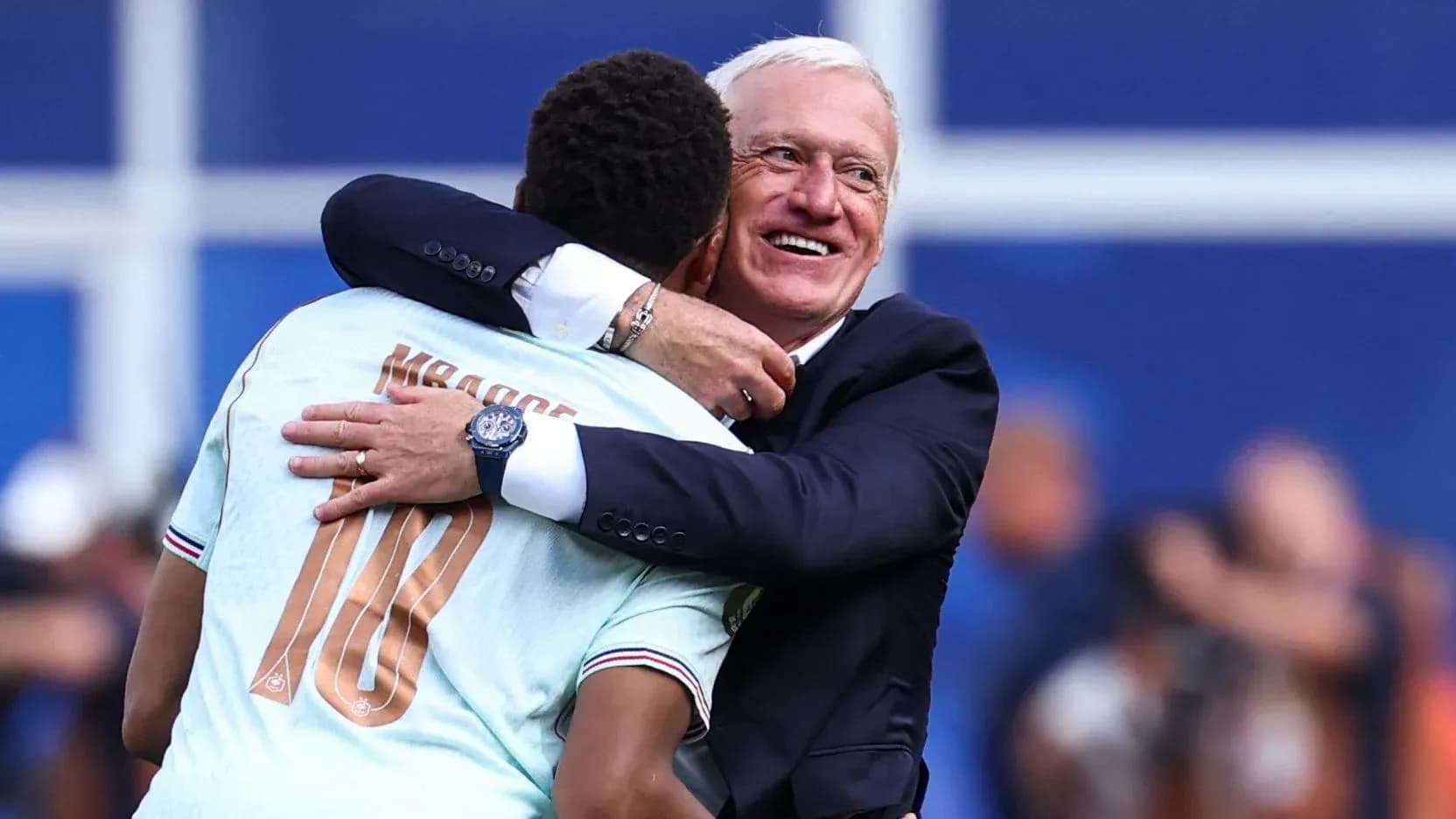
Didier Deschamps walked into the mixed zone with the calm of a man who has been here many times before. Three consecutive World Cup semi-finals with France. Same stage, same pressure, same expectation. The drama outside is enormous; inside, he insists, the message stays simple.
The France coach first moved to cool any panic around his captain. Kylian Mbappé, again decisive, again central to everything, finished the match with a slight ankle problem.
“Kylian had a slight ankle issue; he was feeling some pain,” Deschamps told M6, laying out the situation with the clinical precision of a man used to tournament storms. No alarm, no theatrics. Just a clear explanation that his star forward is managing a knock rather than a crisis.
He then ran through the rest of the late-game concerns. Manu Koné, who had been industrious in midfield, also took a hit.
“Manu took a blow to the knee and had cramps,” Deschamps said, before quickly turning the spotlight onto the players who came in cold and changed the rhythm. Warren Zaïre-Emery, still so young yet already trusted on this stage, drew particular praise. “Warren made a very, very good impact when he came on, so that’s great. Everyone needs to feel ready. And those who aren't playing are still fully behind the rest of the group.”
That line matters. In Deschamps’ France, the hierarchy is clear, but the door is always open. Fringe players are not ornaments; they are weapons to be used when the margins tighten.
The match itself had tested those margins. France missed a penalty, squandered chances, and let tension creep into a night that could have been far more comfortable. Deschamps did not try to dress it up.
“It was complicated today,” he admitted. “Missing the penalty and the chances we didn’t convert makes things difficult. Kylian reacted well and scored. We are exactly where we wanted to be.”
The key word there: reacted. This is a France side that bends without breaking, a team that can misfire from the spot, stumble in front of goal, and still find a way through. Mbappé’s response, scoring after earlier frustration, fit neatly into that hardened identity.
So, three semi-finals in a row. For most nations, that would be framed as a miracle. Deschamps, though, spoke about it with a striking sense of normality.
“I think three consecutive semi-finals is already good, but it seems logical and natural. I have great players. It’s good.”
Logical. Natural. It sounded almost cold, but it was anything but. Behind that line lies the core of his management: expectation. France are not guests at the top table; they belong there. Anything less than the final four feels like a step back.
Yet he knows what this run means beyond the dressing room. The emotional charge back home is never far from his thoughts, even as he talks about the squad living “inside our own bubble”.
“That’s the beauty of sport and football: we create emotions and we share them,” the former defensive midfielder said. “I imagine there is a lot of passion back in France, even if we are inside our own bubble here. The players have a duty to do everything they can to go as far as possible. This is an important step, and we are in the final four once again.”
Duty. Responsibility. Not just to a game plan, but to a country watching, hoping, living every minute. Deschamps framed the semi-final not as a destination, but as a checkpoint on a path they know well.
Next comes Spain or Belgium, to be studied on Friday, dissected, prepared for. No grand declarations, no bold predictions. Just a familiar position for a group that has turned deep tournament runs into a habit.
France are back in the last four. Deschamps expects it. Mbappé drives it. A nation now waits to see if this “logical” progression ends in another star on the shirt.

