.svg&w=384&q=75 "GoalGist logo")
USMNT’s World Cup Challenges: Balancing Talent, Form, and Injuries
Gio Reyna finally had something to celebrate. A late consolation goal in a 3-1 defeat for Borussia Mönchengladbach isn’t the stuff of headlines in Germany, but for Reyna it meant everything: his first club goal in nearly a year and a half, his first real spark of a season that has largely passed him by.
It was a reminder. Of what he can do. Of why his name never quite leaves the conversation around the USMNT, no matter how little he plays for his club.
Reyna hasn’t influenced a match like that in a long time. Not since November with the national team. Since then, his club minutes have been sporadic, his rhythm broken. When he returned to the USMNT in March, he was limited to brief cameos in friendlies, never truly unleashed against top opposition.
And yet, he lingers at the heart of every debate about this squad.
Because the talent is not in doubt. Reyna changes games. He always has in a U.S. shirt. Since he broke through, the team has generally looked sharper, more dangerous, more inventive with him on the pitch. The trophy cabinet from recent CONCACAF runs has his fingerprints on it.
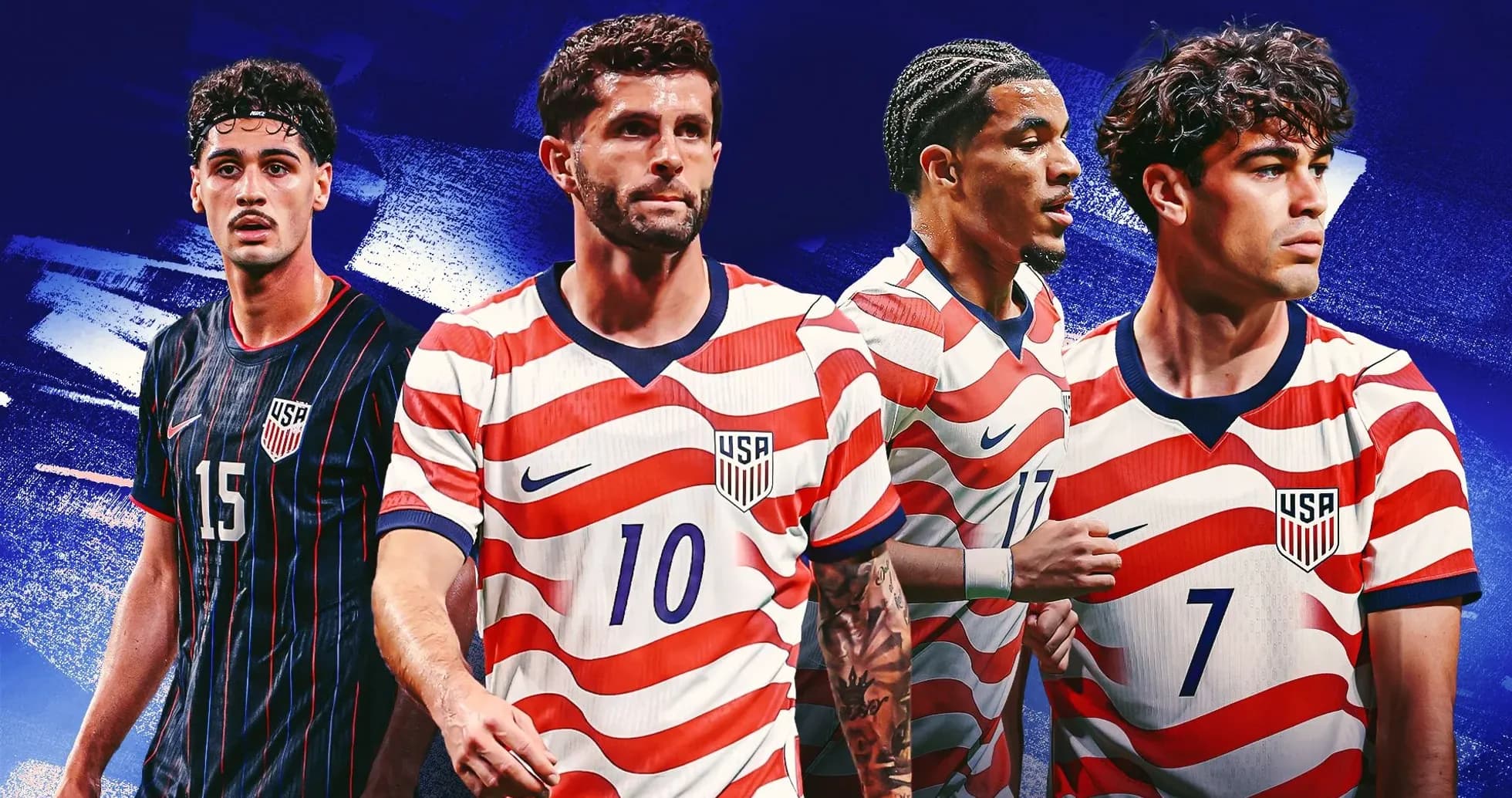
But context matters. This version of the USMNT no longer needs Reyna to be its spine. He’s the luxury piece, the flourish on top of an increasingly solid core. If he hits form, the ceiling rises. If he doesn’t, there are other options in his role, other ways to construct an attack. The team can survive without him. It just becomes a little less exciting.
And Reyna isn’t the only attacking midfielder walking a tightrope between talent and minutes.
Tillman’s Talent, Tillman’s Problem
On pure ability, Malik Tillman belongs in any starting conversation. He has proved that repeatedly. But the clock is ticking, and his recent game log at Bayer Leverkusen tells a more complicated story.
Since the end of the March camp, Tillman has played in seven matches for the Bundesliga champions. Across those seven, he has managed just 77 minutes. Only twice did he get more than 10 minutes on the pitch. When the game has needed support behind the striker, Leverkusen have leaned on Nathan Tella and Ibrahim Maza instead.
The timing could hardly be worse.
Tillman remains very much in the frame to start for the USMNT, but that case would be far stronger if he were arriving with a run of goals and assists. His last strike came on April 4, a two-minute cameo against Wolfsburg that pushed him to six goals in 1,615 minutes this season. Respectable numbers. Just not the profile of a player dominating his role.
For the U.S., that lack of rhythm is a concern. The saving grace? Weston McKennie’s form. The Juventus midfielder has played his way into a role where he can slide into one of the attacking midfield slots alongside Christian Pulisic if Tillman’s lack of minutes becomes too big a risk.
Which brings the conversation to the player the U.S. still leans on most.
Pulisic: No Goals in 2026, Plenty of Pressure in 2026
Christian Pulisic has addressed it himself. No, he hasn’t scored in 2026. Yes, it’s frustrating. No, he isn’t panicking.
His argument is simple: what matters is what happens in the biggest games this summer, not a dry spell months earlier in Milan. His club form, he insists, is only one piece of a much larger puzzle.
The logic holds, to a point. But World Cups demand your best players at something close to their peak, and there’s no way to say Pulisic has been at his best so far this year.
The U.S. will still build plenty around him. He isn’t the lone determinant of the team’s fate, but he remains one of the central pillars: a star, a leader, and the emotional barometer of the group. They need his goals, yes, but they also need his personality, his aggression, his willingness to grab a game and drag it in his direction.
There is still time for him to find that edge again. The concern grows incrementally with every scoreless week, but the alarm bells don’t have to be deafening. Not yet. Not with his track record in big moments for the national team.
While the attack wrestles with form and rhythm, another part of the pitch carries a different kind of tension.
Center Back: Questions Where There Should Be Answers
At this stage of a World Cup cycle, most teams know exactly who anchors their back line. The USMNT is not quite there.
Chris Richards feels like the one certainty. He has the trust, the profile, and the trajectory to walk into the tournament as a locked-in starter.
After that, the picture blurs.
Tim Ream brings vast experience, but the question now is whether he has too much of it. Age, recent injury, and the physical demands of a World Cup raise fair doubts. Mark McKenzie has been thriving in Ligue 1, showing the range and composure to handle high-level football, but his USMNT career has included the odd costly lapse. Auston Trusty has found his feet in Europe with Celtic, yet with only six caps, he remains untested at this level of scrutiny.
Then there’s Miles Robinson. Will he be in the kind of form that once made him a near-automatic pick? Could Noahkai Banks emerge late, seize his chance, and force his way into the conversation?
These are not fringe debates. They cut to the heart of how the U.S. will defend when the stakes rise. And unlike previous cycles, the answers are not obvious. It may come down to who hits a run of form at just the right moment.
If the back line is unsettled, the midfield is now flirting with crisis.
Midfield Hit Hard: Cardoso Out, Tessmann in Limbo
At one point, there was a strong argument that either Johnny Cardoso or Tanner Tessmann would start this summer next to Tyler Adams. That scenario has already been ruled out for at least one of them.
Cardoso’s season peaked with a Champions League semifinal. Then came the blow. Atletico Madrid announced he had sprained his ankle, an injury that always looked tight on the timeline. On Monday, the club confirmed the worst: surgery, and with it, the end of his World Cup hopes.
Tessmann’s situation is less severe but still disruptive. Lyon reported a muscle strain that will sideline him for a spell, though he is expected to be ready for the World Cup. Even before the injury, his place in the Lyon lineup had been inconsistent, his minutes fluctuating as the season wore on.
Those two setbacks land in the same area of the pitch and at the worst possible time. The role alongside Adams was already a delicate decision. Now it becomes a problem that could define the tournament.
Cardoso and Tessmann each carried their own question marks, but both had built strong cases with stretches of impressive play in Europe. They offered balance, energy, and a measure of control in a zone where all good teams lay their foundation.
Without one and with the other recovering and short of consistent club minutes, the USMNT faces the very real possibility of going into the summer light in the one area no serious contender can afford to be thin.
As Mauricio Pochettino prepares to name his squad, the story of this U.S. team is becoming clear: the talent is there, scattered across Europe, but so are the doubts. Who finds form in time, who stays fit, and who steps into the gaps will decide whether this group merely competes at the World Cup—or finally threatens to do something more.