.svg&w=384&q=75 "GoalGist logo")
Union Omaha Dominates Fort Wayne 4–2 in USL League One Cup
Under the lights at Werner Park, the USL League One Cup group-stage narrative sharpened into focus as Union Omaha overpowered Fort Wayne 4–2, a result that felt like a tactical verdict as much as a scoreline. In a competition where margins in Group 4 are already thin, this was a statement from a side that arrived with a volatile profile and left looking like a team that understands exactly what it is.
Heading into this game, Union Omaha’s season in the Cup had been defined by extremes. Overall they had scored 7 goals and conceded 8 in 3 matches, a total average of 2.3 goals for and 2.7 against. At home, the numbers were even more dramatic: 5 goals for and 7 against across 2 fixtures, with averages of 2.5 scored and 3.5 conceded. This was a team built for chaos rather than control, capable of a 4–2 home win at their best and a 1–5 collapse at their worst.
Fort Wayne, meanwhile, were trapped in a different kind of spiral. Heading into this fixture, they sat 6th in Group 4 with 1 point, their total goal difference at -6, the product of 5 goals scored and 10 conceded across 3 matches. On their travels they had lost both games, scoring 3 and conceding 7, an away average of 1.5 goals for and 3.5 against. Their Cup campaign had been a running battle to keep the game under control, and they had lost that battle more often than not.
I. The Big Picture: A Wild Group-Stage Shootout
The match itself mirrored the underlying numbers. A 2–2 half-time scoreline at Werner Park confirmed what the data hinted: neither side was built to sit on a low-event contest. Union Omaha’s attacking DNA—never having failed to score in any of their 3 Cup outings—again came to the fore. Fort Wayne, for their part, continued a curious trend: despite losing all 3 of their previous fixtures, they had also never failed to score.
By full time, the 4–2 home win slotted neatly into Omaha’s statistical identity. Their biggest home win in the Cup prior to this was already 4–2; this performance echoed that ceiling, reinforcing Werner Park as a venue where they lean into attacking risk and live with the consequences. For Fort Wayne, another multi-goal defeat away from home underlined the fragility that has defined their group campaign.
II. Tactical Voids: Discipline, Risk, and the Edges of Control
With no official injury or absence list provided, both squads appeared close to full strength in terms of available personnel. The tactical voids, then, were less about who was missing and more about how each side manages the emotional and disciplinary edges of the game.
Union Omaha’s season-long card profile paints them as a side that plays on the line. Their yellow cards are concentrated in the 31–45 and 61–75 minute ranges, with 25.00% of their yellows coming just before half-time and 50.00% in that 61–75 window. Another 25.00% arrive late between 76–90, suggesting a team that often has to firefight in the closing stages. More striking is their red-card pattern: 100.00% of their reds in this Cup have come between 61–75 minutes, a period where their emotional and tactical intensity can tip into recklessness.
Fort Wayne’s disciplinary curve is different but equally telling. A full 44.44% of their yellow cards arrive in the 76–90 minute band, with 22.22% each between 16–30 and 31–45, and 11.11% between 46–60. This late-game surge in cautions hints at a team that chases matches from behind, stretching their structure and resorting to tactical fouls as fatigue and scoreboard pressure mount.
III. Key Matchups: Hunter vs Shield, Engine Room vs Enforcer
With no top-scorer or assist tables available, the “hunter vs shield” duel is best understood through collective rather than individual lenses.
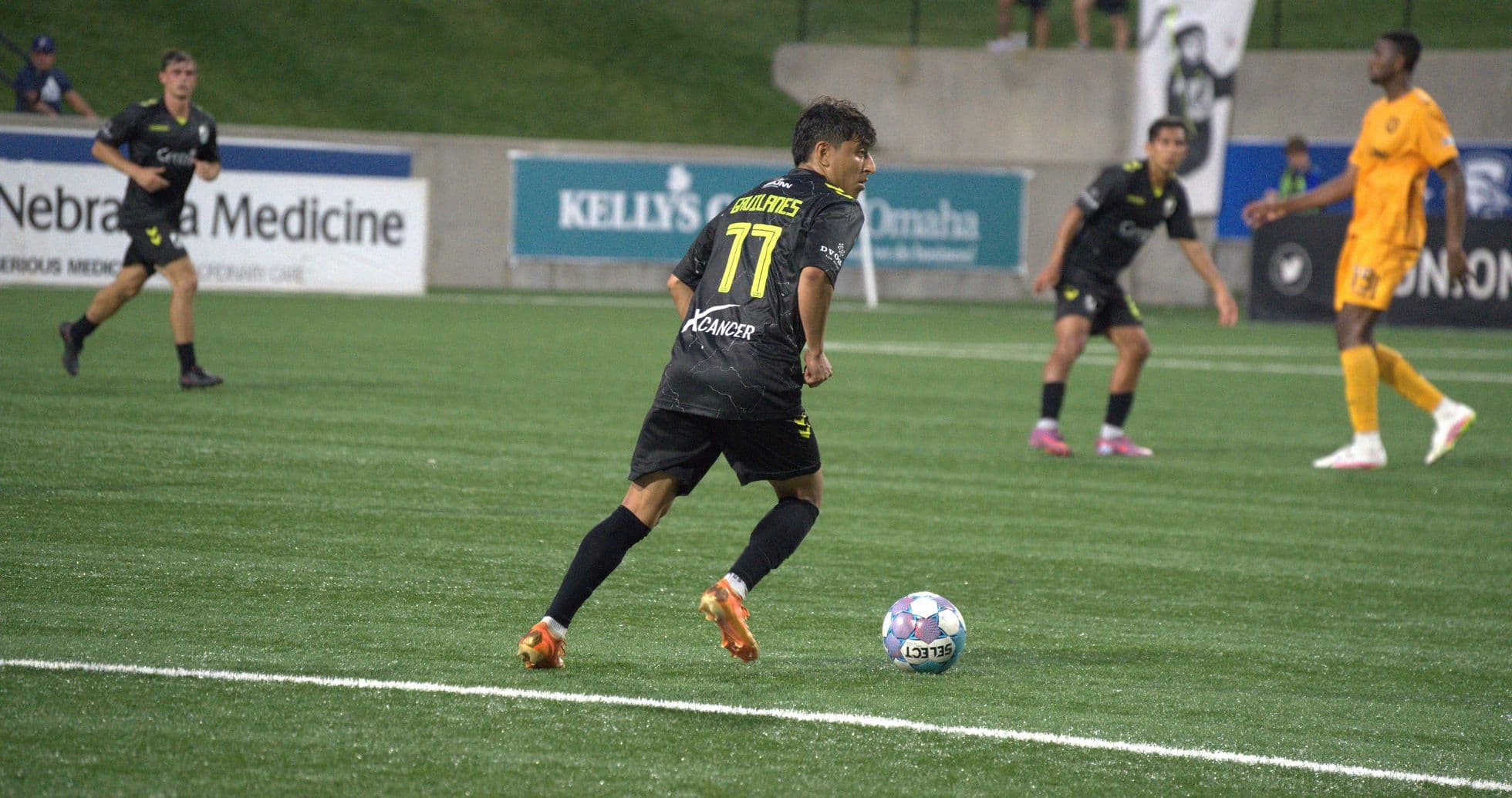
For Union Omaha, the attacking trident of P. Botello Faz, A. Gavilanes, and D. Borczak formed the spearhead. With the team averaging 2.5 goals at home, this front line operated with the confidence of a unit that expects to score multiple times at Werner Park. Behind them, A. Gomez and Gabriel Cabral were key connectors, tasked with turning transitions into sustained pressure.
Fort Wayne’s defensive “shield”—J. Smith, R. Sproat, J. Solis, and A. Hernandez—entered the night under strain. On their travels they had conceded 7 goals in 2 matches, an away average of 3.5 goals against. The 4–2 final underlined the mismatch: Omaha’s high-tempo, risk-embracing attack repeatedly found seams between and behind that back line.
In the engine room, Gabriel Cabral and S. Ors Navarro represented Union Omaha’s control axis. Their job was to tilt the game into Omaha’s preferred chaos on their terms: quick ball progression, second-ball dominance, and early service into wide and central channels. For Fort Wayne, the likes of J. Garay and E. Nieto were asked to slow that rhythm, but the overall Cup trend—10 goals conceded in 3 matches, a total average of 3.3 per game against—suggests they struggled to impose a more conservative tempo.
IV. Statistical Prognosis: What This Result Says About Both Sides
Following this result, Union Omaha’s profile in Group 4 looks clearer: they are a high-event, front-foot side that trusts its attack to outpace its defensive vulnerabilities. Their total goal difference heading into the game was -1 (7 scored, 8 conceded), and while the updated numbers are not provided, the 4–2 scoreline fits a pattern where they are more likely to win by outscoring than by shutting down opponents. Their penalty record in the Cup—1 taken, 1 scored, 100.00% conversion with no misses—adds another layer of attacking reliability.
Fort Wayne, by contrast, remain a team whose offensive promise is consistently undermined by defensive frailty. Scoring 5 total goals in 3 matches heading into this fixture showed they can threaten; conceding 10 in the same span, with an away average of 3.5 against, showed they cannot yet control space or tempo for long enough spells. With no penalties won or missed, they have not even had the lifeline of spot-kicks to tilt tight moments.
Tactically, the prognosis is stark. Union Omaha can build a Cup run on this identity if they refine their discipline in that volatile 61–75 minute window and learn to close games without inviting chaos. Fort Wayne, on the other hand, must start by tightening their defensive distances and emotional management in the final quarter-hour, where their yellow-card surge betrays a side that is perpetually chasing, rarely dictating.
At Werner Park, the scoreboard merely confirmed what the numbers had been whispering: Union Omaha are built for wild nights, and Fort Wayne are still learning how to survive them.