.svg&w=384&q=75 "GoalGist logo")
Tampa Bay Rowdies Dominate Sporting JAX in USL League One Cup
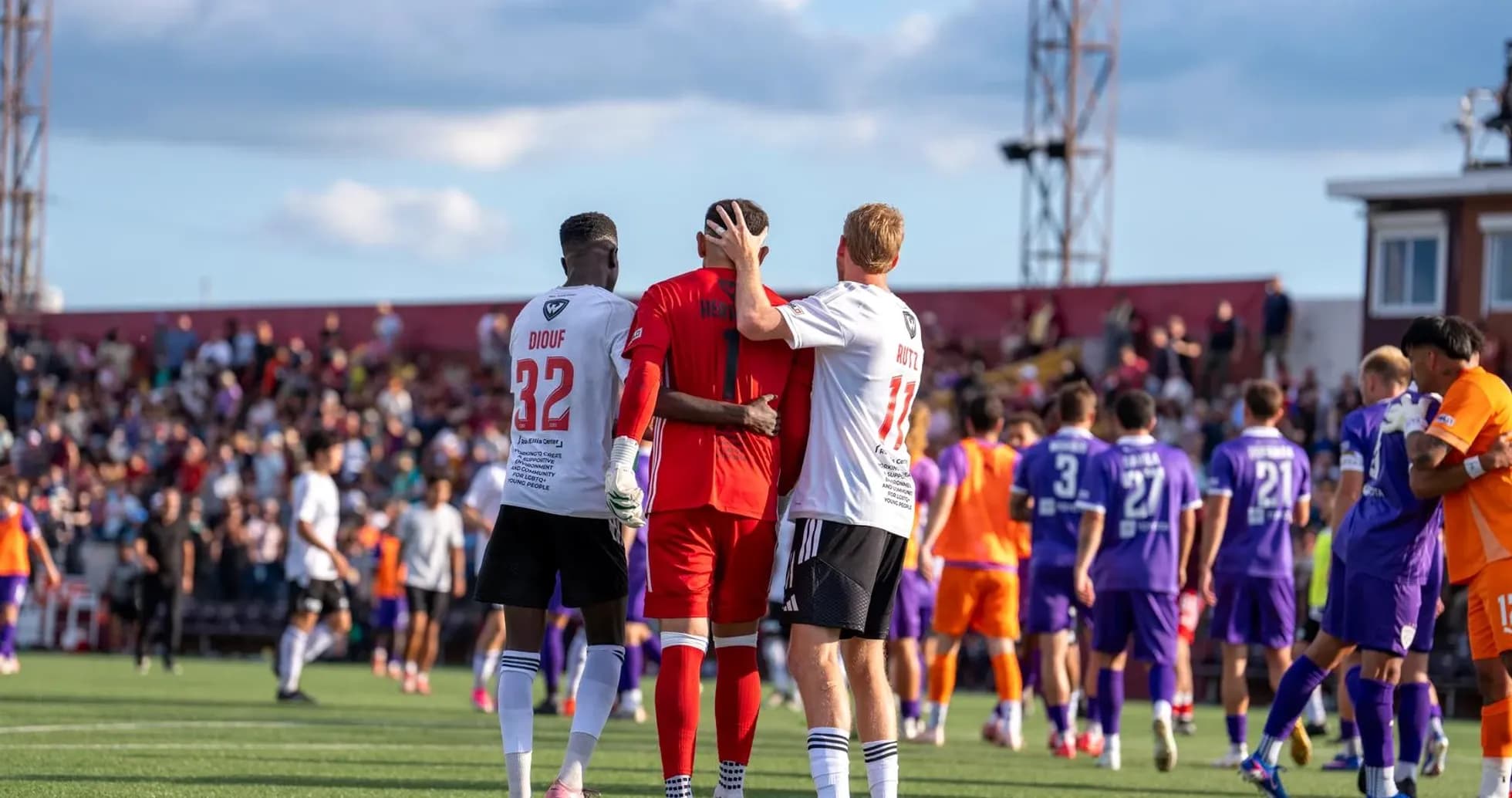
Under the lights at Hodges Stadium, the USL League One Cup group-stage narrative sharpened into focus. Sporting JAX, still feeling their way through a first Cup campaign, ran headlong into a ruthless Tampa Bay Rowdies side that arrived top of Group 7 and left with a 2–0 win, reinforcing the gap in maturity and cohesion between the two squads.
Heading into this game, the table already sketched a clear hierarchy. Tampa Bay sat 1st in Group 7 with 9 points from 3 matches, an immaculate record built on 3 wins, 8 goals scored and just 1 conceded overall. Their goal difference of 7 was the product of a high-tempo, front-foot identity: 2.7 goalsFor on average in total, including a striking 3.0 on their travels. Sporting JAX, by contrast, were 3rd with 4 points from 4 matches, and their overall goal difference of -3 (4 scored, 7 conceded) told of a side still stitching together its defensive structure and attacking patterns.
The contrast at home was even starker. At Hodges Stadium, Sporting JAX had played 2 group matches heading into this fixture, losing both, with 0 goalsFor and 3 goalsAgainst. Their total attacking return in the competition – 3 goals overall – had come entirely on their travels, at an average of 1.5 away goalsFor but 0.0 at home. Tampa Bay, meanwhile, had travelled with swagger: 2 away wins from 2, 6 goalsFor and just 1 conceded, an away average of 3.0 goalsFor and 0.5 goalsAgainst.
That structural imbalance framed the tactical story before a ball was kicked. Dominic Casciato named an XI that underlined Tampa Bay’s continuity. J. Waite anchored them in goal, with a back line built around A. Rodriguez, L. Wyke, B. Schaefer and N. Dossantos. C. Ostrem and M. Schneider offered width and balance, while the creative spine ran through L. Perez, S. Cruz and M. Micaletto, all feeding the movement of M. Myers up front. On the bench, the likes of R. Cicerone, G. Vivi Quesada and E. Conway gave Casciato multiple ways to tilt the game further in his favour if needed.
Sporting JAX, by contrast, looked like a side still defining its best version. J. McGuire started in goal, shielded by W. Ackwei, A. Gomez, E. Dudley and the adventurous E. Rito. The midfield blend of W. Kuzain and B. Soumaoro was tasked with both screening and progression, while T. Rose and J. Evans flanked the attacking pivot of E. Jaaskelainen and K. Sadlier. The bench – C. Olivares, J. Rossiter, A. Reid, H. Neville, P. Elias, R. Pedder, L. Granitur and E. Underwood – offered energy but not yet the proven end-product that Tampa Bay carried in reserve.
The tactical void for Sporting JAX has been brutally simple in this Cup: they have failed to score in both home fixtures, and heading into this game they had failed to score in 2 matches overall, both of them at Hodges Stadium. Their total attacking output is scattered evenly across time – 33.33% of their goals overall arriving in each of the 16–30, 31–45 and 76–90 minute ranges – but crucially, all of those strikes have come away from home. At Hodges Stadium, the script has been sterile.
Defensively, the numbers expose a recurring pattern. Sporting JAX concede an average of 1.5 goalsAgainst at home and 1.0 on their travels, for 1.3 overall. The minute distribution of those concessions is damning: 50.00% of their goalsAgainst overall come in the 31–45 window, with another 25.00% between 0–15 and 25.00% in the final 76–90 stretch. They are repeatedly vulnerable either side of the interval, when concentration and structure are most severely tested.
Tampa Bay’s attacking profile intersects with that weakness like a blade. Heading into this match, 50.00% of their goalsFor overall arrived between 31–45 minutes, with another 25.00% between 46–60 and 12.50% in each of the 0–15 and 61–75 windows. This is a side that ramps up pressure as the first half wears on and then emerges from the break with the same intensity. Their offensive peak precisely overlaps Sporting JAX’s defensive soft spot.
That “Hunter vs Shield” matchup – Tampa Bay’s relentless first-half surge against Sporting JAX’s fragile late-first-half defending – was always likely to decide the evening, and the 2–0 full-time scoreline simply confirmed the trend that the data predicted. Once Tampa Bay established control before the interval, Sporting JAX’s historically blunt home attack never truly looked equipped to haul them back.
In the “Engine Room”, the duel was more subtle but just as decisive. Without formal assist data, we infer roles from the structure: M. Micaletto and L. Perez operate as Tampa Bay’s primary connectors between lines, receiving from Schneider and Ostrem and threading passes into Myers and Cruz. On the other side, Kuzain and Soumaoro are asked to be both playmakers and enforcers, a dual burden that often leaves them stretched. When Tampa Bay’s midfield three circulate the ball at tempo, Sporting JAX’s pair can be pulled into lateral chases, opening seams for late runs from Perez or Micaletto.
Discipline added another layer. Sporting JAX’s yellow-card profile is heavily weighted to the 46–60 minute period, with 55.56% of their cautions overall arriving just after half-time, and a further 22.22% in the final quarter-hour. Tampa Bay’s yellows are more evenly spread, but 33.33% also come in that 46–60 zone and another 33.33% between 76–90. In practical terms, this means both teams tend to pick up cards in the very phases where Tampa Bay attack most aggressively and Sporting JAX defend most desperately. It is in those passages that tactical fouls and last-ditch interventions accumulate, often further destabilising Sporting JAX’s already fragile structure.
There were no penalties to complicate the narrative; both sides have taken 0 spot-kicks overall in this Cup, with 0 scored and 0 missed. Instead, the story was one of open-play superiority and structural clarity. Tampa Bay’s defensive line, marshalled by Wyke and Schaefer in front of Waite, extended a remarkable record: just 1 goalAgainst away and 1 overall heading into this fixture, with an away average of 0.5 goalsAgainst. Their only concession in the competition had come late, between 76–90 minutes, a window where Sporting JAX’s total goalsFor overall do show a 33.33% share – but again, never at home.
Following this result, the statistical prognosis hardens into something close to certainty about these two squads. Tampa Bay are built on a platform of defensive control and timed attacking bursts, especially around the 31–60 minute corridor. Their 3-match winning streak, 2 clean sheets overall and perfect away record in both points and goalsFor/goalsAgainst make them the group’s benchmark.
Sporting JAX, meanwhile, remain an intriguing but incomplete project. Their away numbers – 3 goalsFor at 1.5 per game, 2 goalsAgainst at 1.0 per game, and a single clean sheet on their travels – suggest there is a competitive side in there. But at Hodges Stadium, where they have 0 goalsFor and 3 goalsAgainst in 2 matches, the patterns are of hesitancy in the final third and lapses in concentration at the very moments Tampa Bay, and sides like them, are most ruthless.
For now, the Rowdies leave Jacksonville with the win their underlying metrics promised, while Sporting JAX depart the group stage with a clear tactical mandate: harden the defensive spine around that 31–45 minute window, and find a way for Sadlier, Jaaskelainen, Evans and Rito to translate their away threat into something more tangible in front of their own supporters.