.svg&w=384&q=75 "GoalGist logo")
Sweden's Journey to the World Cup: From Chaos to Hope
Sweden should not be here. Not by any conventional logic, anyway.
One point from the first four qualifiers under Jon Dahl Tomasson. Two points from six group games in total. A 1-0 defeat to Kosovo in October 2025 that felt less like a bump in the road and more like the end of one. Tomasson was sacked that night. The World Cup dream looked dead.
Then Graham Potter walked back into Swedish football and turned a car crash into a pilgrimage.
Potter returns – and strips it back
Potter’s name still carries weight in Sweden. Östersund is where he built his reputation between 2011 and 2017, dragging a small club from the fourth tier to the Allsvenskan, lifting the cup, and even bloodying Arsenal’s nose in Europe. Those memories mattered when he popped up on Fotbollskanalen in October 2025, effectively waving a flag.
“I have feelings for Sweden. I love the country and I love Swedish football. Coaching the national team would be an incredible opportunity for me, absolutely.” It sounded less like an interview and more like a job application.
A few days later, he had the job. Results did not instantly explode into life – no wins in his first two games – but the Swedish FA were already convinced. In March, they handed him a contract extension to 2030. For Potter, bruised by difficult spells at Chelsea and West Ham, it was the right place at the right time. He speaks the language, understands the culture, and knows what a Swedish national team looks like when it feels like itself.
He went back to basics. Out went the muddled identity, in came the old Swedish hallmarks: a stubborn, organised defence and quick, ruthless counterattacks. Potter said he preferred a back four, yet when the stakes rose in the Nations League playoff route, he parked that idea and rolled out a 5-3-2. Safety first. Keep it tight. Live to counter.
It was pragmatic. It was also exactly what Sweden needed.
Gyökeres drags a nation to North America
The Nations League lifeline offered Sweden a way back into the World Cup qualifying picture. They grabbed it with both hands – and with Viktor Gyökeres’ boots.
In Spain, against Ukraine in the semi-final, Gyökeres tore through the game. A hat-trick, a 3-1 win, and suddenly Sweden looked like a team with a clear plan and a ruthless edge. The football was not always pretty. It did not need to be. When you have a forward in that kind of form, clarity is enough.
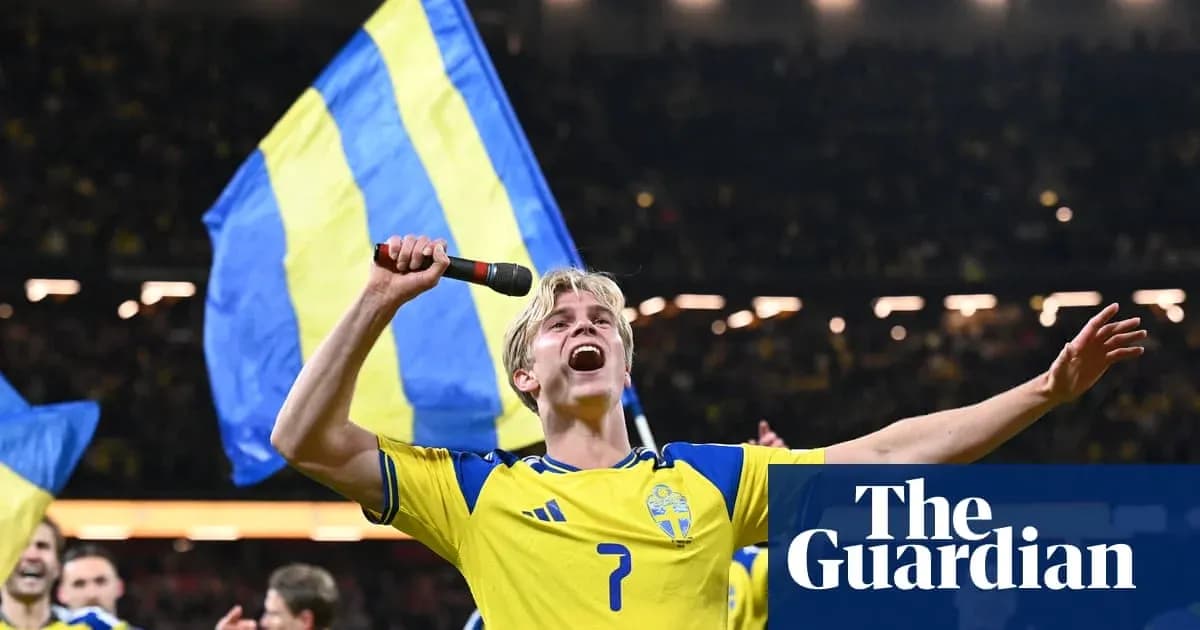
The final against Poland was far more brutal to watch. Poland were better for long spells. Sweden clung on. The game swung one way, then the other. Yet when the tension was at its thickest, Gyökeres appeared again, this time in the 88th minute, to win a 3-2 thriller.
Potter stood on the touchline, almost dazed by it all. “It’s hard to explain, hard to describe,” he admitted later. “Just an incredible evening, just so proud to be part of that and obviously proud to experience it. It was just the best night I’ve had in football. Incredible, like I was having some sort of out-of-body experience. I’m looking at the goal and suddenly all our bench is running and you’re thinking: ‘Am I here?’ I’m just grateful to be part of that.”
Sweden, a team that had stumbled and scraped through qualifying, were suddenly on their way to the World Cup. Not because the underlying numbers made sense. Because their new coach had given them structure and their new talisman had delivered at the sharp end.
They now head to North America to face Tunisia, Netherlands and Japan with something that looked impossible a year earlier: genuine hope of reaching the knockout stages. That is the Potter effect in its purest form.
A star reborn – and another in doubt
On paper, Alexander Isak should still be the poster boy. He became the most expensive transfer in Premier League history last year when he swapped Newcastle for Liverpool for £125m. In reality, his first season at Anfield was hard going, his form and fitness flickering in and out.
He did score after coming off the bench in a worrying 3-1 defeat to Norway on 1 June, but the doubts remain. Isak arrives at this tournament with questions hanging over him.
Gyökeres does not. The Arsenal forward also needed time to settle in London, yet he has hit stride at the right moment and, crucially, for the national team. He scored four of Sweden’s six goals across the two playoff ties. His late winner against Poland did more than book a ticket to the World Cup – it turned him into a nationwide phenomenon.
His celebration, inspired by Bane from The Dark Knight Rises, spread across Sweden, with fans posting their own versions. A mask, a stance, a sense of menace. A comic-book flourish wrapped around a very real, very modern No 9.
Right now, this is Gyökeres’ team.
Life without Kulusevski
All of this, though, comes with a brutal caveat. Sweden will travel without their captain, Dejan Kulusevski. His influence on this side is hard to overstate. He stitches counterattacks together, links midfield and attack, and brings a touch of invention that no one else quite replicates.
They will miss him. Deeply.
Without Kulusevski, the margins tighten. Isak’s form matters more. Gyökeres’ fitness becomes non-negotiable. The midfield must carry extra responsibility, both on the ball and in the press.
Lagerbielke the baron, Nygren the spark
If there is a player ready to surprise the wider world, it might be Gustaf Lagerbielke. He is not a household name outside Sweden and Portugal yet, but his performance in the playoff final against Poland was immense: a thunderous header at one end, and a composed, rugged display that kept Robert Lewandowski quiet at the other.
The Braga defender brings more than just physicality. His story adds a layer of intrigue: a former Celtic centre-back, a baron, and 254th in line to the Swedish throne. That title will raise eyebrows in North America, but it is his timing in the air and calm in big moments that really count here.
Talks of a move to one of Europe’s big-five leagues are already bubbling. A strong World Cup and those conversations will only get louder.
Celtic’s Benjamin Nygren also sits firmly in the “one to watch” category. He offers attacking thrust and creativity, the kind of player who can tilt a tight group game with one sharp run or clever pass. In a squad that will lean on organisation and discipline, his ability to break patterns could be invaluable.
Karlström, the quiet anchor
Every tournament team needs a player who does the heavy lifting in the shadows. For Sweden, that figure is Jesper Karlström.
Now captain of Udinese, Karlström’s path has not been straightforward. He took time to establish himself at Djurgården and has spoken openly about his struggles with gambling addiction during his time there. The club and his family helped him pull himself out of it, and that experience shows in the way he plays: composed, grounded, unfazed by chaos around him.
On the pitch he is the archetypal deep-lying midfielder – strong in the tackle, steady in possession, capable of dictating the tempo. At 30, he will be the calming presence in a midfield that could feature the youthful energy of Yasin Ayari and Lucas Bergvall.
Against the technical quality of Netherlands and the relentless, intricate movement of Japan, Karlström’s ability to win duels and then use the ball cleanly will be central to Sweden’s chances. If they are to grind their way out of this group, he will be at the heart of it.
The stands: yellow, blue and loud
Sweden rarely travel quietly. At major tournaments their supporters arrive in thick, yellow-and-blue waves, filling squares, metros and stadiums with noise and good humour.
Blågult fans have built a reputation for turning up in big numbers and embracing the occasion. They mix easily with opposition supporters, trading songs and jokes rather than hostility.
Their soundtrack has a clear lead track: “Kanna på”, a chant built around beer pitchers that keep on coming. It is raucous, self-aware and very Swedish. “We are coming with 100,000 men,” the song declares. North America will not see a Viking invasion, but it will see a sizeable Swedish contingent, armed with flags, voices and probably a few of those metaphorical pitchers.
A curious US connection
Sweden’s relationship with the United States carries one odd modern footnote. In 2017, Donald Trump stood at a rally and said: “Look what happened in Sweden last night,” while talking about immigration and terrorism. The only issue: nothing dramatic had happened in Sweden the night before.
He later said he was referring to a TV report on Fox News, which did little to clarify the confusion. Swedish newspaper Aftonbladet responded by listing what had actually taken place that day:
- Famous singer Owe Thörnqvist suffered technical problems in rehearsals.
- A man set himself on fire at a plaza in central Stockholm.
- Road closures in northern Sweden due to harsh weather.
It was a surreal exchange that said more about American politics than Swedish reality. This summer, the focus shifts from rhetoric to football, from misquotes to matches.
Sweden arrive in North America battered by a disastrous qualifying campaign, stripped of their captain, yet energised by a coach who knows them and a striker who currently refuses to miss. It is an unlikely combination.
The only question now is whether this improbable resurrection ends in another glorious night like Poland – or in the harsh light of a group stage that shows no mercy.

