.svg&w=384&q=75 "GoalGist logo")
Spain's Tactical Domination in World Cup Final Victory Over Argentina
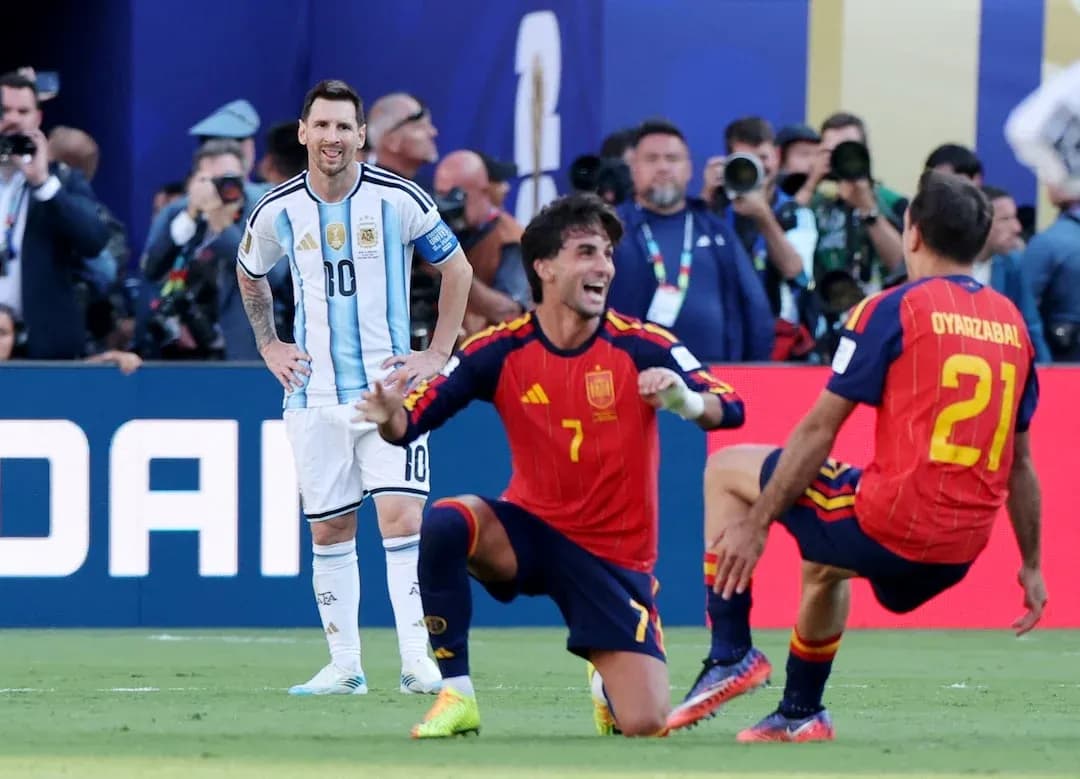
Spain’s 1-0 extra-time win over Argentina at MetLife Stadium was a tactical domination wrapped in a tight scoreline. Across 120 minutes of the World Cup Final, Luis de la Fuente’s 4-2-3-1 imposed almost total control: 65% possession, 20 total shots and 12 on goal against an Argentina side that mustered only 2 shots and not a single effort on target. The contest became a siege, with Spain methodically stretching and tiring a 4-4-2 block that Lionel Scaloni progressively reshaped with defensive substitutions, especially after Argentina were reduced to ten men late in normal time.
I. Executive Summary
Spain’s structure was built on a double pivot of Rodri and Fabián Ruiz, three creative midfielders behind Mikel Oyarzabal, and relentless width from Pedro Porro and Marc Cucurella. Argentina’s 4-4-2, with Lionel Messi and Julián Alvarez up front, was forced deeper and narrower as the game went on, conceding territory and allowing Spain to dictate tempo through long passing sequences. The decisive moment came in extra time, when Ferran Torres struck to reflect the underlying pattern: Spain’s sustained pressure versus Argentina’s increasingly desperate rearguard.
II. Scoring Sequence & Disciplinary Log
The only goal arrived in extra time. At 106', Ferran Torres (Spain) finished after service from Nico Williams, making it 1-0 to Spain. That strike, following over an hour and a half of Spanish probing, finally broke Argentina’s resistance and proved decisive as Spain saw out the remaining minutes with the numerical and territorial advantage they had already established.
Discipline heavily skewed towards Argentina and shaped the tactical balance, especially in the closing stages of normal time. The chronological card log:
- -5' Cristian Romero (Argentina) — Argument
- 41' Lisandro Martínez (Argentina) — Foul
- 52' Leandro Paredes (Argentina) — Unsporting behaviour
- 83' Enzo Fernández (Argentina) — Argument
- 90+3' Enzo Fernández (Argentina) — Foul (second yellow)
- 90+3' Enzo Fernández (Argentina) — Foul (Red Card)
- 111' Alexis Mac Allister (Argentina) — Foul
Totals: Spain 0 cards, Argentina 6 yellow cards and 1 red card, for 7 cards in total. The dismissal of Enzo Fernández at 90+3' locked Argentina into a deep, reactive 4-4-1 for extra time, amplifying Spain’s already clear dominance of territory and possession.
III. Tactical Breakdown & Personnel
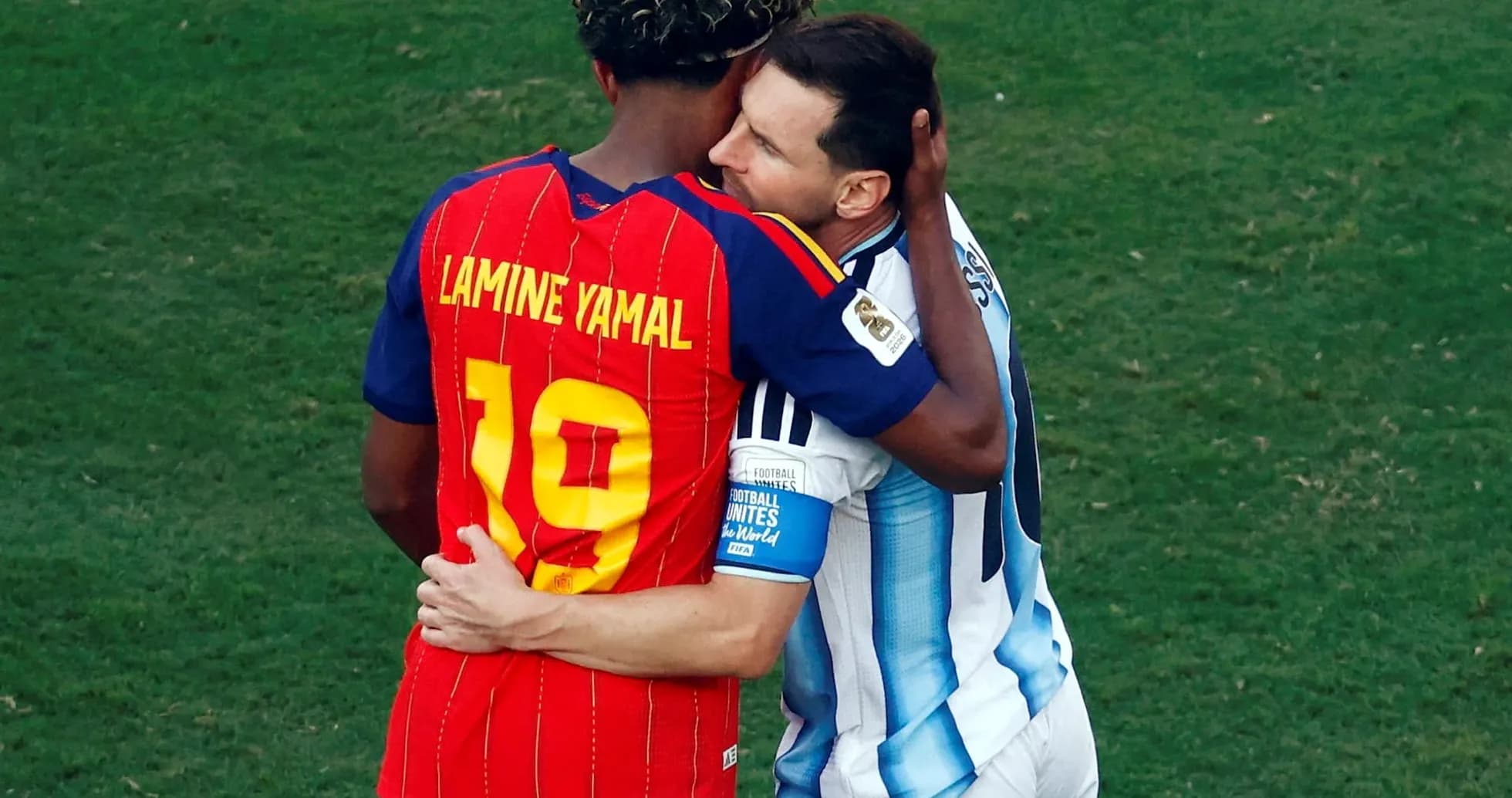
Spain’s 4-2-3-1 was designed for ball control and zone occupation rather than direct penetration. Rodri and Fabián Ruiz gave de la Fuente a secure double pivot to recycle possession and protect rest defence, while Lamine Yamal, Dani Olmo and Alex Baena (before his substitution) operated between the lines. Full-backs Pedro Porro and Marc Cucurella pushed high to pin Argentina’s wide midfielders and create constant 2v1s on the flanks.
The passing data underlines Spain’s control: 852 total passes, 762 accurate, at 89%. This volume and precision allowed them to repeatedly circulate around Argentina’s 4-4-2, dragging the block from side to side and opening half-spaces for the advanced midfielders. With 9 shots inside the box and 11 from outside, Spain varied their threat, using patient edge-of-box combinations as well as crosses and cutbacks. Three blocked shots and 12 on goal show how often they were able to shoot through or around the compact Argentine line.
Unai Simón (Spain) was effectively a distributor rather than a shot-stopper; with 0 goalkeeper saves recorded, Spain’s structure in front of him limited Argentina to 2 total shots and none on goal. The defensive line of Pau Cubarsí and Aymeric Laporte, shielded by Rodri, controlled depth so effectively that Messi and Alvarez were forced into receiving far from goal, often with their backs to play. Spain’s “goals prevented” figure of 1.81 reflects how little high-quality threat they faced.
In contrast, Argentina’s 4-4-2 was pushed into survival mode. With only 463 passes (357 accurate, 77%) and 35% possession, they rarely constructed long sequences. The midfield four of Rodrigo De Paul, Enzo Fernández, Alexis Mac Allister and Nicolás González had to shuttle horizontally to plug gaps, but the constant defensive workload led to fouls (25 in total) and a string of bookings. Once Leandro Paredes and later Facundo Medina and Giuliano Simeone came on, Scaloni’s changes were more about fresh legs and defensive solidity than altering the basic shape.
Emiliano Martínez (Argentina) was the central figure in keeping the scoreline respectable. He made 11 saves, and Argentina’s “goals prevented” figure of 1.81 highlights how his interventions far exceeded what the underlying xG would normally allow. He repeatedly repelled Spain’s on-target efforts, especially as fatigue and the red card left Argentina deeper and more exposed.
The red card to Enzo Fernández at 90+3' was the tactical hinge. Reduced to ten, Argentina could no longer press even sporadically and dropped into a narrow 4-4-1, with Messi and then the forwards having to choose between screening passes or staying high for transitions. Spain responded by reinforcing control in midfield with Martín Zubimendi and Mikel Merino entering, ensuring that extra time was played almost entirely in Argentina’s half. The decisive goal at 106', finished by Ferran Torres from a Nico Williams assist, was the logical outcome of that structural superiority and numerical advantage.
IV. The Statistical Verdict
The numbers confirm a final that was far more one-sided than the 1-0 scoreline suggests. Spain’s expected goals of 1.94 versus Argentina’s 0.22 captures the gulf in chance quality: Spain created almost nine times the xG and 12 shots on goal to Argentina’s 0. Spain’s 9 corner kicks against 4 further illustrate sustained pressure, while 4 offsides show a team willing to threaten depth despite dominating the ball.
Argentina’s discipline issues (6 yellows, 1 red) were both a symptom and a cause of their struggle. Forced into 25 fouls just to break Spain’s rhythm, they repeatedly invited set-piece pressure and eventually suffered the decisive dismissal that tilted extra time even further. Spain, with 21 fouls but no cards, managed the physical side of the game more cleanly within the referee’s threshold.
In the end, Spain’s superior overall form — high passing accuracy, territorial control and chance creation — combined with a strong defensive index (0 shots on target conceded, 0 saves required from Unai Simón) to deliver a deserved World Cup title. Argentina’s resistance, anchored by Emiliano Martínez’s 11 saves, kept them alive deep into extra time, but the tactical and statistical balance always pointed towards a Spanish triumph once the deadlock was finally broken.