.svg&w=384&q=75 "GoalGist logo")
Spain vs Argentina: Tactical Preview of the World Cup Final
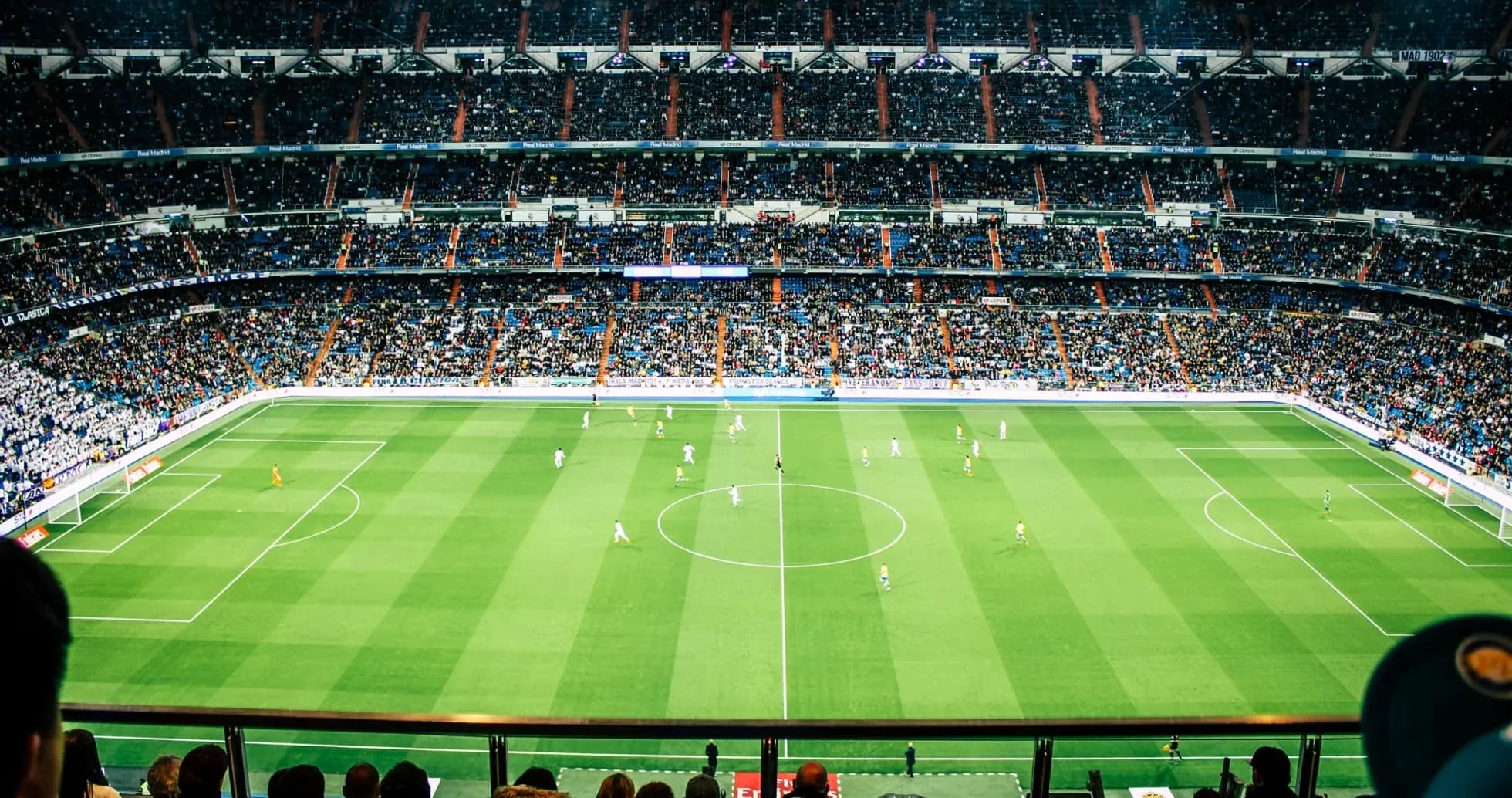
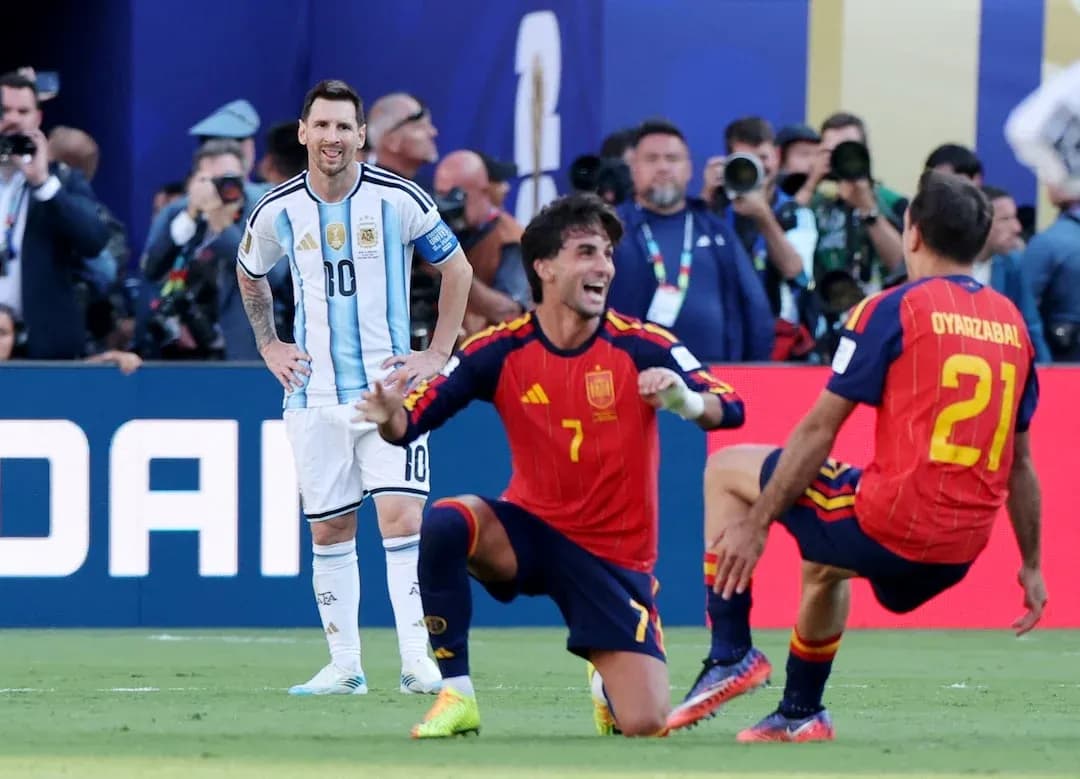
MetLife Stadium stages a World Cup Final that feels less like a neutral venue and more like a pressure chamber, with Spain and Argentina arriving as the two most complete stories of this 2026 tournament. The scoreboard will eventually read Spain 1–0 Argentina after extra time, but the paths that bring these squads here are written in very different tactical dialects.
Spain's Tactical Profile
Heading into this game, Spain’s season profile is defined by control and suffocation. Across the campaign they have played 8 matches in total, winning 7 and drawing 1, without a single defeat. Their attack has been efficient rather than wild: 14 goals in total, split as 10 at home-equivalent venues and 4 on their travels, for an overall scoring average of 1.8 goals per match. More telling is the defensive record: only 1 goal conceded in total, with 1 at home and 0 away, an overall average of 0.1 goals against. Seven clean sheets in eight underline a side built on structure and positional discipline.
Argentina's Tactical Profile
Argentina arrive with a more volatile profile, but one that has burned through opponents. Across 8 matches in total, they have 7 wins and 1 loss, scoring 19 goals overall (14 at home, 5 away) at a striking average of 2.4 goals per match. Yet they have conceded 8 in total (5 at home, 3 away), an overall average of 1.0 per game. Where Spain’s season has been about denying jeopardy, Argentina’s has embraced it, trusting their firepower to outpace the damage at the other end.
Starting Lineups
On the teamsheets, the contrast is immediate. Luis de la Fuente doubles down on Spain’s most-used shape of this tournament, a 4-2-3-1 that has been deployed 6 times already. Unai Simón anchors the side in goal, shielded by a back four of Pedro Porro, Pau Cubarsí, Aymeric Laporte and Marc Cucurella. In front of them, Rodri and Fabián Ruiz form the double pivot, the metronome and the connector. Ahead of them, the line of three is as technical as it is inventive: Lamine Yamal wide right, Dani Olmo central, Álex Baena from the left half-space. Mikel Oyarzabal starts as the nominal striker, but his World Cup numbers – 5 goals and 1 assist in 8 appearances – mark him as a roaming finisher rather than a classic target man.
Lionel Scaloni answers with Argentina’s tournament backbone: a 4-4-2 that has been his most-used setup, with 5 appearances this season. Emiliano Martínez stands in goal, behind a back four of Gonzalo Montiel, Cristian Romero, Lisandro Martínez and Nicolás Tagliafico. The midfield is a hard-running, technically secure quartet: Rodrigo de Paul on the right, Enzo Fernández and Alexis Mac Allister centrally, Nicolás González from the left. Up front, the weight of legend and form is shared between Lionel Messi and Julián Álvarez.
Messi's Impact
If Spain’s defensive “DNA” is collective, Argentina’s threat is personified. Messi’s World Cup numbers are staggering: 8 goals and 4 assists in 8 appearances, from 28 shots (18 on target), with 26 key passes and 38 dribble attempts, 27 successful. He has drawn 20 fouls and won 60 of 102 duels, a reminder that he still bends games to his rhythm. Yet buried in his profile is a tactical wrinkle: from 3 penalties in total for Argentina this campaign, the team has scored only 1, with 2 missed. Messi himself has missed 2 penalties. In a Final that went to extra time but not to a shootout, that fragility from the spot hangs as an unspoken tension.
Spain, by contrast, have a perfect record from the spot this tournament: 1 penalty in total, 1 scored, 0 missed. Oyarzabal’s single successful penalty underlines why he is trusted as the finisher at the tip of Spain’s structure.
Disciplinary Landscape
The disciplinary landscape adds another layer to the tactical preview. Spain’s yellow cards are concentrated in the 31–45 minute window (33.33% of their cautions) and then surge in extra time’s first period, with 50.00% of their yellows arriving between 91–105 minutes. It suggests a team that occasionally strains against the tempo just before half-time, then again when fatigue meets rising stakes in extra time.
Argentina’s card map is even more telling. Their yellow cards are spread across 31–45, 46–60 and 76–90 minutes (each 13.33%), but the real storm hits late: 33.33% of their yellows arrive between 91–105 minutes and 20.00% between 106–120. More dramatically, their only red card of the campaign comes in the 91–105 minute window. Enzo Fernández’s season profile shows a yellow and a yellow-red, reflecting a midfielder who can cross the disciplinary line when intensity spikes. In a Final that stretches to 120 minutes, this late-game volatility is a genuine tactical fault line.
Key Matchups
That shapes the key matchups. The “Hunter vs Shield” duel is Messi against Spain’s defensive block. With only 1 goal conceded in total all tournament, Spain’s back four and Rodri’s screening have repeatedly turned games into positional puzzles. Messi’s tendency to drop between the lines will test Pau Cubarsí and Laporte’s willingness to step out, while Rodri must decide when to track him and when to hold the zone. Every time Messi receives between Rodri and the centre-backs, the entire Spanish structure is on trial.
At the other end, Oyarzabal’s movement becomes the “Hunter” against Argentina’s back line. Romero and Lisandro Martínez are both among the tournament’s leading enforcers: each has 2 yellow cards, with Romero registering 15 tackles, 3 blocked shots and 10 interceptions, and Lisandro Martínez adding 12 tackles and 6 interceptions. They relish front-foot defending, but Oyarzabal’s tendency to drift wide and drop short could drag them into awkward spaces, opening corridors for late runs from Olmo or Baena.
The “Engine Room” battle is pure attrition and craft. Rodri and Fabián Ruiz against Enzo Fernández and Mac Allister is a clash of two double pivots that want the ball, not just to destroy. Enzo’s 512 passes at 93% accuracy and 11 tackles show a player who both builds and breaks. But his disciplinary line – 12 fouls committed, 1 yellow, 1 yellow-red – means Spain can target him with rotations between Olmo and Baena, forcing him into late decisions. If Enzo is booked early, Scaloni’s entire pressing structure becomes more cautious.
Off the bench, Scaloni has a different kind of enforcer in Leandro Paredes, another high-card midfielder with 2 yellows, 10 tackles and 3 blocked shots. His introduction would signal Argentina leaning into duels and long passing, but also increases the risk of cards in a match where their yellow and red card spikes arrive precisely in extra time.
Statistical Prognosis
Statistically, the prognosis before a ball is kicked tilts slightly towards Spain’s control. Their overall defensive average of 0.1 goals conceded per match versus Argentina’s 2.4 goals scored sets up a classic irresistible-force-versus-immovable-object narrative, but Spain’s unbeaten run and 7 clean sheets hint that their structure has been the more repeatable edge. Argentina’s attacking ceiling is higher, yet their defensive average of 1.0 goal conceded per match and their late-game disciplinary spikes suggest that over 120 minutes, the side that better manages fatigue and emotion will prevail.
In the end, the Final that finishes 1–0 after extra time feels like the logical intersection of these profiles: Spain’s patience and defensive perfectionism finally bending Argentina’s back line, while Messi’s brilliance is contained just enough by a system built to deny space rather than moments.