.svg&w=384&q=75 "GoalGist logo")
Sacramento Republic vs Monterey Bay: A Dramatic USL League One Cup Clash
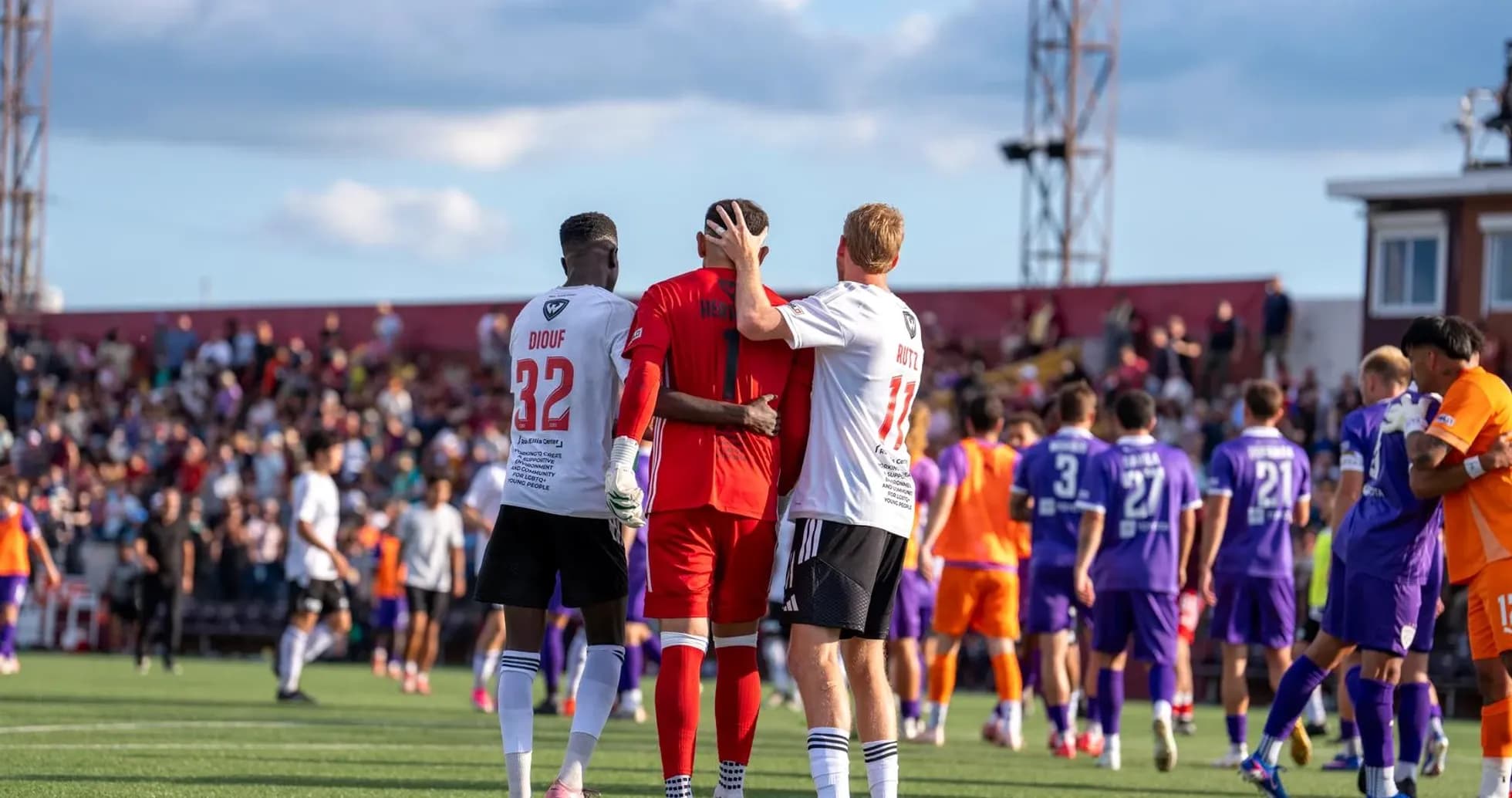
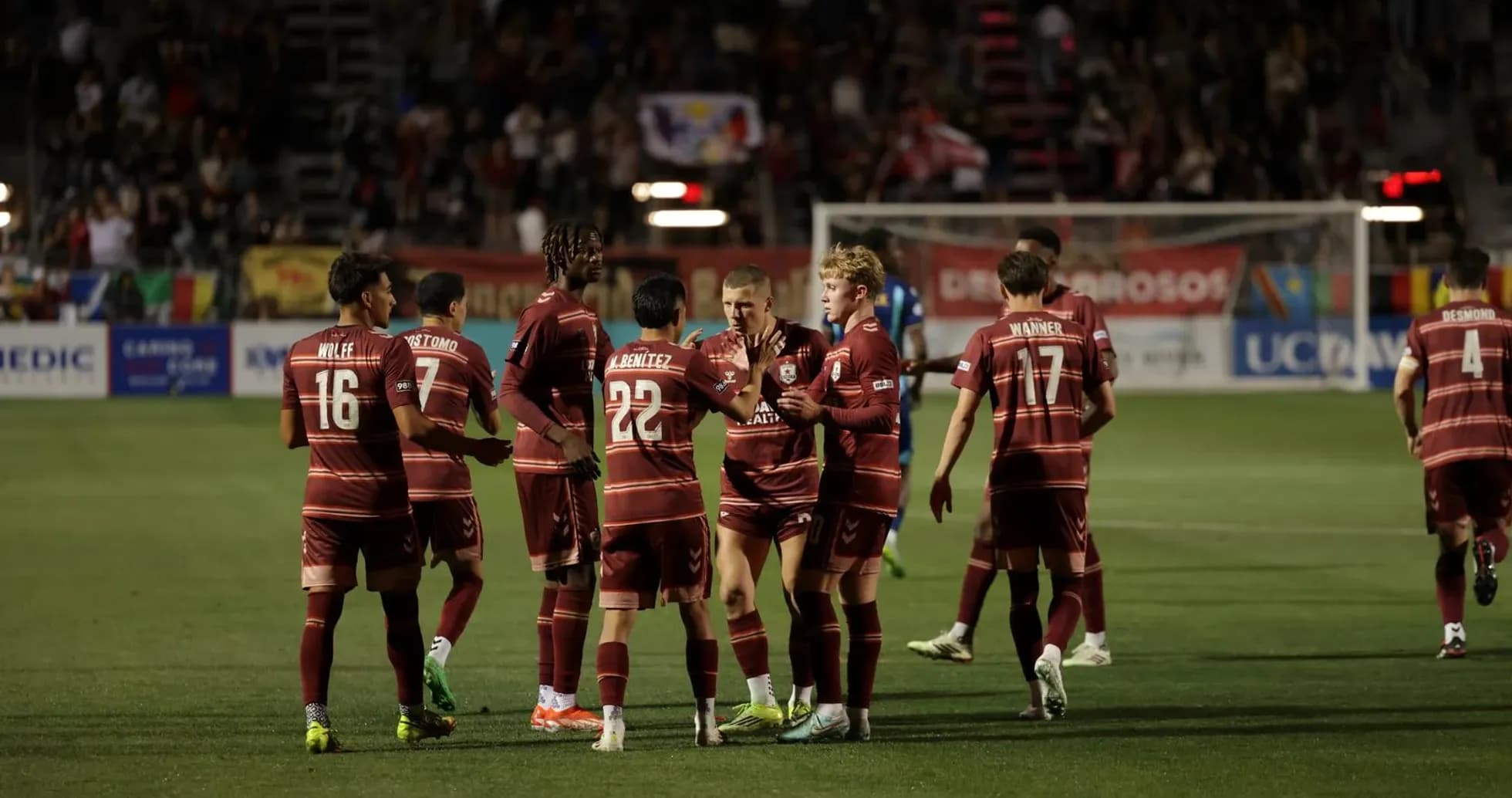
Heart Health Park under the lights, 120 minutes in the legs and a penalty shootout to separate them: Sacramento Republic and Monterey Bay delivered a Group Stage tie in the USL League One Cup that felt far closer to a knockout night. The scoreboard will remember 1-1 over normal time and extra time, with Sacramento edging the shootout 5-3, but the real story lies in how two very different footballing identities collided.
Team Profiles
Heading into this game, Sacramento were the group’s benchmark. Top of USL Cup 2026, Group 1 with 8 points and a goal difference of 7, they had built a ruthless, controlled profile: 3 wins from 3 overall, 11 goals for and 4 against in the standings. Their season statistics reinforced that dominance. Overall they were averaging 2.3 goals for per game and just 0.3 against. At home they were even more imposing, with 3.0 goals for on average and only 0.5 conceded, two wins from two, 6 goals scored and 1 allowed. Clean sheets in both home and away categories (2 in total) underlined a side comfortable suffocating games.
Monterey Bay arrived as something closer to chaos merchants. Fifth in the same group, their standings line read 3 points and a goal difference of -2, with 12 goals scored and 14 conceded overall. Their season numbers painted the same picture: 2.0 goals for per game both at home and on their travels, but leaking 2.3 goals per match overall, including 3.0 away. They had yet to keep a clean sheet, and their away record in the standings showed 0 wins, 0 draws, 2 defeats, with 4 goals scored and 6 conceded. Where Sacramento were structure and control, Monterey Bay were volatility and punch.
Lineups
Neill Collins’ lineup for Sacramento was built on continuity and balance. D. Vitiello in goal anchored a back line featuring J. Gurr, J. Timmer, L. Desmond and M. Benitez – a unit that, heading into this game, had conceded only 1 goal at home in the competition. In front of them, the double pivot of D. Crisostomo and M. Kaye promised composure and tempo, with T. Wolff and M. Rodriguez offering connective tissue between midfield and attack. The front band, completed by D. Wanner and K. Edwards, gave Sacramento vertical threat and the ability to stretch Monterey’s back line horizontally.
On the bench, Collins had a variety of tools to change the game state. A. Rodriguez and F. Ajago offered fresh attacking profiles, while M. Malango and C. Ukaegbu could tilt the match physically in the final half hour. R. Spaulding and J. Casas gave defensive and structural insurance if Sacramento needed to protect a result late.
Jordan Stewart’s Monterey Bay, by contrast, were set up to punch upwards. F. Delgado in goal sat behind a defensive group of L. Malesevic, K. Egwu, Z. Farnsworth and S. Ritchie. The numbers suggested a back line under siege on their travels, conceding 3.0 away goals on average and 6 total away in the competition. The midfield triangle of N. Ross, G. Lomtadze and S. Lletget was clearly designed to mix bite and creativity, with J. Belmar and C. Nadje flanking central forward R. Bidois.
Stewart’s bench was rich with energy and disruption: J. Jackson and D. Carbajal as defensive options, A. Rebollar and O. Glasgow as wide sparks, and W. Leggett or R. Nakamura as flexible attacking pieces capable of reshaping the front line. It was the squad of a coach prepared to chase games, not just manage them.
Disciplinary Trends
Disciplinary trends hinted at the emotional undercurrent. Sacramento’s yellow cards were spread but with a late-game surge: 28.57% of their yellows in 31-45 minutes and another 28.57% in 76-90, with a notable red-card spike at 16-30 minutes (100.00% of their reds in that window). Monterey Bay, meanwhile, were more front-loaded in their aggression: 25.00% of yellows in each of the 0-15, 16-30 and 31-45 minute ranges, before tailing off after the break. Their red-card profile peaked at 61-75 minutes, with 100.00% of reds arriving in that stretch. In a game that went to 120 minutes, both managers had to navigate not only fatigue but also the risk of their teams’ known flashpoints.
Match Dynamics
The “Hunter vs Shield” dynamic was always going to favor Sacramento. Their overall defensive record – 1 goal conceded in 3 matches, 0.3 per game – was the Shield. Monterey Bay’s Hunter was collective rather than individual: 6 goals overall at 2.0 per match, with 4 of those on their travels at the same 2.0 away average. On paper, Monterey Bay’s attack matched up respectably with Sacramento’s defense, but their own fragility without the ball tilted the balance. Sacramento’s home scoring rate of 3.0 per game versus Monterey’s away concession rate of 3.0 created a statistical fault line that was always likely to crack in the hosts’ favor over 120 minutes and a shootout.
In the “Engine Room,” Sacramento’s pairing of Crisostomo and Kaye squared off against the combative Ross and the more creative Lletget. Sacramento’s season profile – zero matches failed to score, both home and away – reflected a midfield that reliably progressed the ball and created platforms for their forwards. Monterey Bay, for all their defensive woes, had also failed to draw a blank in front of goal, home or away. The battle between these midfields was less about whether chances would come and more about whose structure would hold once fatigue and cards began to bite.
Penalty Shootout
From the spot, Sacramento carried a quiet assurance. Their season penalty record showed 1 taken, 1 scored, 100.00% conversion, with no penalties missed. Monterey Bay had yet to take a penalty in the competition. In a tie that finished 1-1 over 120 minutes and went to a 5-3 shootout, that marginal edge in practiced composure from 12 yards felt like the logical extension of their broader statistical solidity.
Conclusion
Following this result, the numbers and the narrative converge. Sacramento Republic’s squad looks built for tournament football: miserly at the back, relentless at home, and calm from the spot. Monterey Bay, with their 2.0 goals for and 2.3 against overall, remain a side nobody will enjoy facing, but until their defensive structure on their travels improves, nights like this – brave, wild, and ultimately just short – will define their story.