.svg&w=384&q=75 "GoalGist logo")
Real Madrid vs Oviedo: La Liga Clash Ends 2-0
Under the lights of the Estadio Santiago Bernabéu, this was a meeting of opposites in La Liga’s Regular Season - 36: title-chasing Real Madrid against bottom‑placed Oviedo. By full time, the scoreboard read 2–0, a result that felt entirely in tune with the season‑long trajectories of both clubs.
Heading into this game, Real Madrid sat 2nd in La Liga on 80 points, their seasonal DNA defined by relentless winning habits and an imposing goal difference of 39, built from 72 goals scored and 33 conceded overall. At home they had been especially ruthless: 15 wins from 18, with 41 goals for and only 14 against. Oviedo arrived in Madrid rooted to 20th place with 29 points, their overall goal difference a stark -30, having scored 26 and conceded 56. On their travels, they had lost 12 of 18 away matches, shipping 39 goals and scoring 17. It was a classic clash of a heavyweight machine against a side fighting simply to survive.
Real Madrid’s starting shape, a 4‑4‑2, was both pragmatic and expressive. Thibaut Courtois anchored the side from goal, shielded by a back four of T. Alexander-Arnold, R. Asencio, David Alaba and A. Carreras. The midfield band of four – F. Mastantuono, Eduardo Camavinga, A. Tchouameni and Brahim Diaz – gave Alvaro Arbeloa verticality and control, while the front two of G. Garcia and Vinicius Junior offered complementary movement: Garcia more reference point, Vinicius the chaos agent between lines and channels.
Oviedo, under Guillermo Almada Alves Jorge, set up in a 4‑3‑3 that was clearly designed to survive before it could dream of counter‑punching. A. Escandell started in goal, with a back line of N. Vidal, Eric Bailly, D. Costas and R. Alhassane. The midfield trio of N. Fonseca, S. Colombatto and A. Reina was built to screen central spaces, while the front three – I. Chaira, F. Vinas and T. Fernandez – were tasked with stretching transitions and punishing any Madrid overcommitment.
The tactical voids on both sides shaped the story before a ball was kicked. Real Madrid were without a full second spine of quality: D. Ceballos (coach’s decision), Eder Militao and A. Guler (muscle injuries), D. Huijsen (lacking match fitness), A. Lunin (illness), F. Mendy (muscle injury), Rodrygo (knee injury) and F. Valverde (head injury) all missed out. That forced Arbeloa to lean deeper into his squad, trusting younger or less established figures like R. Asencio, A. Carreras and F. Mastantuono to uphold elite standards.
For Oviedo, the absences were even more destabilising in structural terms. L. Dendoncker and O. Ejaria were out injured, B. Domingues sidelined with a knee injury, while J. Lopez and K. Sibo were suspended through red cards. In a team already struggling for stability, losing two players to suspension underlined a disciplinary fragility that mirrors their season: Oviedo’s red card profile in La Liga is heavily back‑loaded, with 40.00% of their reds arriving between 76–90’, and a further 20.00% between 91–105’. This is a side that tends to fray late, both mentally and physically.
Real Madrid, by contrast, are used to managing the dark arts with more control. Their yellow card distribution shows a pronounced spike between 61–75’ at 22.06%, a period where they often tighten the screw and press higher. Their red cards are more evenly spread, with 14.29% in each of the 31–45’, 61–75’ and 76–90’ windows, and a notable 28.57% between 91–105’. They walk the line in high‑intensity phases but rarely lose the collective plot.
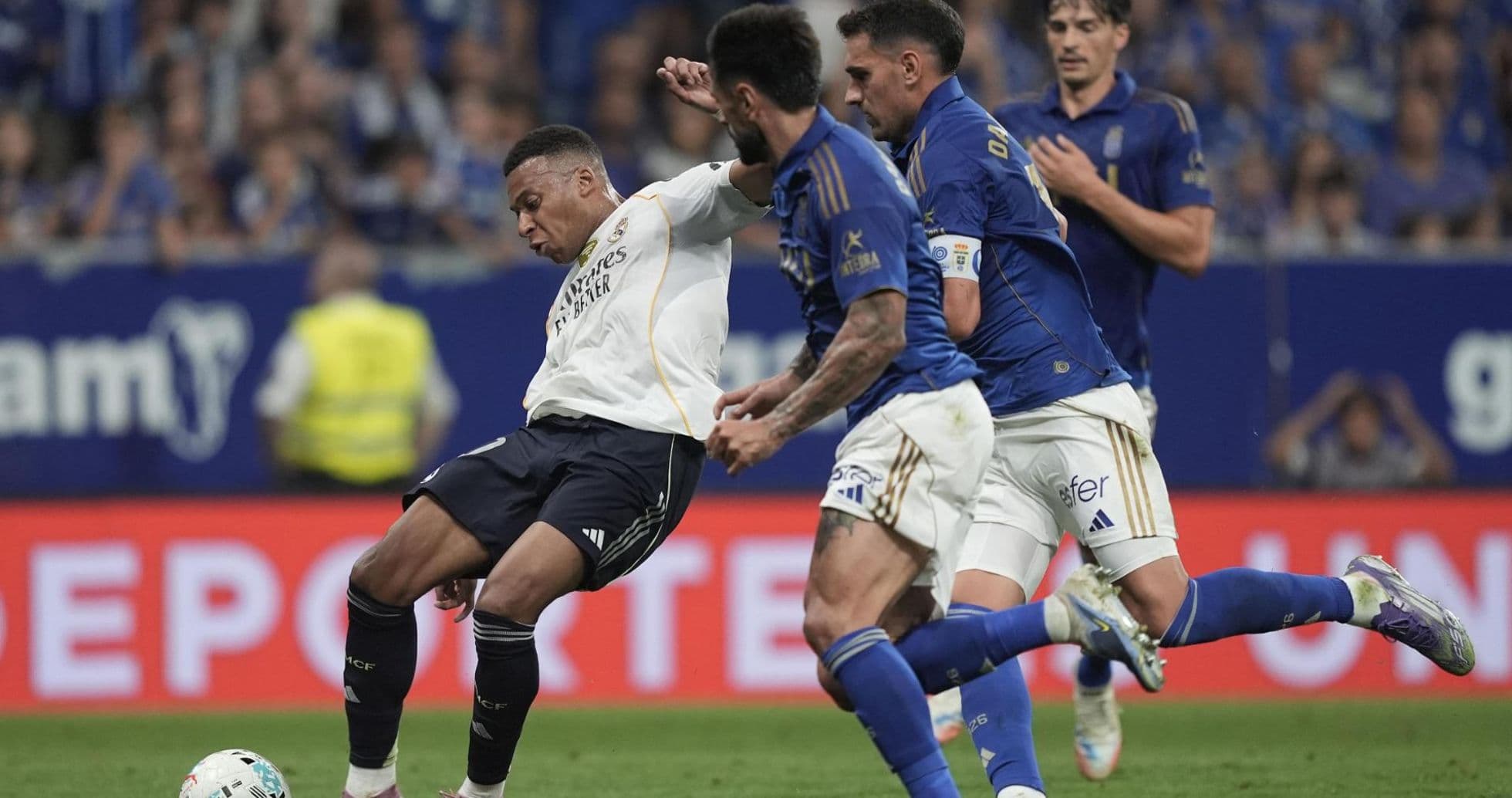
Within this context, the “Hunter vs Shield” matchup tilted heavily towards Madrid. Kylian Mbappé, La Liga’s top scorer with 24 goals and 5 assists overall, did not even need to start to loom over the contest from the bench. His season profile – 102 shots, 61 on target, and 8 penalties scored from 9 taken (with 1 missed) – represents an offensive force few defences can contain for 90 minutes. Even when not in the XI, his presence alters how a back line like Oviedo’s prepares and substitutes.
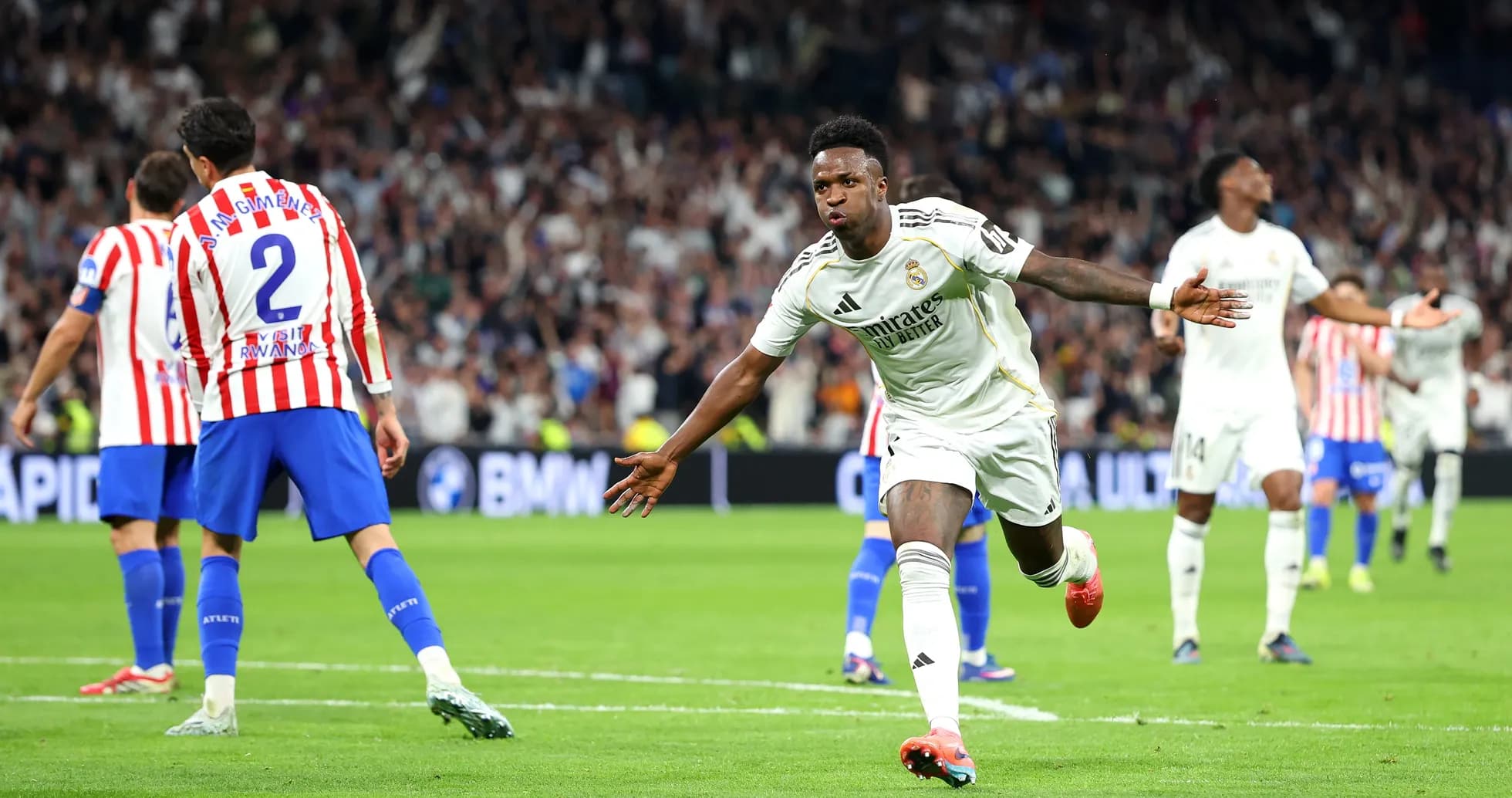
On the pitch, the primary hunter was Vinicius Junior. With 15 goals and 5 assists overall, plus 73 shots and 45 on target, he carries a constant threat both 1v1 and when attacking the half‑spaces. Up against N. Vidal and D. Costas on Oviedo’s right‑centre channel, Vinicius repeatedly forces defenders into duels – he has contested 395 duels this season, winning 196 – and Oviedo’s away record of conceding 2.2 goals on average on their travels hinted at a long night. F. Vinas, Oviedo’s own leading light with 9 goals and 1 assist overall, is a very different kind of hunter: a battling forward who has engaged in 484 duels and won 254, drawing 67 fouls but also committing 45, with 2 red cards to his name. He is both outlet and risk.
The “Engine Room” duel was equally decisive. For Madrid, the double pivot of Camavinga and Tchouameni provided the platform. Tchouameni’s positional discipline allowed Brahim Diaz and Mastantuono to drift inside, overloading A. Reina and Colombatto. Without the injured Dendoncker and Ejaria, Oviedo’s midfield lacked a true enforcer; N. Fonseca and Colombatto had to cover enormous horizontal distances just to keep Madrid’s 4‑4‑2 from morphing into a 4‑2‑4 in possession.
Statistically, the prognosis was always going to lean white. Real Madrid’s overall scoring average of 2.0 goals per game, rising to 2.3 at home, met an Oviedo defence conceding 1.6 overall and 2.2 away. Oviedo’s attack, averaging 0.7 goals overall and only 0.9 on their travels, was coming up against a Madrid back line that concedes just 0.8 at home and has collected 6 home clean sheets and 13 in total. Add in Madrid’s perfect penalty record this season – 12 scored from 12, with no misses – and their capacity to convert territorial dominance into high‑value chances is clear.
Following this result, the 2–0 scoreline felt like the logical expression of the underlying numbers. Madrid’s xG profile in such fixtures typically hovers well above two, while Oviedo’s limited away threat and structural absences made it hard to imagine them consistently breaking Courtois’ line. In narrative terms, this was a night where Real Madrid’s squad depth and tactical coherence absorbed a long injury list without losing identity, while Oviedo’s thin margins and disciplinary scars were once again exposed under elite pressure.