.svg&w=384&q=75 "GoalGist logo")
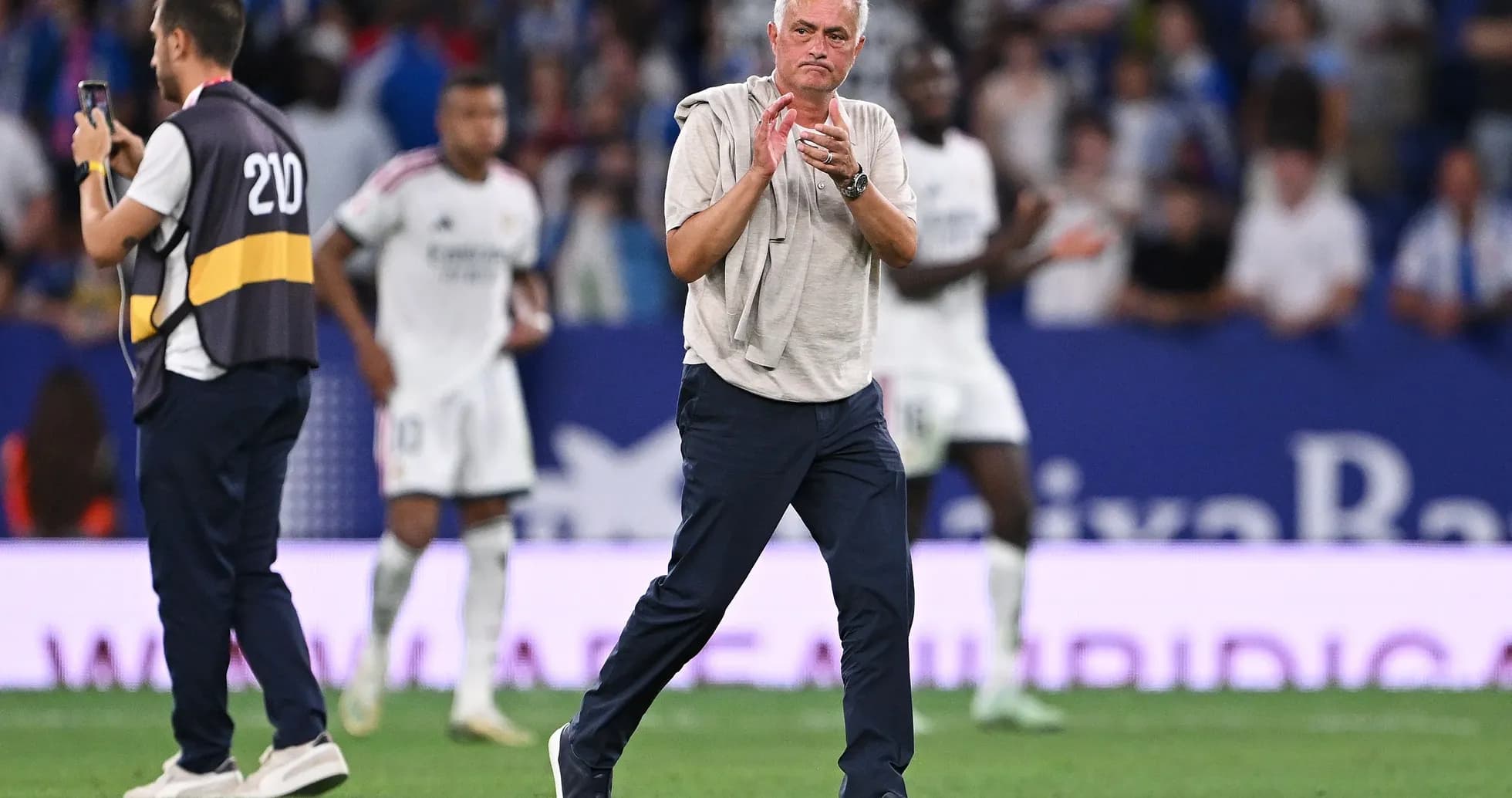
Real Madrid 2–1 Espanyol: Mourinho's Debut Drama
Real Madrid began the Mourinho era at full tilt. They tore into Espanyol from the first whistle, and the breakthrough arrived almost immediately.
Arda Guler, drifting into space on the flank, whipped in a vicious, bending cross. Jude Bellingham attacked it like a centre-forward, climbed above his marker and thumped his header home in the ninth minute. One chance, one goal, and the night seemed to be following the script.
It didn’t.
The early lead brought no calm, no control. Instead of folding, Espanyol regrouped and started to push Real Madrid back. The visitors’ swagger with the ball faded, and Thibaut Courtois suddenly had work to do.
On 26 minutes he produced a vital save, bailing his defence out from a dangerous opening that cut straight through the heart of the back line. It was a warning. Real Madrid did not heed it.
Minutes later, Alex Calatrava punished them. Espanyol carved out another clear chance, and this time Courtois could not rescue his side. Calatrava levelled the score and, on the balance of chances, it felt no more than Espanyol deserved.
For long stretches of the first half, the Catalan side carried the greater threat. Real Madrid had the advantage on the scoreboard, but Espanyol had the sharper ideas in the final third. Every turnover seemed to expose the same old fault line.
The equaliser was not an isolated mistake; it reopened a familiar debate about the structure of Madrid’s defence. There was no true defensive anchor in front of the back four in that key moment, nobody to step in early, break the move at source or anticipate the pass that slipped into the box. With so many attack-minded players on the pitch, every lost ball left a wide, worrying channel of space for Espanyol to drive into.
These are the details Mourinho has built entire careers on fixing. If he wants to stamp a more ruthless, disciplined identity on this side, that soft centre will be one of the most revealing themes to track in the coming weeks.
Espanyol sensed it. They kept testing those gaps, especially when Real Madrid tried to accelerate and then lost control of possession. The game became stretched, messy, exactly the kind of contest that exposes a team still learning its defensive habits under a new coach.
For all their talent, Madrid rarely pieced together the kind of sustained attacking dominance that kills a match. They had moments, half-chances, promising breaks. Not the steady, suffocating pressure that Mourinho sides once made their trademark.
And so the clock ticked on, the tension rose, and a draw began to feel inevitable.
Then the bench changed everything.
With the match drifting, Real Madrid found their winner from a substitute. In the 90th minute, Espanyol’s defence hesitated inside the area, a tangle of bodies and half-clearances. Espi reacted first. He pounced on the confusion, seized the loose ball and lashed it in, ripping the game away at the death and sealing the first three points of Mourinho’s second spell.
That strike underlined the power of fresh legs and sharp minds late on. It also covered up a more uncomfortable reality. Real Madrid did not win because they imposed a clear attacking idea over 90 minutes. They won because, in one chaotic moment, they were more ruthless than a tiring Espanyol back line.
On paper, Mourinho could not have asked for a better start: three points, a late winner, a sense of drama. On the pitch, many of the issues that have haunted Madrid over the last two seasons resurfaced.
The lack of varied attacking solutions when the initial plan stalls. The struggle to dictate tempo for long spells. The recurring gaps that invite opponents to create danger, even when Madrid appear to be in control. All of it flickered into view again in Catalonia.
It is too early to draw hard conclusions from a single game with a new-old coach on the touchline. The season has barely begun, the players are still adjusting to Mourinho’s demands, and sharper patterns will take time to emerge.
But if these same cracks appear against stronger rivals, what showed up against Espanyol will stop looking like early-season rust and start to resemble something deeper.
For now, the table shows three points and a winning start. Mourinho will take that. The performance leaves a different question hanging over the Bernabéu: was this just a scrappy opening-day escape, or the first sign that his return may not be enough to cure Madrid’s lingering flaws?