.svg&w=384&q=75 "GoalGist logo")
Qatar and Switzerland Battle to 1–1 Draw in World Cup 2026 Opener
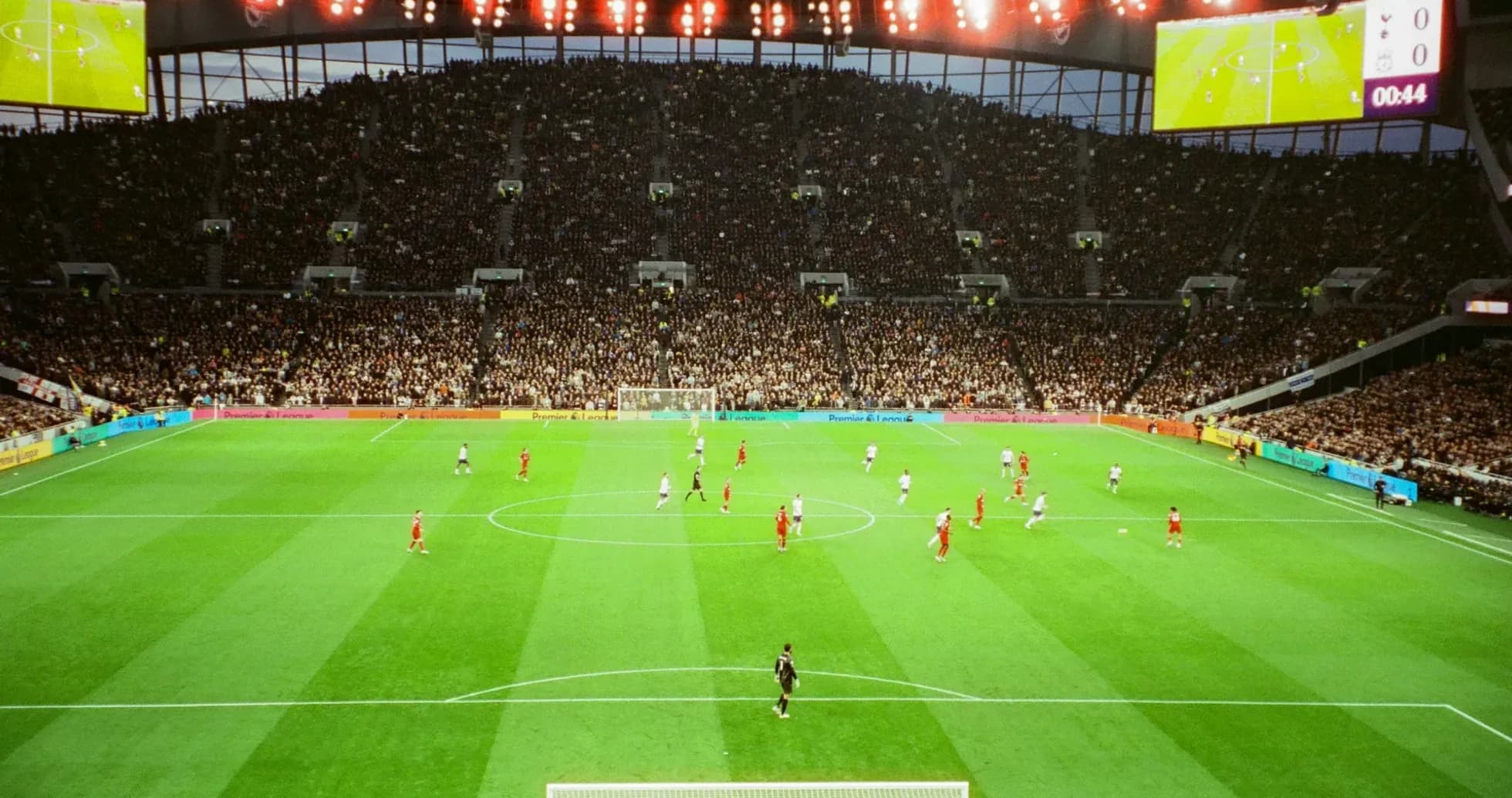
Under the California evening sky at Levi’s Stadium, Qatar and Switzerland opened their World Cup 2026 journeys with a 1–1 draw that revealed as much about their tactical identities as it did about their nerves. Following this result, both sides sit on 1 point in Group B, Switzerland ranked 1st and Qatar 3rd in the group snapshot provided, each with a goal difference of 0 after scoring and conceding 1 in total.
I. The Big Picture – Mirror Midfields, Different Intentions
Both coaches went with a 4-3-3 on paper, but the shapes told different stories once the ball rolled.
Julen Lopetegui’s Qatar lined up with Mahmud Abunada in goal behind a back four of H. Al Amin, Boualem Khoukhi, Pedro Miguel and A. Al Oui. In front, a compact midfield trio of I. Laye, A. O. Madibo and Jassem Gaber tried to weld industry to progression, while the front three of A. Afif, Y. Abdurisag and Edmilson Junior were tasked with stretching Switzerland on the break.
Murat Yakin mirrored the structure but not the rhythm. Switzerland’s back line of R. Rodriguez, M. Akanji, N. Elvedi and D. Zakaria stepped high and wide, with Granit Xhaka orchestrating from the middle band, flanked by R. Freuler and M. Aebischer. Ahead of them, R. Vargas and D. Ndoye flanked Breel Embolo, whose movement between the lines became the reference point of Swiss possession.
The statistical DNA of both sides after this opener is strikingly symmetrical: in total this campaign, Qatar have scored 1 and conceded 1, averaging 1.0 goal for and 1.0 against at home. Switzerland, on their travels, have also scored 1 and conceded 1, with an away average of 1.0 goals for and 1.0 against. Neither side has kept a clean sheet in total, and neither has failed to score in total. It is a group stage beginning defined by balance rather than dominance.
II. Tactical Voids and Discipline – Edges and Fault Lines
There were no listed absentees in the data, so both coaches had their full squads available. The voids, instead, were tactical.
For Qatar, the biggest early concern is control in the second phase. Jassem Gaber, who lasted 60 minutes, embodies this tension. He completed only 5 passes but was heavily involved in the duels – 8 in total, winning 3 – and, crucially, blocked 2 shots. His yellow card places him already on the disciplinary radar, and his profile underlines how much defensive firefighting Qatar’s midfield had to do to protect a back line that prefers to defend the box rather than space.
Mahmud Abunada also walks that disciplinary tightrope. The goalkeeper picked up a yellow card and committed the foul that led to a penalty, recorded as 1 penalty committed and none saved. Switzerland’s penalty record in total now reads 1 taken, 1 scored, 0 missed – clinical from the spot, even if they could not turn that into three points.
On the Swiss side, D. Zakaria’s yellow card in the 31–45’ window is emblematic. Switzerland’s only caution came in that late first-half band, a period where their aggression without the ball edged into risk. Zakaria was otherwise excellent: 56 passes at 96% accuracy, 3 tackles and 2 interceptions, and 10 duels contested, winning 6. But his booking will be noted by future opponents looking to drag him into repeated one-v-one duels.
Qatar’s yellow card timing is also telling. Heading into this game, 100.00% of their yellows came between 16–30 minutes. That early spikiness reflects a side that uses fouls as a tool to slow tempo and avoid being overrun in transitions. It is effective, but it also threatens to erode control if cards accumulate.
III. Key Matchups – Hunter vs Shield, Engine Room vs Engine Room
The “Hunter vs Shield” narrative in this fixture centred on Breel Embolo and Boualem Khoukhi.
Embolo, now on 1 goal in total this campaign, produced a forward’s performance that was both ruthless and connective. Across 90 minutes he scored from the spot, took 2 shots with 1 on target, and, strikingly, registered 5 key passes from just 8 total passes at 75% accuracy. He is not just Switzerland’s finisher; he is their attacking pivot, dropping into pockets to thread runners like Ndoye and Vargas through the channels.
Against him, Khoukhi emerged as Qatar’s defensive leader and unexpected scoring threat. In total this campaign, he has 1 goal from 1 shot, 1 on target, and his all-round defensive line is imposing: 34 passes at 70% accuracy, 1 successful tackle, 1 shot blocked and 2 interceptions. That blocked shot is more than a statistic; it symbolises Qatar’s low-block bravery, with Khoukhi stepping into the line of fire to keep his side alive.
In the engine room, the duel between Xhaka and Qatar’s central trio shaped the tempo. Xhaka’s metronomic distribution allowed Switzerland to sustain pressure, while Qatar’s midfield responded with density rather than dominance. Madibo and Laye closed passing lanes, leaving Gaber to shuttle and disrupt. The cost was that Qatar rarely built through the thirds, leaning instead on the individual creativity of Afif and Edmilson Junior to turn turnovers into attacks.
IV. Statistical Prognosis – Margins, xG Hints and the Road Ahead
We do not have explicit xG values in the data, but the penalty for Switzerland and Qatar’s more limited shot volume implied by their profiles suggest a slight underlying edge for Yakin’s side in chance quality. Switzerland’s ability to win and convert a penalty – now 1 scored from 1 in total – points to a team that can manufacture high-value moments even when open-play penetration stalls.
Yet Qatar’s resilience is structurally backed. At home, they average 1.0 goal for and 1.0 against, and their goal difference overall is 0 (1 scored minus 1 conceded). Switzerland mirror that with an overall goal difference of 0 as well, their away metrics identical in averages. Both are, numerically and tactically, finely poised.
Looking ahead in the group, the key intersection will be Qatar’s early-game aggression against opponents who build slowly, and Switzerland’s capacity to turn territorial control into non-penalty chances. If Qatar continue to channel their cards into the 16–30’ window, they risk walking a disciplinary tightrope. If Switzerland continue to rely on Embolo’s dual role as scorer and creator without adding secondary scorers, they may find draws like this recurring.
The tactical verdict: this was a match where structure met structure and neither blinked. Qatar showed they can suffer and still strike, anchored by Khoukhi’s authority and Abunada’s shot-stopping despite his penalty concession. Switzerland demonstrated control and composure, with Xhaka and Zakaria setting a high technical floor and Embolo carrying the attacking burden.
In a group that already feels compressed, this 1–1 at Levi’s Stadium reads less like two points dropped and more like a carefully drawn opening gambit. The numbers say parity; the patterns hint that the side who first adds a cutting edge beyond their primary stars will tilt the balance of Group B in their favour.