.svg&w=384&q=75 "GoalGist logo")
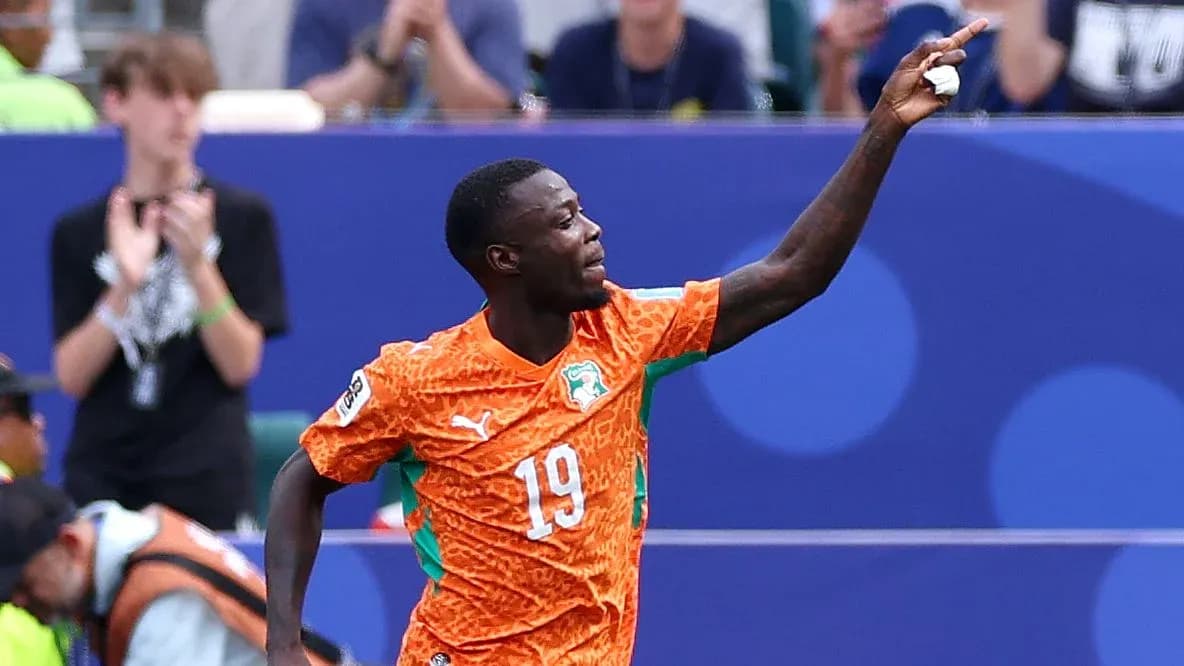
Nicolas Pépé's Redemption: Ivory Coast's Historic World Cup Journey
Nicolas Pépé was supposed to be yesterday’s man. Seven months ago he was watching the Africa Cup of Nations on television, exiled from the Ivory Coast squad and seemingly drifting away from the international stage.
In Philadelphia, he walked back into the spotlight and took the World Cup with him.
Pépé’s redemption, delivered in two strikes
It took him seven minutes. One loose defensive exchange, one sharp read, one ruthless finish. Yan Diomande pounced on the hesitation at the back, slipped the ball into space, and Pépé did the rest, sliding his shot home with the calm of a player who never doubted he would be back.
From that moment, the game belonged to him.
Curacao, brave and unbowed all tournament, tried to reset. They pressed higher, snapped into tackles, refused to let the occasion swallow them. Yet every time Ivory Coast broke forward, Pépé hovered in those awkward pockets where defenders hate to turn.
The second goal, when it came on 65 minutes, felt like a full stop on his recent past. Classic Pépé. A touch to open his body, a flash of that left foot, and the ball screamed into the top corner. Vintage, ruthless, emphatic. The kind of finish Arsenal fans once thought they would see every week, now reborn in Villarreal yellow and Ivorian orange.
Emerse Faé had recalled him on the strength of that revival in Spain, trusting that the winger who had lost his way in north London still had decisive nights in him. In Philadelphia, that decision looked like the work of a coach with perfect timing.
History rewritten for the Elephants
Ivory Coast have carried big names to World Cups before. Didier Drogba. Yaya Touré. Kolo Touré. Salomon Kalou. A generation that lit up European football but never escaped the group stage in 2006, 2010, or 2014. For all their star power, the World Cup always seemed to close its doors just as the Elephants reached for the handle.
Not this time.
The 2-0 win over Curacao sealed second place in Group E with six points and, with it, a first-ever ticket to the knockout rounds. A barrier that mocked the so‑called Golden Generation has finally fallen to a squad without the same global glamour, but with something else: edge, resilience, and a sense of timing.
Faé understood the moment. He allowed himself to enjoy it, but not to drown in it.
“My message to fans would be to enjoy this historic qualification, celebrate it,” he said. “Once we are done celebrating, please continue sending us positive vibes so we can go as far as we can in this tournament. I am very happy with this result. Not everything was perfect but not conceding is good for our morale. Now our group has to bask in this victory. It is easy to recuperate after a victory.”
The clean sheet mattered. Curacao were no tourists, no soft touch. They tested the Ivorian back line’s concentration, kept asking questions, and still found Yassin Fofana in an unforgiving mood whenever they broke through.
A squad growing up on the biggest stage
For all the attention on Pépé, Faé kept steering the conversation back to the group. This is a young World Cup side, learning in real time how to live with pressure and expectation.
“This group is growing. They are all at their first World Cup but they are growing well – it is a team that sticks together,” he said. “Even the players competing for similar positions are laughing together, always together. We have healthy competition which helps every player give their best.”
That togetherness showed in the way Ivory Coast managed the game once they were ahead. They did not chase chaos. They tightened the lines, trusted their structure, and struck when the moments came. Curacao managed just two shots on target, a statistic that underlined the Elephants’ control more than any flourish in possession.
The clinical edge at one end, the discipline at the other: this was not the swashbuckling, occasionally naïve Ivory Coast of previous tournaments. This looked like a team that understands tournament football.
Curacao bow out with heads high
For Curacao, elimination will sting, but the broader story is one of overachievement and pride. The smallest nation by population ever to reach a World Cup, they arrived as a curiosity and leave as a benchmark for every aspiring underdog.
They took a point off Ecuador, refused to be intimidated by reputations, and against Ivory Coast they stayed in the fight until the final whistle. Juninho Bacuna had the chance that could have rewritten the evening, a golden opportunity just before half-time to drag the score back to 1-1. He missed, and the margins that define tournaments snapped shut.
Still, the respect they earned was obvious.
“This team has outdone itself against world-class sides,” said coach Dick Advocaat. “[Ivory Coast’s] wingers are worth 50m each … The most important thing when we set out was qualifying for the Gold Cup. And only once we’d done that, qualifying for the World Cup.”
Asked if Curacao could return to this stage, Advocaat did not hesitate. “When you see how we played the second and third game,” he said, “that’s very promising.”
They leave the World Cup, but not the conversation.
A dangerous dark horse emerges
The bracket now stretches out in front of Ivory Coast. The round of 32 awaits, and with it a brutal assignment: either Kylian Mbappé’s France or Erling Haaland’s Norway.
On paper, the Elephants will be underdogs. On the pitch, they look like trouble.
Pépé is back to tormenting full-backs and finishing like a man who has rediscovered his conviction. The defense, so often the Achilles heel of African contenders on this stage, has tightened and toughened. The mood in the camp, by Faé’s own account, is light, competitive, and united.
Ivory Coast have finally stepped beyond the shadow of their own history. The question now is not whether they belong in the knockout rounds. It is how many giants they might trample before someone stops the Elephants in full charge.

