.svg&w=384&q=75 "GoalGist logo")
New Mexico United Dominates Phoenix Rising 4–0 in USL League One Cup
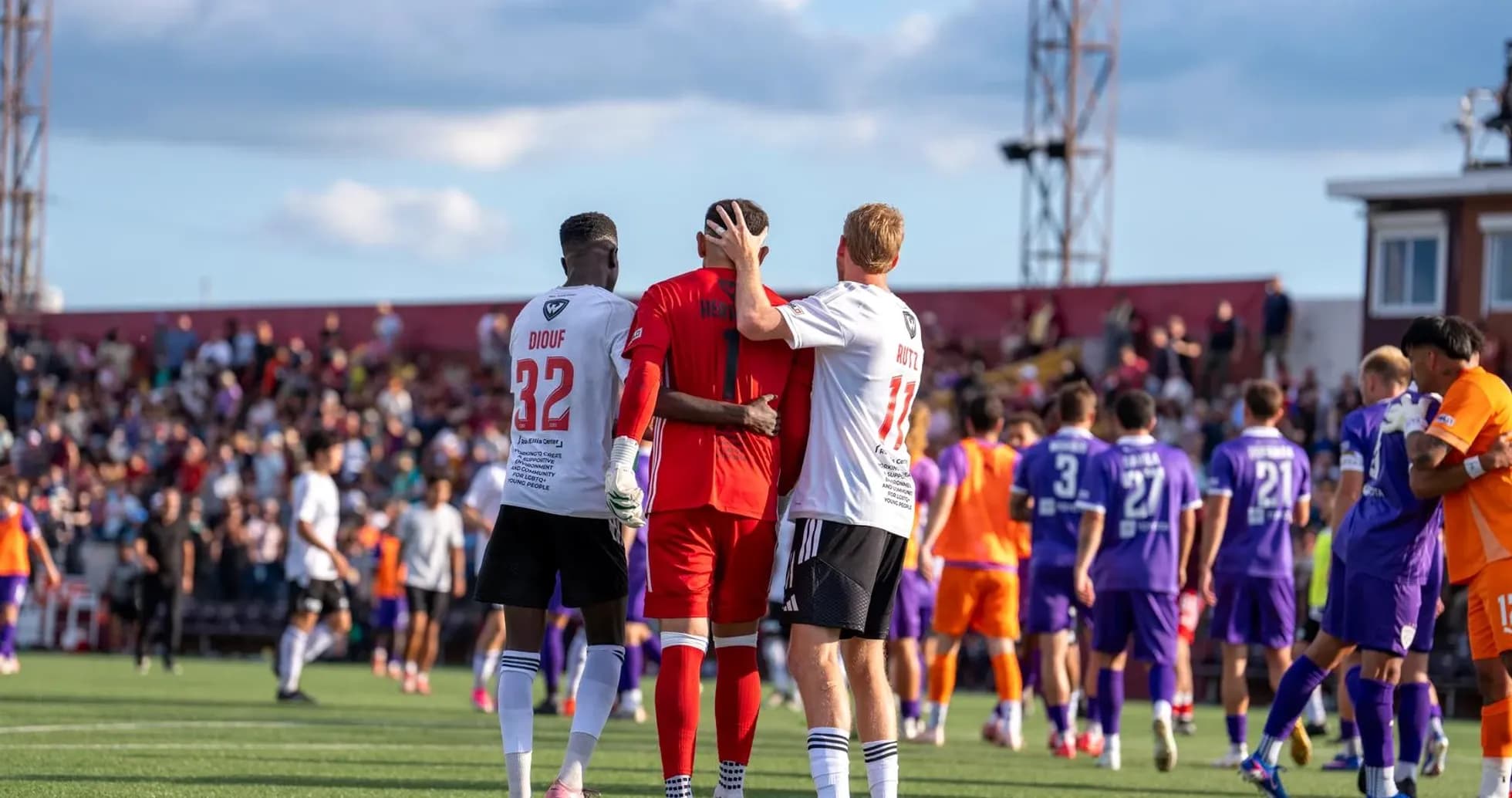
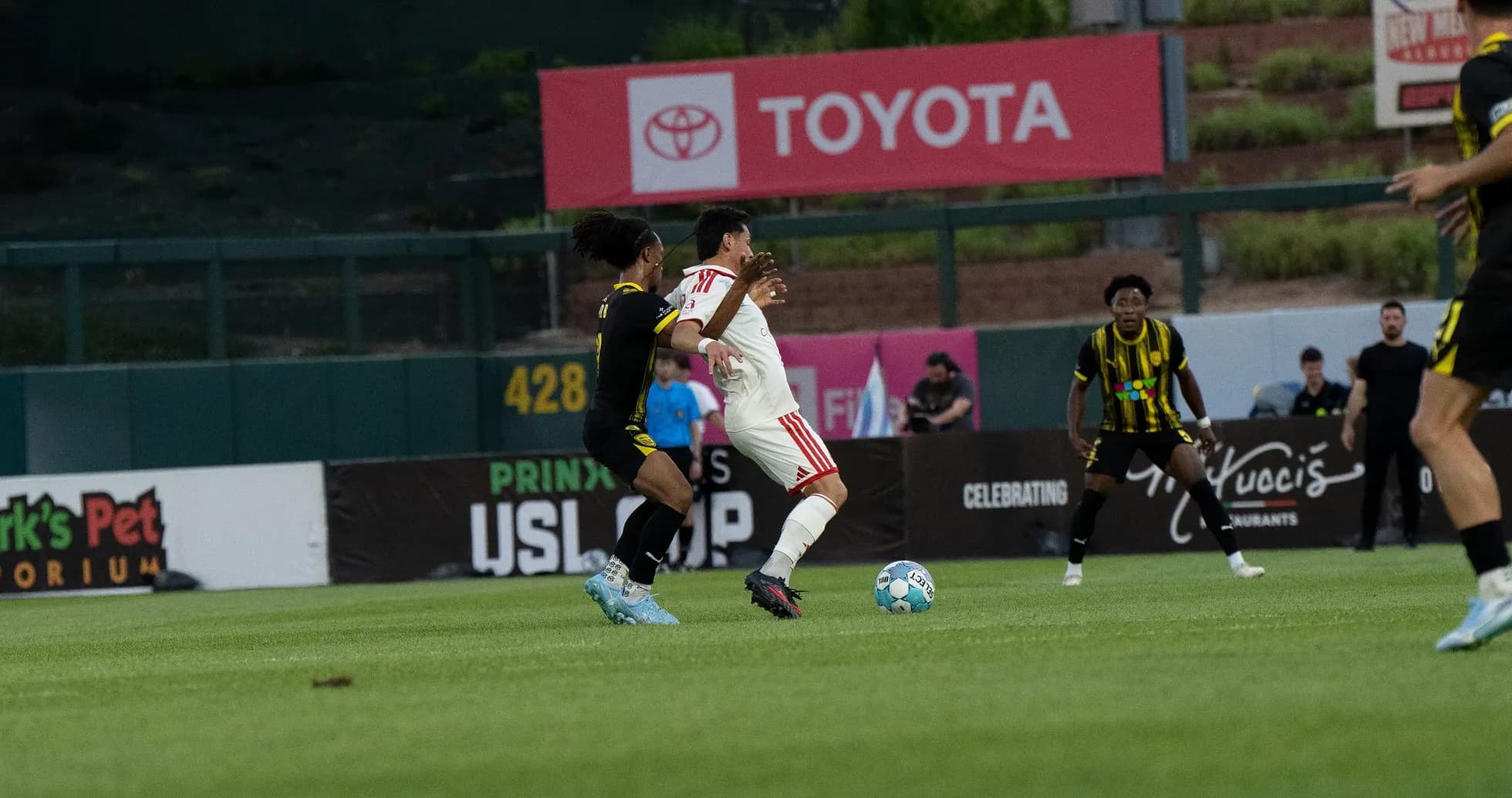
Under the lights at Rio Grande Credit Union Field at Isotopes Park, New Mexico United did far more than win a group game; they authored a statement. In a USL League One Cup night that began with cautious intrigue and ended in emphatic clarity, Dennis Sanchez’s side dismantled Phoenix Rising 4–0, a scoreline that echoed and inverted both teams’ seasonal DNA.
Heading into this game, the numbers had already drawn a stark contrast. New Mexico sat 3rd in USL Cup 2026, Group 2 with 6 points from 3 matches, their overall goal difference a slender +1 built on 6 goals for and 5 against. At home, though, they were a different beast: 2 wins from 2, 6 goals scored and just 1 conceded, an attacking average of 3.0 goals at home against only 0.5 allowed. Phoenix arrived 5th in the group, on 3 points, with a goal difference of -4. Their total record of 2 goals for and 6 against painted a side still searching for balance, and their away numbers were brutal: 0 goals scored, 4 conceded in their only previous road outing.
Those trajectories collided in Albuquerque, and the home side’s identity won out decisively.
I. The Big Picture: New Mexico’s home fortress takes shape
From the opening whistle, New Mexico leaned into what the data suggested they were built to do: dominate at home. With no fixed formation listed, their structure had to be read from the names. K. Shakes anchored the back line, supported by the defensive presence of M. Howell and the full-back pairing of N. Hamalainen and C. Gloster. In front, the blend of O. Jabang and Z. Bailey offered legs and bite, while N. Reid-Stephen and V. Noel knitted play, leaving D. Harris and the talismanic G. Hurst to stretch and finish.
The first half’s 1–0 scoreline at the break hinted at control more than chaos. New Mexico, who had already posted a home “biggest win” of 4–0 earlier in the competition, looked intent on matching that benchmark again. Phoenix, with C. Odunze in goal and a back line marshalled by N. Cross and P. Mar Boye, tried to sit compact, but the pattern of the group stage so far—2 total goals scored, 6 conceded—was hard to shake.
II. Tactical Voids: Discipline, pressure, and invisible absences
With no formal injury or suspension list provided, the absences in this match were more tactical than personnel-driven. Phoenix’s void was psychological and structural: a team that had yet to keep a clean sheet anywhere in the competition, with 0 clean sheets total and 4 goals conceded on their travels, tried to absorb waves of pressure without a proven template for defensive resilience.
Discipline told its own story across the campaign. New Mexico’s yellow card distribution had been heavily skewed toward the middle and late phases of matches: 50.00% of their yellows arriving between 46–60 minutes, and a further 25.00% from 76–90. That profile suggested a side that ratchets up intensity as games wear on, sometimes walking the disciplinary tightrope to protect leads or press for more. Phoenix, too, showed a pattern of strain under pressure: 40.00% of their yellows arriving between 46–60 minutes, and 20.00% in the final quarter-hour. In a match that ended 4–0, those trends likely manifested as Rising chasing shadows and arriving late into duels as New Mexico accelerated.
The absence of red cards for both sides across the competition underscored that, while aggressive, neither team had tipped into outright self-destruction. But Phoenix’s inability to turn that aggression into control—no clean sheets, 2 matches failing to score overall—left them exposed once New Mexico found their rhythm.
III. Key Matchups: Hunter vs Shield, Engine Room vs Enforcer
The symbolic “Hunter vs Shield” battle was between New Mexico’s free-scoring home attack and Phoenix’s fragile away defence. New Mexico’s home goals-for average of 3.0 versus Phoenix’s away goals-against average of 4.0 set the stage. Once G. Hurst began to find pockets between the lines, the contest tilted. Hurst, supported by the direct running of D. Harris and the wide craft of N. Reid-Stephen, repeatedly asked questions of Phoenix’s central pairing of Mar Boye and J. Gaydon. The visitors’ “biggest away loss” of 4–0 earlier in the campaign foreshadowed exactly the kind of collapse that unfolded again here.
In the engine room, O. Jabang and Z. Bailey formed the hinge on which New Mexico’s structure turned. Their job was twofold: protect K. Keller and the back line from Phoenix’s transitions and provide the first progressive pass into Noel and Reid-Stephen. On the other side, Phoenix’s D. Gomez and E. Ramirez were tasked with disrupting that rhythm and springing G. Studenhofft and J. Ping on the break. But with Phoenix’s total goals-for average stuck at 0.7 per match and 0.0 on their travels, the “enforcers” never truly turned into launchpads.
As the second half unfolded, New Mexico’s historical tendency to spike in intensity after the break—reflected in that 46–60 yellow card surge—translated into footballing dominance rather than mere fouls. The 1–0 half-time cushion swelled into a 4–0 full-time rout, echoing their earlier 4–0 home win and underlining the symmetry of their “biggest home win” metric.
IV. Statistical Prognosis: What this result says about both squads
Following this result, the numbers behind the narrative only harden. New Mexico’s overall goal difference, previously +1 (6 scored, 5 conceded), is propelled into far more comfortable territory by another four-goal haul and a clean sheet. Their home persona—now underlined by multiple 4–0 wins—marks them as one of the group’s most intimidating hosts, with a total goals-for average of 2.0 per match driven almost entirely by home performances.
Phoenix, by contrast, see their total goals-against climb from 6 and their goal difference sink further from -4. Their away profile remains stark: 0 goals scored across all away fixtures, with 4 conceded in each of their two road games. Any xG model would likely paint a picture of a side creating too little and conceding high-quality chances, especially once they fall behind and have to open up.
Tactically, New Mexico’s template is now clear. Shakes and Keller provide the platform, Hamalainen and Gloster the width, Jabang and Bailey the engine, and Hurst the cutting edge. With options like G. Zelalem, M. Vargas, J. Rennicks, L. Archimede and C. Nava on the bench, Sanchez has layers of control, creativity, and pace to rotate in late on—especially in those high-intensity final 15 minutes where his side already shows a 25.00% share of yellow cards.
For Phoenix, Pa-Modou Kah must confront a dual problem: an attack that has failed to score in every away outing and a defence that concedes 4.0 goals per match on their travels. The spine—Odunze, Mar Boye, Gomez—needs both structural protection and a clearer plan in possession if Rising are to turn their “LWL” form line into anything resembling consistency.
This 4–0 is more than a single bad night for Phoenix or a single good one for New Mexico. It is the crystallisation of trends already etched into the group stage numbers: New Mexico United as a ruthless home force, Phoenix Rising as a side still searching for an identity that travels.