.svg&w=384&q=75 "GoalGist logo")
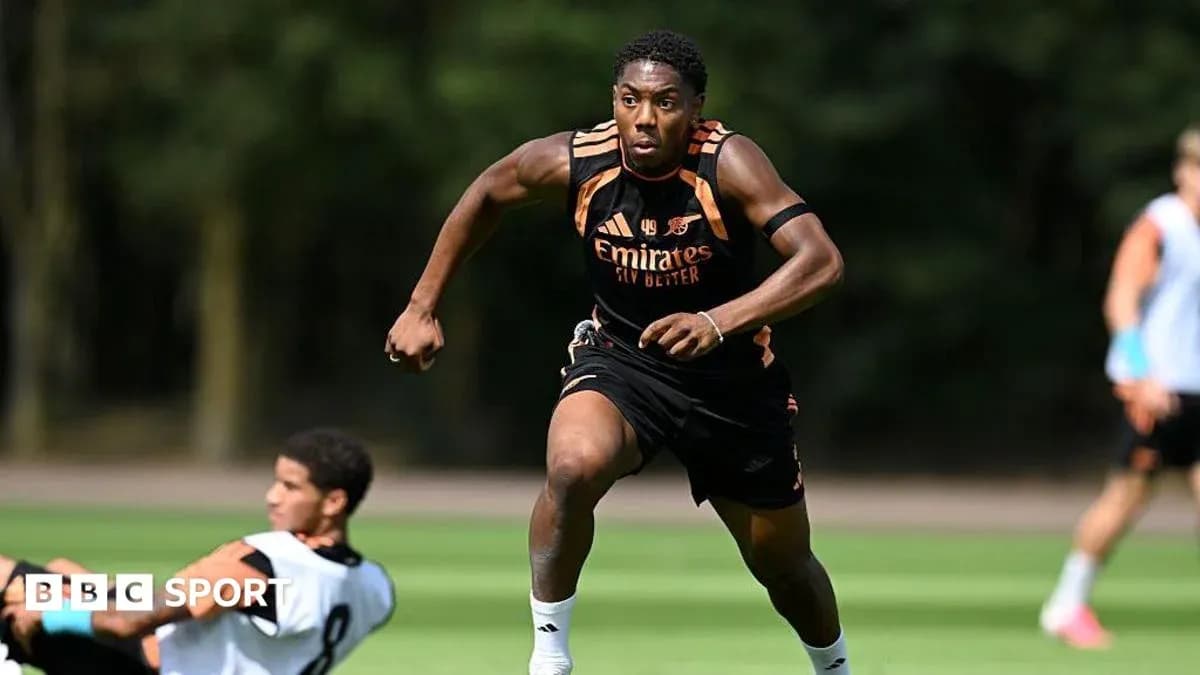
Myles Lewis-Skelly: Arsenal's Young Talent at a Crossroads
Myles Lewis-Skelly is yet to kick a competitive ball this season, but his name is already all over the market chatter.
The 19-year-old sits at the heart of a debate Arsenal did not expect to be having so soon: cornerstone of the next cycle, or expendable asset in a summer of financial juggling?
From breakout star to uncertain status
Two years ago, the picture looked simple. In 2024-25, Lewis-Skelly exploded onto the scene at left-back, forcing his way past more experienced options and rapidly being talked about as one of the Premier League’s most exciting young full-backs. His form carried him into the England squad and he became the youngest player ever to score on his Three Lions debut.
Arsenal moved quickly. The academy graduate was handed a new five-year deal the following summer, a clear signal that he was part of the club’s long-term plans.
Last season complicated that story. Riccardo Calafiori and Piero Hincapie both moved ahead of him in the pecking order, leaving Lewis-Skelly as Mikel Arteta’s third-choice left-back. For a player who had just broken through, it felt like the brakes had been slammed on.
Inside the club, conversations started to shift. By April, Arsenal were prepared to at least listen. Club sources indicated they would look to recoup a minimum combined £100m for Lewis-Skelly and fellow academy product Ethan Nwaneri if serious offers arrived.
Then the picture changed again.
Revival in his natural role
Given a run in his preferred position in central midfield at the end of the campaign, Lewis-Skelly caught fire. His late-season resurgence did more than restore confidence; it forced a rethink. Suddenly, this was not just a sellable asset. This was a player who might yet solve an internal problem.
That form has carried into pre-season. Lewis-Skelly has been one of Arsenal’s standout performers this summer and has started the past two friendlies as the Gunners tune up for Sunday’s Community Shield against Manchester City.
Circumstances have opened the door. Several midfielders are still working their way back after the World Cup, and £75m signing Bruno Guimaraes is only just settling into his new surroundings. In that gap, Lewis-Skelly has stepped forward again, hoping to turn this window of opportunity into something more permanent: a regular place in Arteta’s first-team rotation.
He wants to stay. Those close to the player are clear on that point, and Lewis-Skelly himself has made it known he is focused on establishing himself at Arsenal rather than engineering a move away.
The market, as ever, has other ideas.
United’s need, Arsenal’s stance
On Tuesday, headlines suggested Lewis-Skelly could be on the move, with two Premier League clubs reported to be interested.
One source told BBC Sport that he was offered to Manchester United in January. Arsenal, for their part, insist they have not actively offered him to anyone.
United’s need is obvious. Patrick Dorgu, their latest signing in the left-back department, has spent pre-season in a far more advanced role. After Michael Carrick took charge, Dorgu’s Premier League minutes came almost exclusively as a winger or wide attacker. Luke Shaw, who started every league game last season, still carries a patchy fitness record.
United have been linked with Newcastle’s Lewis Hall, but privately accept that move would be extremely difficult, especially after the departures of Sandro Tonali and Guimaraes from St James’ Park. Newcastle are in no mood to lose another key player.
Lewis-Skelly, in theory, ticks a lot of boxes. He could arrive as a left-back and still offer cover in midfield, potentially filling the much-debated third midfield role. Yet the feeling around Old Trafford is that, if they move in that area, they want a specialist full-back to push for an immediate starting berth rather than a hybrid option.
For now, there is interest, but no imminent deal.
Chelsea watching, but blocked by numbers
Chelsea’s name has also entered the conversation. Like United, they say they have been offered the chance to sign Lewis-Skelly. Like Arsenal, the Gunners maintain they have not put him on the table.
The London club’s squad dynamics make a move unlikely. Jorrel Hato and new signing Pep Chavarria already cover left-back, and with Chelsea out of Europe this season, fixture congestion will not be as severe. A third left-back would be a luxury, not a necessity.
Central midfield is also crowded. Chelsea currently have six options there, even with the possibility that Enzo Fernandez could be sold and Dario Essugo could depart on loan. Unless significant sales materialise, adding Lewis-Skelly would only swell the numbers without guaranteeing him the regular minutes he craves.
Right now, it would take major outgoing business at Stamford Bridge for Chelsea to become serious contenders.
Arsenal’s financial reality
All of this plays out against a harsh financial backdrop at Arsenal. The club spent heavily last summer, bringing in eight players for around £250m. They have already gone past £100m in this window and are still exploring further additions before the deadline.
Something has to give.
Gabriel Jesus and Gabriel Martinelli are understood to be available for transfer if suitable offers arrive. Fabio Vieira and Reiss Nelson do not feature in Arteta’s plans. Christian Norgaard has already gone to Everton for £7m and Leandro Trossard has joined Besiktas for about £15m.
Lewis-Skelly sits in a different category. As an academy graduate, any fee for him would count as ‘pure profit’ in the accounts. He knows it, too. When Arsenal celebrated their title at Selhurst Park on the final day of last season, he captioned a picture of himself with the Premier League trophy: “pure profit”.
That line cut to the heart of modern football. Players are assets as much as athletes, and homegrown talents can be the cleanest way to balance the books.
The landscape has shifted, though. The new Squad Cost Ratio (SCR) rules mean clubs can no longer book the full benefit of an academy sale in one go. Any transfer income is now spread evenly over the length of the player’s contract. For Lewis-Skelly, tied down to a long-term deal, that reduces the immediate accounting boost Arsenal would gain from cashing in.
He is still valuable. Just not quite the instant financial fix he might have been under the old regulations.
A decision still waiting
So Arsenal hesitate. On one side, a young, versatile, homegrown player who has just reminded everyone of his quality in his natural position and is shining again in pre-season. On the other, a squad that needs trimming, a wage bill that needs managing, and a market that always pays a premium for English talent.
His path to the XI is under threat after Guimaraes’ arrival, and competition in midfield will only intensify once the World Cup returnees are fully up to speed. Yet with so many matches on the calendar and Arteta’s demands for depth in every position, Lewis-Skelly still has a credible route to the minutes he wants.
For now, there is no move on the verge of happening. No agreement. No green light.
But there is also no guarantee that the boyhood academy product, the breakout full-back turned midfield hope, will be wearing an Arsenal shirt when this window finally slams shut.
That call, as the pressure of the deadline builds, may define not just his career – but the shape of Arsenal’s next era.