.svg&w=384&q=75 "GoalGist logo")
Craig Bellamy's Decision to Stay with Wales: Insights from FAW's David Adams
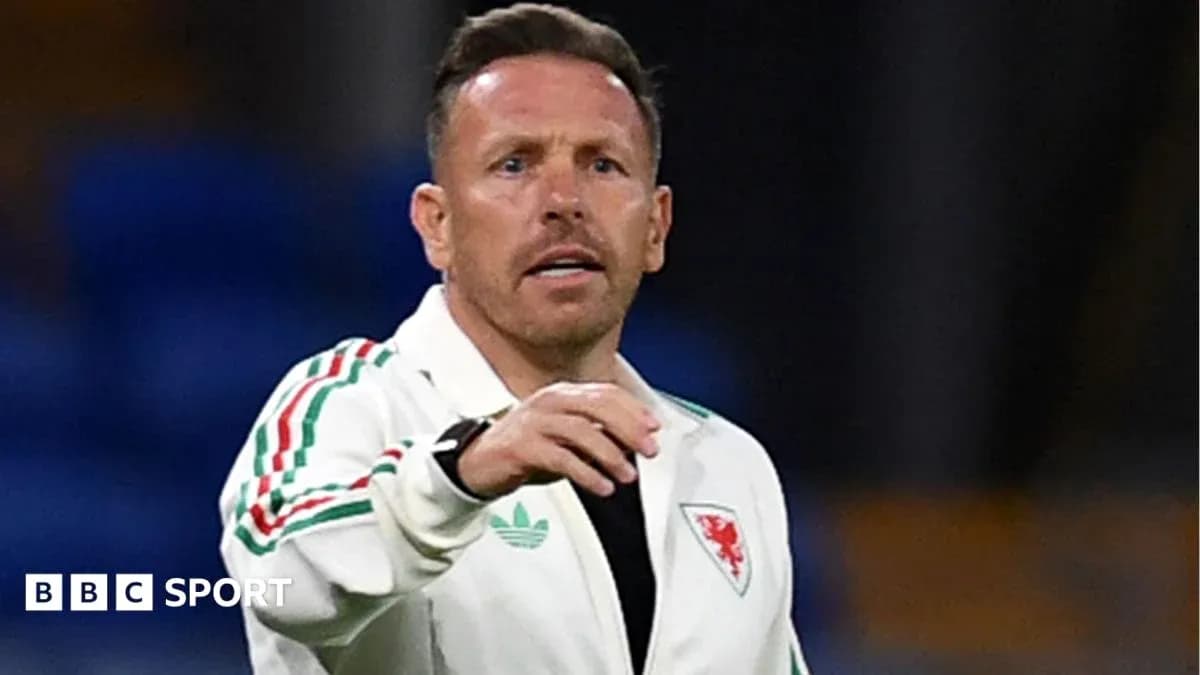
Craig Bellamy was right to sit down with Burnley in the summer. That is the firm view of Football Association of Wales chief football officer David Adams, who insists the Wales boss handled the saga with honesty, even as speculation raged over his future.
Bellamy, whose FAW contract runs to the end of Euro 2028, has never hidden his ambition to return to the week‑to‑week grind of club management. When Burnley, one of his former clubs, came calling after Scott Parker’s departure, talks were inevitable. They happened. They were serious. And for a while, it looked as if Wales might lose their head coach almost as quickly as they had secured him.
Instead, Bellamy stayed put. Publicly, he has since stressed it was his decision to remain in charge of the national team. Adams backs that up and goes further: in his eyes, Bellamy was right to explore the offer.
“The way it played out was unfortunate, things get leaked these days,” Adams said on BBC’s Feast of Football podcast on BBC Sounds. The noise grew as the days dragged on. Reports suggested Bellamy had accepted the Turf Moor job. Inside the FAW, the picture was different.
“Internally, Craig has always been very open and transparent about opportunities,” Adams explained. “We all know that Craig wants to eventually go and work in club football, he's made that very clear across his time here. For him to go and speak to Burnley was the right thing to do, knowing that he does want to do that at some point.”
Adams was not watching from a distance. He held regular conversations with Burnley chairman Alan Pace, just as he had during the process that saw Bellamy leave the Lancashire club in 2024 to take the Wales job.
“We were happy for Craig to go and speak to them,” Adams said. “And then unfortunately, the way it played out was that they were saying he had accepted the job when he hadn't. Craig was telling us the same thing as that and then one morning he rang and said ‘I'm staying’.”
That call settled the short-term drama. It did not remove the long-term reality. Bellamy still wants club football one day. Adams knows it, accepts it, and is planning for it.
“Craig's very transparent, we speak a lot, we get on well, so that's how it landed really,” Adams said. But behind that calm tone sits a clear succession strategy.
“Behind the scenes in my job, I have to be alert to these things and I have to have a list of people in the background that I'd speak to if [Bellamy's departure] ever materialised,” he admitted. The FAW believe they have found a formula that works.
“We've got a profile of what we're looking for, which we've been pretty successful in doing by selecting former international players into the role,” Adams said. “That's always our preference, to find someone who is connected to Wales, is passionate about Wales and has Wales in their heart. That's been a really good profile of manager to look at in the last 10 years and we would try and stick to that profile ideally.”
So while Bellamy stays and Wales push towards Euro 2028, Adams is already thinking about the next chapter. And not just in the men’s game.
A “game-changer” for women’s football in Wales
The FAW’s horizon has widened dramatically with confirmation that Cardiff’s Principality Stadium will host the women’s Champions League final in 2029. Adams did not underplay its significance. He called it “a game-changer” for the country.
Cardiff is no stranger to the showpiece. Cardiff City Stadium staged the women’s final in 2017, the same year the men’s Champions League decider came to Principality Stadium – rebranded as the National Stadium of Wales for Uefa events.
This time, the FAW want the event to accelerate a transformation already under way.
“It's absolutely incredible, a game-changer for us,” Adams said. He has watched the growth at close quarters. “When I first came into the job, we were getting maybe 1,000 people at Rodney Parade for women's games. We got 15,000 at Cardiff City Stadium in this last campaign, so you can see the growth and how quickly the game is moving.”
The numbers tell the story. So do the venues. Young girls now see Wales players walking out at the home of Cardiff City and at Principality Stadium. Adams calls that “just inspirational for those players” – a visual proof that the pathway exists, or at least is starting to.
On the pitch, Wales’ women have already broken new ground. Under Rhian Wilkinson they reached Euro 2025 in Switzerland, their first appearance at a major tournament. The next target is clear: a World Cup debut.
They continue their 2027 World Cup qualifying push with a double header against Albania in October. Longer term, the bar rises again. The 2035 women’s World Cup will be staged in the United Kingdom, with England, Northern Ireland, Scotland and Wales all hosting matches.
Wales want to be more than just hosts. They want to qualify, compete and stay there.
Building a pathway that lasts
For that, talent alone is not enough. The FAW need structure. Adams is blunt about the gap that still exists.
“Our goal is to create a pathway, which hasn't been there for women's football, where girls can actually play in a talent system which prepares them to play in tournament football on a consistent basis,” he said. “I don't think we're there yet, personally. I think what we've done in the last three years is fantastic, with the girls' regional programme.”
The regional system has started to funnel promising players into national squads. The next step is harsher, and more ambitious.
“But now we've got to try and make sure the girls graduate out of that system and play in the top leagues across Europe,” Adams said. “That's what gives you the best chance of qualifying consistently for major tournaments.”
So while one eye stays on Bellamy’s future and the delicate balance between national-team stability and club ambition, the FAW’s broader project is clear. Wales want coaches with the country in their blood and players hardened by Europe’s best leagues, walking out into a Principality Stadium packed for women’s finals and men’s qualifiers alike.
The question now is not whether the game is growing in Wales. It is how quickly the structures can catch up with the ambition.