.svg&w=384&q=75 "GoalGist logo")
Matthijs de Ligt's Comeback: A Crucial Return for Manchester United
Matthijs de Ligt is almost back. Finally.
The Dutch centre-back has been stuck on the sidelines for close to a year, his career stalled by a stubborn back injury that first forced him out in November 2025. What began as a short-term problem turned into a draining, stop-start ordeal that refused to ease.
For six months he tried to avoid the operating table. Rest, rehab, specialist programmes – nothing worked. In the end, there was no escape. Surgery in May ended any lingering hope of making the 2026 World Cup and drew a hard line under a season lost to pain and frustration.
The decision hurt. De Ligt admitted as much in a raw message on social media, outlining how half a year of graft had led to one brutal conclusion: “After six months of treatment and working hard to get back, surgery was the only option left.” He spoke of his disappointment at not being able to help Manchester United, and of the heartbreak of missing the World Cup.
Now the tone around him is changing.
Back at Carrington, the 25-year-old is finally stacking training sessions together. United’s medical staff are encouraged by his progress and expect him to be available for selection once the current international break ends. After months of individual work and careful load management, he is edging towards the one thing he has craved most: a place back in the matchday squad.
United need him. Their backline has creaked in his absence, and Michael Carrick has made no secret of how important this next phase of recovery is. Speaking after a 1-1 draw with Fulham, the United manager pointed to the cavalry on the horizon.
“Amad [Diallo], hopefully by the time we get back, he will have trained with the group. Matta [De Ligt] is working towards his fitness as well,” Carrick said, hinting at a defensive reinforcement that could reshape his options.
The calendar offers an immediate test. United return to Premier League action against Tottenham Hotspur on October 10, a fixture that rarely allows anyone to ease their way back. Carrick has stopped short of promising De Ligt will feature against Spurs, but the fact the defender is back in full team training suggests his comeback is no longer a distant target. It’s close.
His return matters beyond Manchester.
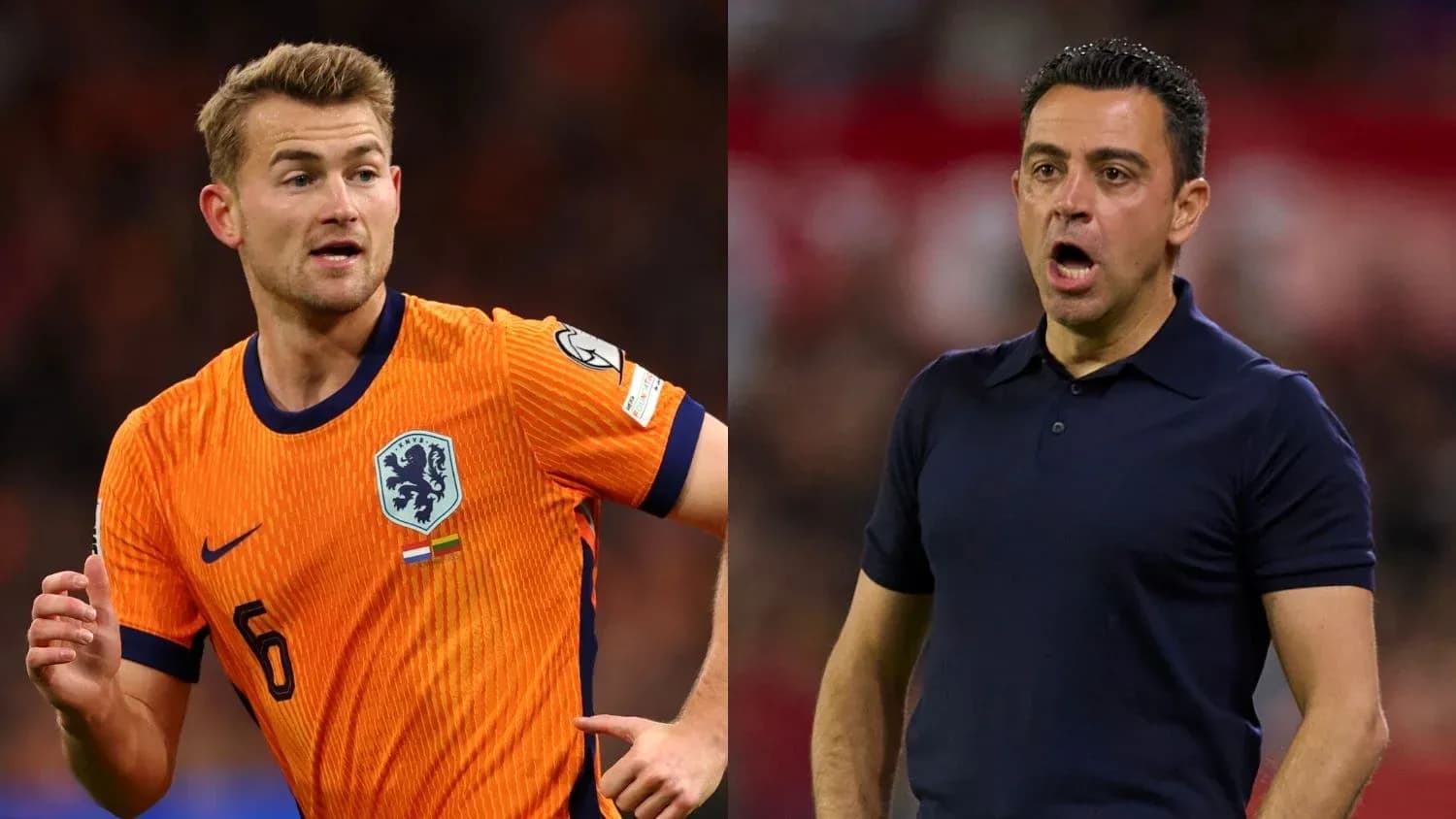
Under new national-team boss Xavi, the Netherlands are bracing for a demanding run of Nations League fixtures against Germany, Serbia and Greece. De Ligt has not kicked a ball competitively for months, yet he remains central to Oranje planning.
“Yes, we’re in touch with him and Manchester United,” Xavi said as he assessed his options. “He’s been through a tough time. I’ve also been in touch with Frenkie de Jong and Xavi Simons recently. We need all our players, especially these guys.”
The message was clear. De Ligt has not been forgotten.
Xavi doubled down on that stance, underlining how closely the national staff are tracking the centre-back’s recovery. “He’s doing well. We are checking how are they. We want to check because we need all the players. In this case, De Ligt is an important player. He could be important in the future.”
For a former Ajax captain whose career has rarely slowed since his teenage breakthrough, this enforced pause has been a brutal examination of patience and mentality. Training alone. Watching tournaments from home. Seeing others take the minutes and the spotlight that once seemed guaranteed.
Now comes the real test: turning medical clearance into match sharpness.
If De Ligt proves his fitness over the coming weeks, United’s defence instantly gains authority, aerial presence and leadership. The knock-on effect is obvious – a calmer backline, more control in big moments, and a manager with the option to build his structure around a genuine defensive pillar.
For the Netherlands, a smooth domestic return would do even more. It would push De Ligt straight back into the heart of Xavi’s plans, not as a nostalgic name but as a current, reliable cornerstone for the next phase of Oranje football.
After a year defined by what he couldn’t do, the question now is simple: how quickly can Matthijs de Ligt remind everyone what he still can?