.svg&w=384&q=75 "GoalGist logo")
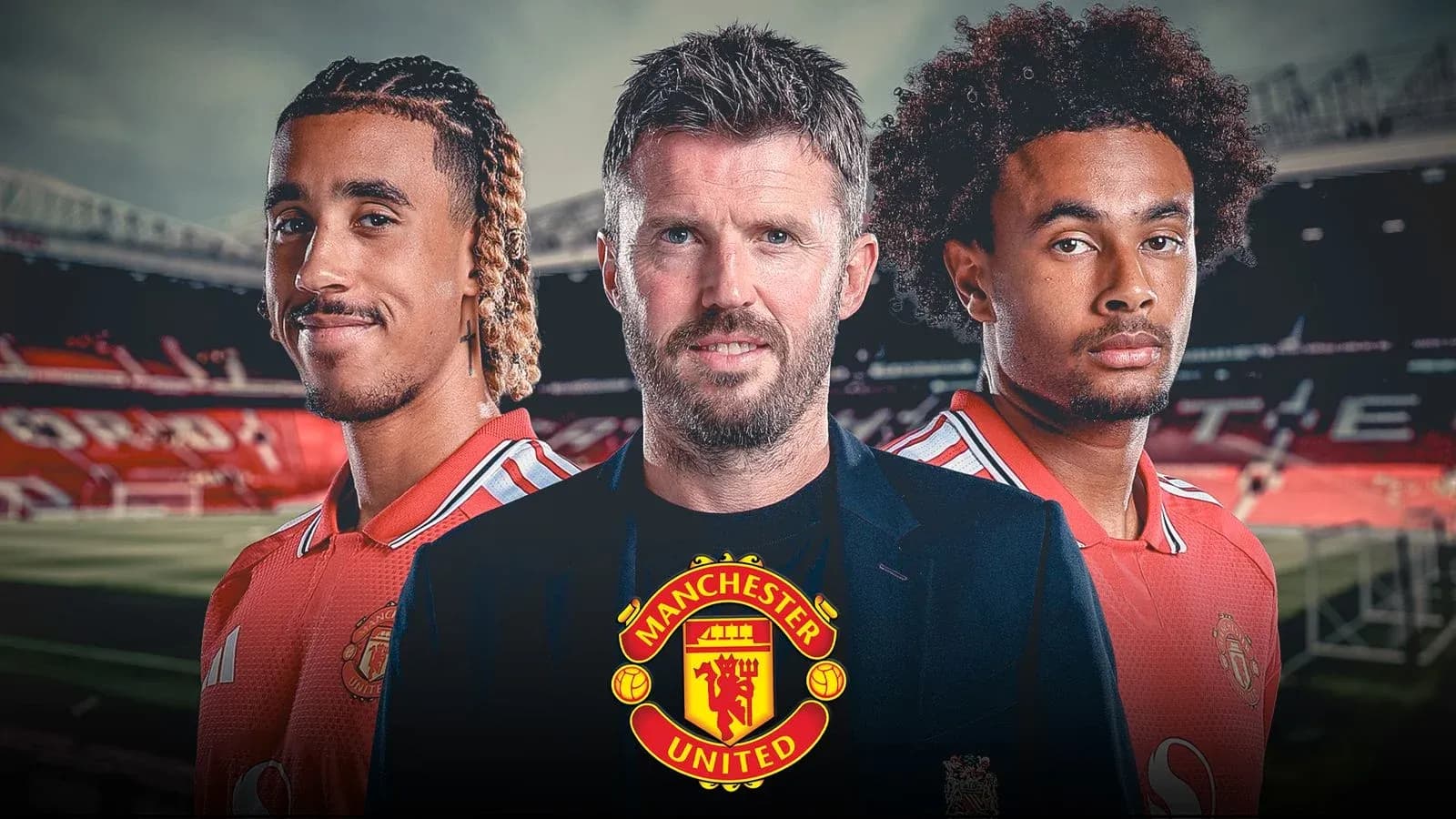
Manchester United's Pressure Mounts Ahead of Champions League and Derby
“It puts a bit of pressure on United. They've got City next week and European games starting in midweek.”
Gary Neville tossed that line out after Manchester United’s 2-2 draw with Everton. It already sounds like the headline for their week. It may only be September, but the temperature around Michael Carrick has gone up a few notches. This next stretch feels big. Uncomfortably big.
An ‘easy’ start that’s slipping away
When the 2026/27 Premier League fixtures dropped, the numbers painted a friendly picture for United: on paper, the statistically easiest opening six games in the division. Six matches to build rhythm, confidence, points.
Three games in, they’ve done the opposite. They’ve dropped more points than they’ve collected. The margin for error has shrunk before autumn has even settled in.
And now the gentle slope turns into a climb.
On Thursday, United launch their Champions League campaign against Azerbaijani champions Sabah. Three days later, it’s the first Manchester derby of the season. Two very different stages, one unforgiving spotlight.
Carrick will surely be tempted to rotate in Europe. He almost has to. That makes Thursday the first real stress test of his squad rather than just his favoured XI. Strip away the branding and the big names, and a blunt question hangs over Old Trafford.
Is this group actually deep enough?
A big squad with small margins
The popular view is clear: United’s transfer work has left them light where it matters, too reliant on the same core of players to carry them through three-game weeks.
The numbers tell a slightly different story – and underline a different problem.
According to Transfermarkt, United have the second-biggest squad in the Premier League. On the surface, that screams depth. Look closer and the balance is skewed.
They’re stacked in attacking areas, ranking highest for forward options. But in midfield they sit only eighth for depth. In defence, they slip to 10th. Zoom in further and the picture gets uglier: ninth for right-back depth, 18th at left-back, a position that never seems far from debate thanks to Luke Shaw’s injury record.
They did this to themselves. Since 2022, only Everton and Liverpool have invested less in their backline than United. For a club that has spent so much, that blind spot is remarkable.
One issue is the imbalance. The other is harsher: the gap in quality once Carrick starts turning to his bench.
United have operated under financial restrictions, but even that comes with a caveat. Since 2022, they still hold the highest net spend of any Premier League club. All that money, yet they still don’t have a squad that can genuinely push the starters for their places. When Carrick rotates, United change – and not in a good way.
What happens when Carrick turns to the bench
Take Everton as a case study. Carrick waited until the 70th minute to make his first substitutions. From that point, United’s personality on the pitch shifted.
On paper, they spent more time in the opposition half. That sounds positive. It wasn’t. The possession became less incisive, with fewer passes finding the final third and a drop in chances created.
At the same time, United contested fewer duels. They ceded the physical battle, invited Everton on, and allowed far more opportunities against them.
Context matters. Everton were chasing the game, throwing more at it. The final 20 minutes will never mirror the first 70. But the pattern is becoming familiar: when Carrick leans on his fringe players, the performance level dips.
Benjamin Sesko is the obvious exception, the one substitute who consistently changes the mood. One impact player, though, does not equal a robust squad.
You see the same trend against Hull. On the surface, the metrics suggest United improved after the changes. But the detail tells the real story. Four of the starters that day were dropped for the next two fixtures. That Hull match came too early in the season, with several players still building fitness, forcing Carrick to shuffle his pack.
His substitutions in that game simply nudged the line-up closer to the side he actually trusts – the one that then faced Ipswich and Everton. When he moves away from that trusted core, the level drops.
And that’s the crux. Even when Carrick alters fewer than half of his XI, the team suffers. Those on the fringes either rise to the standard or leave their manager exposed, not just this week but across the campaign.
A European audition with derby stakes
That’s why Thursday night looms so large for a certain group of players.
If you’re Leny Yoro, Patrick Dorgu, Andrey Santos or Joshua Zirkzee, this isn’t just a European fixture against Sabah. It’s an audition in front of a fanbase that has already started to question the club’s £1bn rebuild.
Of course they all want a taste of the derby. Everyone does. But first comes the job of getting United’s Champions League campaign off on the right track. Slip up, and the noise around Carrick and his squad management will swell.
Neville talked about Carrick needing to earn the supporters’ trust. That responsibility doesn’t rest solely in the dugout. It sits with the players who have been waiting for their chance, too.
Deliver on Thursday and some of the anxiety around Old Trafford will ease, even if only slightly. Fail, and that “bit of pressure” Neville mentioned could quickly feel like the weight of an entire season.