.svg&w=384&q=75 "GoalGist logo")
Manchester United's Pre-Season Victory: Insights from Trondheim
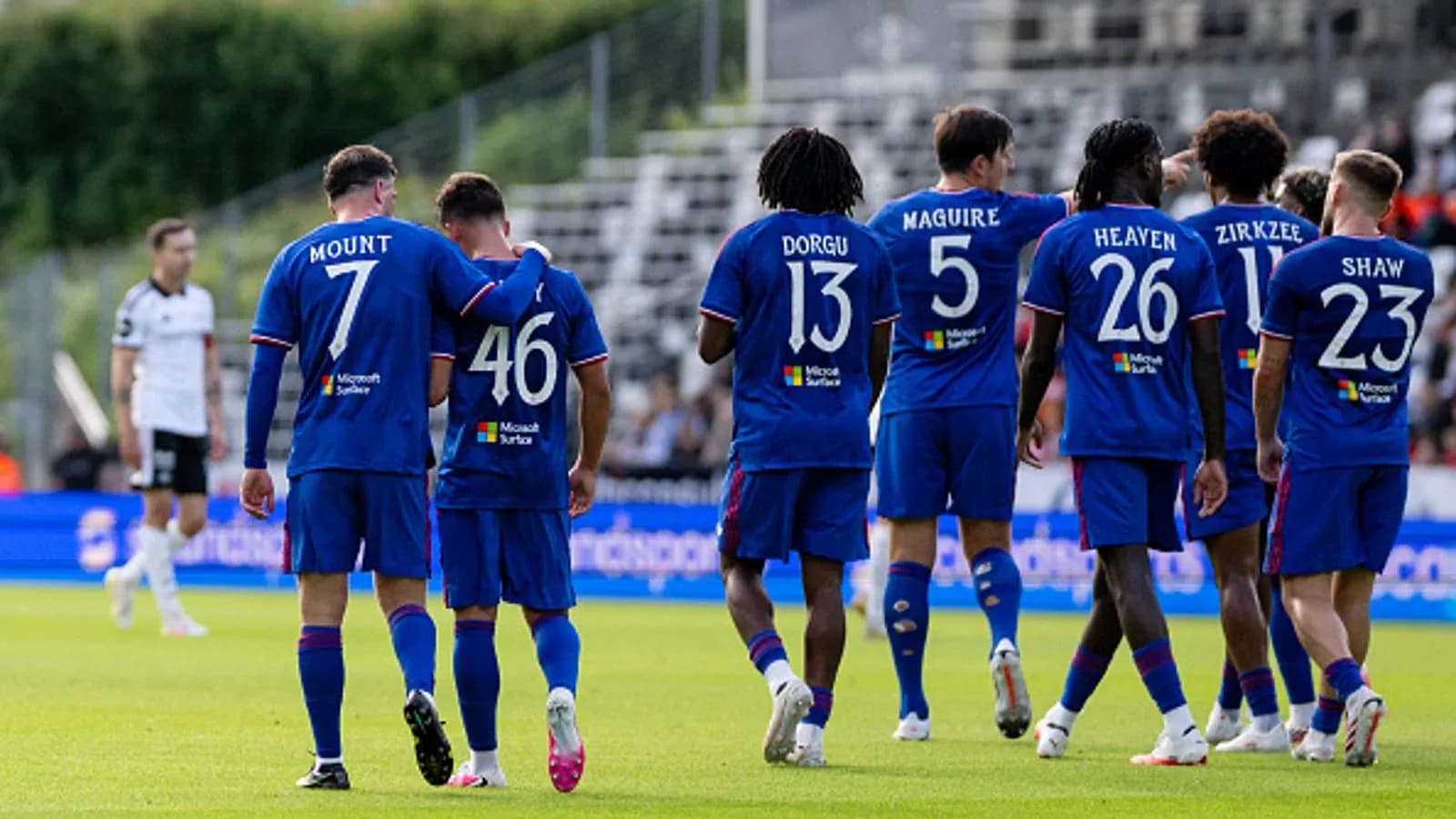
Manchester United hit five in Trondheim, but the scoreline told only half the story. This was their first win of pre-season and, more importantly, the clearest glimpse yet of what Michael Carrick wants this team to be.
Six days after losing to Wrexham, United dismantled Rosenborg 5-0 in Norway. The opposition were no Premier League heavyweight, but they were 13 games into their league campaign and should have been sharper, stronger, fitter. Instead, they were pulled apart by a United side that looked different. Not just better. Different.
A new face to ‘Carrick-ball’
When Carrick first took the reins on a temporary basis, United became a counter-attacking machine. They thrived in chaos. Fast breaks, quick turnovers, space to run into. Bryan Mbeumo and Patrick Dorgu flying down the wings, Bruno Fernandes and Matheus Cunha threading passes through gaps that barely existed.
The numbers backed it up. From that first 2-0 win over Manchester City to the end of the season, United ranked third in fast breaks per game at 1.53. They were joint-top for goals from fast breaks per 90 (0.24) and second in expected goals from those situations (0.23). They were lethal when the game opened up.
On the ball, though, they were ordinary. Thirteenth in overall possession. Eleventh for average possession duration. Once again, as has so often been the case since Sir Alex Ferguson left, United looked uncomfortable when asked to probe against a low block, to dictate rather than react.
Rosenborg, on paper, should have exposed that. A team in mid-season rhythm, with superior fitness and cohesion, ought to have used that advantage to control the ball and the tempo, forcing United to live off scraps and transitions.
They didn’t. United, without Fernandes or Cunha, were the ones who looked at ease in possession.
Joshua Zirkzee was central to that shift. He offered a focal point, a player who could make the ball stick, link play, and allow United to build rather than simply break. There were spells where Rosenborg were simply dragged around, pulled into areas they didn’t want to go.
United still broke with speed when the chance came. The second and fourth goals came straight from that familiar, ruthless transition play. That weapon is not going away. But the balance is changing. With Carrick now the permanent manager, this felt like the first real sign of a tweak in philosophy – the kind of tweak that explains why the club were so drawn to a midfielder like Youri Tielemans, someone who can control games as well as join them.
Zirkzee’s night – but what does it change?
Zirkzee left Trondheim with two goal contributions in an hour and the unofficial player-of-the-match tag. For a player so often questioned since his 2024 arrival, this was a welcome reminder of what he can do when the stage suits him.
He has never looked like a classic number nine. He has never seriously threatened Fernandes’ role as a number 10. He lives in that awkward in-between, a forward with elegance and touch, but without the relentless pace or power that usually defines a Premier League striker.
In Norway, he didn’t need any of that. He needed to be clever. He was.
He dropped off, absorbed pressure, spun on the half-turn and brought others into the game. He assisted the opener, then scored the second himself. Both contributions were sharp. His goal, though, was something else.
A slick give-and-go with substitute Harry Amass opened the door. Zirkzee then danced through it. He glided past two defenders with nimble footwork, then repeated the trick to send the Rosenborg goalkeeper the wrong way before rolling the ball into an empty net. It was the kind of finish that draws instant comparisons to technicians like Dimitar Berbatov – not in output, but in style.
Moments like that fuel debate. They spark demands. Some fans will leave this game insisting Zirkzee must have a bigger role next season.
Reality may be harsher. The tempo in Trondheim suited him. The spaces, the time on the ball, the looseness of the contest – all of it played into his strengths. It did little to answer the nagging question of whether he can cope with the speed and physicality of English football week in, week out.
Benjamin Sesko still looks the more natural fit to lead the line. What this game perhaps revealed more clearly is how Carrick might use Zirkzee – and, by extension, Sesko – as a connector, a player who can drop in, combine, and open the pitch up for others when the Slovenian is fully ready to return.
Carrington’s kids take centre stage
For all the tactical intrigue, this night in Trondheim will live longest in the memories of United’s academy graduates. Carrington’s influence was everywhere.
Shea Lacey started as the number 10 and grew steadily into the game. The 19-year-old has already offered glimpses of his ability with the first team – most notably when he nearly scored a spectacular goal in a 2-2 draw with Burnley. Given a more central role here, he looked like he belonged.
His finish for the opener was calm and clinical, the kind of composed strike that suggests a player comfortable in big moments. United fans recognised it, voting him player of the match.
The noise around Lacey has dipped over the last year. Once, he was the standout name in the youth ranks, the next big thing. That hype may have cooled, but the talent hasn’t gone anywhere. Performances like this hint at someone who could yet carve out a serious role in the senior squad.
Amass, introduced at half-time, offered another reminder of the depth of potential at Carrington. His progress stalled late last season at Sheffield Wednesday because of injuries, just when he seemed to be building momentum. Here, he looked fresh again.
His goal showed smart instincts from full-back, timing his movement into a dangerous area and finishing with conviction. He also defended solidly on the left and looked composed on the ball. United are in the market for another left-back, but nights like this inevitably pose the question: should Amass be given a genuine shot as Luke Shaw’s long-term deputy?
Jacob Devaney and Ethan Williams both found the net too. Those goals will stay with them forever. Whatever happens to their careers from here, they can always point back to this evening and say: I scored for Manchester United.
Yet the standout among the lesser-known names was Jaydan Kamason.
The 19-year-old right-back was not flawless. He was caught out positionally at times without the ball, which is hardly unusual for a young full-back still learning the trade. With the ball, though, he was electric.
His two assists showcased a sharp eye for the low cross, the kind that begs to be finished. His feet were quick, more like a winger than a defender, and he attacked his flank with real intent. Carrick’s decision to give him more minutes than most of the other youngsters said plenty about the trust already being placed in him.
The missing wonderkid
There was one name on many lips before kick-off that never made it onto the pitch.
JJ Gabriel, 15 years old and already the subject of fevered discussion among United supporters, travelled with the squad. His presence alone turned heads. At that age, most teenagers are playing school football, messing around in cages, or, in some cases, dislocating elbows by running into their own team-mates. Gabriel is sitting on the bench for Manchester United’s first team.
That bench was where he stayed. Fluorescent bib on. No minutes.
For some, that might feel like an anti-climax. No glimpse of the hype, no viral clip to circulate, no early taste of what might be coming. But it is not necessarily a warning to dampen expectations.
Carrick had already hinted before the game that Gabriel would get opportunities across the pre-season schedule. This time, he watched and waited. His turn is expected to come in the friendlies ahead.
On a night that belonged to Zirkzee’s artistry and Carrington’s kids, Gabriel’s absence from the pitch was the only unanswered question. The next few weeks will show whether this was just a pause in the story, or the quiet before another prodigy steps into the light.