.svg&w=384&q=75 "GoalGist logo")
Tottenham’s Struggles Continue After Aston Villa Defeat
Tottenham’s slide into trouble no longer shocks anyone inside this stadium. It feels baked into the script.
They attack, they threaten, the crowd rises. And the closer they edge towards a breakthrough, the more inevitable the punch in the gut at the other end.
On Sunday, Aston Villa delivered it.
Roberto De Zerbi called his team “too fragile” after the 3-2 defeat, and that was the kindest way to put it. Spurs were comfortable, on the front foot, the better side for 20 minutes. Then, in first-half stoppage time, with Micky van de Ven off the pitch receiving treatment for a blow to the face, everything unravelled.
Spurs on top, then picked off
Tottenham started sharply. They pinned Villa back, moved the ball quickly, and forced Zion Suzuki into action. The Villa goalkeeper denied Savio and then Archie Gray, sharp saves that kept the game level and quietly shifted its tone.
Because this is a Tottenham side that cannot afford to blink.
Once they concede first, history takes over. They have now failed to win any of their last 36 Premier League matches when falling behind. So when the breakthrough came for Villa, the sense of inevitability was suffocating.
It arrived in messy fashion. Andy Robertson tried to prevent a corner but only succeeded in handing John McGinn the ball in a dangerous area. Boubacar Kamara’s effort caused chaos, and Johan Manzambi reacted quickest to stab in from close range. Spurs were down to 10 men at the time, Van de Ven still off after his facial injury, and the goal felt like a self-inflicted wound as much as a Villa reward.
Some home fans didn’t even see it, already on their way for half-time refreshments. They would not be the last to head for the exits early.
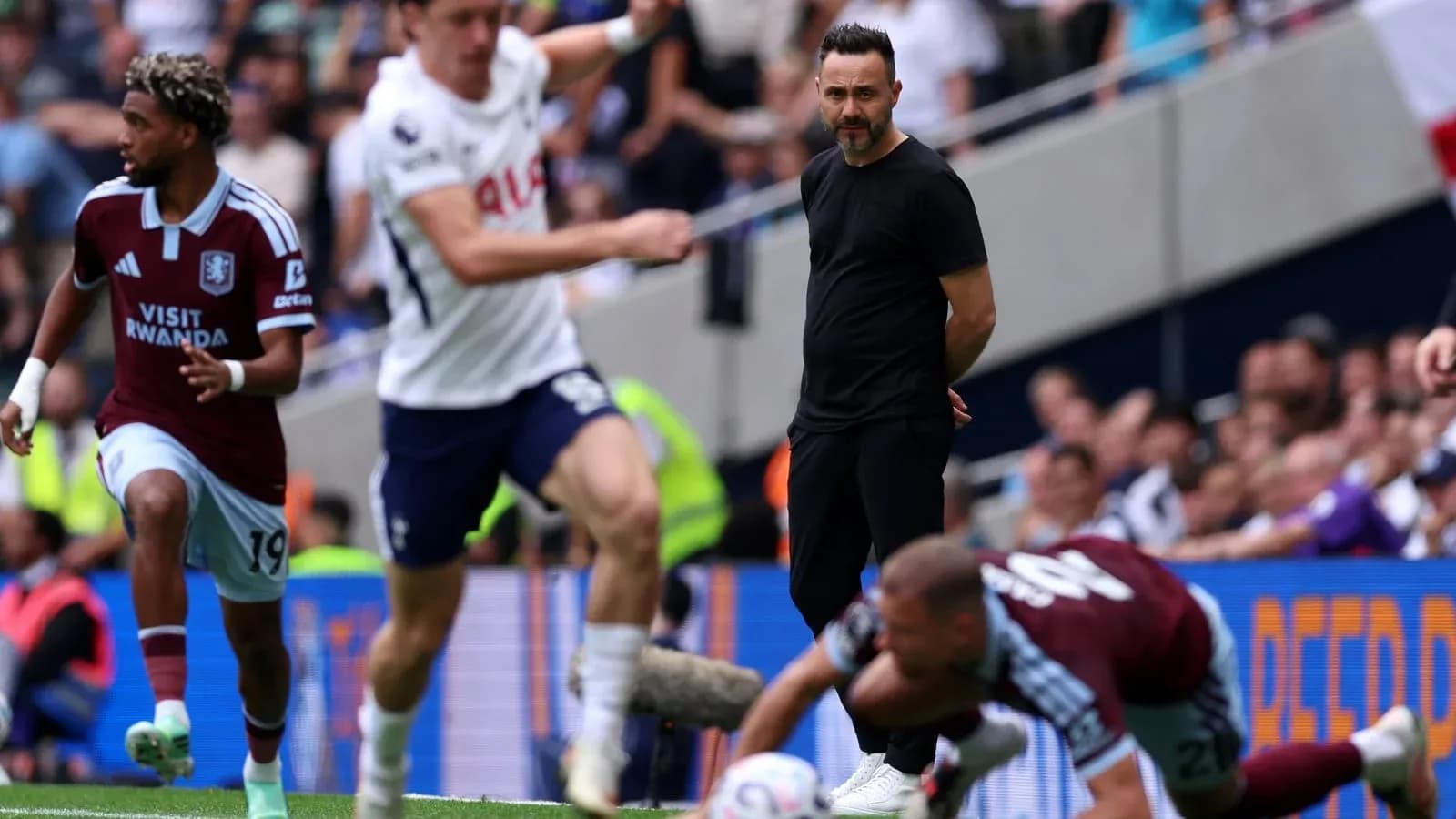
De Zerbi’s warning signs
At 1-0 down, the pattern was familiar. Tottenham, now chasing, still saw plenty of the ball but carried the air of a team that knows the punchline before the joke is told.
De Zerbi, who had shuffled Rodrigo Bentancur into centre-back and dropped Mateus Fernandes into midfield during the Van de Ven incident, was furious with how his side handled that crucial spell.
“My focus is why we concede the first goal with 10 players, we can stay stronger, communicate more and more, defend in a compact way,” he said. “If we have a red card we can play 70 minutes with 10 players.”
He had a point. Spurs knew Villa would go long. De Zerbi said the visitors are playing 86% more long balls this season than last and that they had “many meetings” about it. The preparation didn’t show.
The second half briefly teased a twist. Mohammed Kudus thought he had levelled on the hour, only for VAR to rule Robertson marginally offside in the build-up. The stadium roared, then sagged. That was the moment.
Seven minutes later, Villa killed it.
Suzuki launched a long ball downfield, exactly the route De Zerbi had flagged, and Nicolas Jackson did the rest. One direct pass, one clinical finish, and Spurs were 2-0 down, their resistance snapped. De Zerbi would later call that second goal “incredible” in the worst possible sense.
“Sacked in the morning,” sang the Villa fans as the Italian prowled his technical area, increasingly short of answers.
Buendia’s bullet, emptying stands
If Jackson’s goal deflated Spurs, Emi Buendia’s strike emptied the stadium.
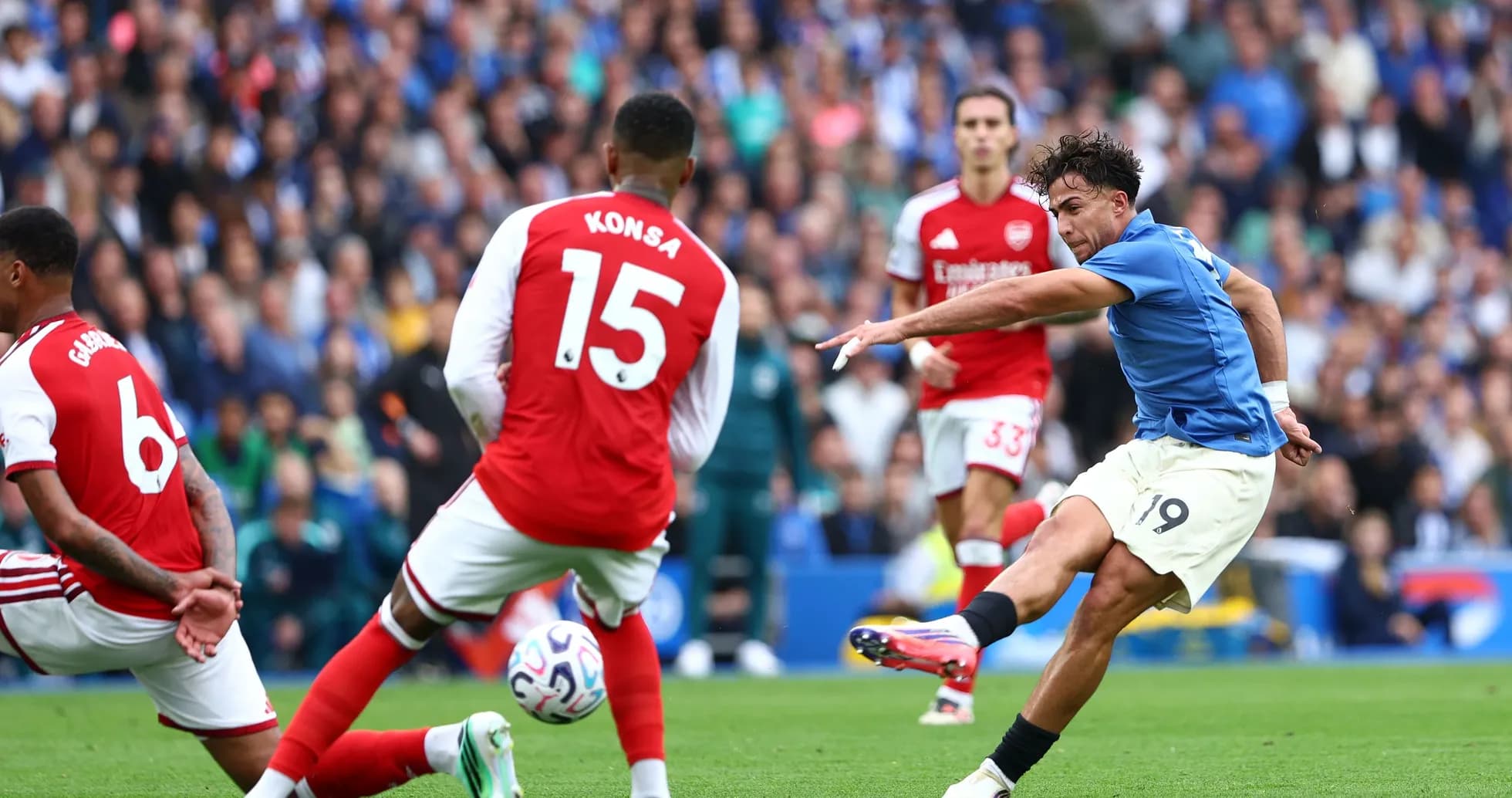
With 11 minutes left, the Argentine picked up the ball 25 yards out and unleashed a stunning drive into the top corner. A brilliant goal, a brutal moment. Thousands of Tottenham supporters streamed out almost instantly, long before their side finally found the net.
Those who stayed did at least see the first Premier League goals of the season for the club. Conor Gallagher pulled one back, Jan Paul van Hecke added another late on, but at 3-0 down the game had already gone. The comeback flattered the scoreline more than the performance.
De Zerbi didn’t bother delivering a post-match dressing-down.
“I didn’t speak with the players [afterwards], I didn’t want to say anything,” he admitted. The message was clear: the work starts again during the break, whether they like it or not.
“The players who go to the national team, they have to play and work. The others, [James] Maddison, Gallagher, [Dominic] Solanke, Tosin [Adarabioyo], [Marcos] Senesi, Savio have to work more because their physical condition, I didn’t like in this game.”
A £300m problem with no solution
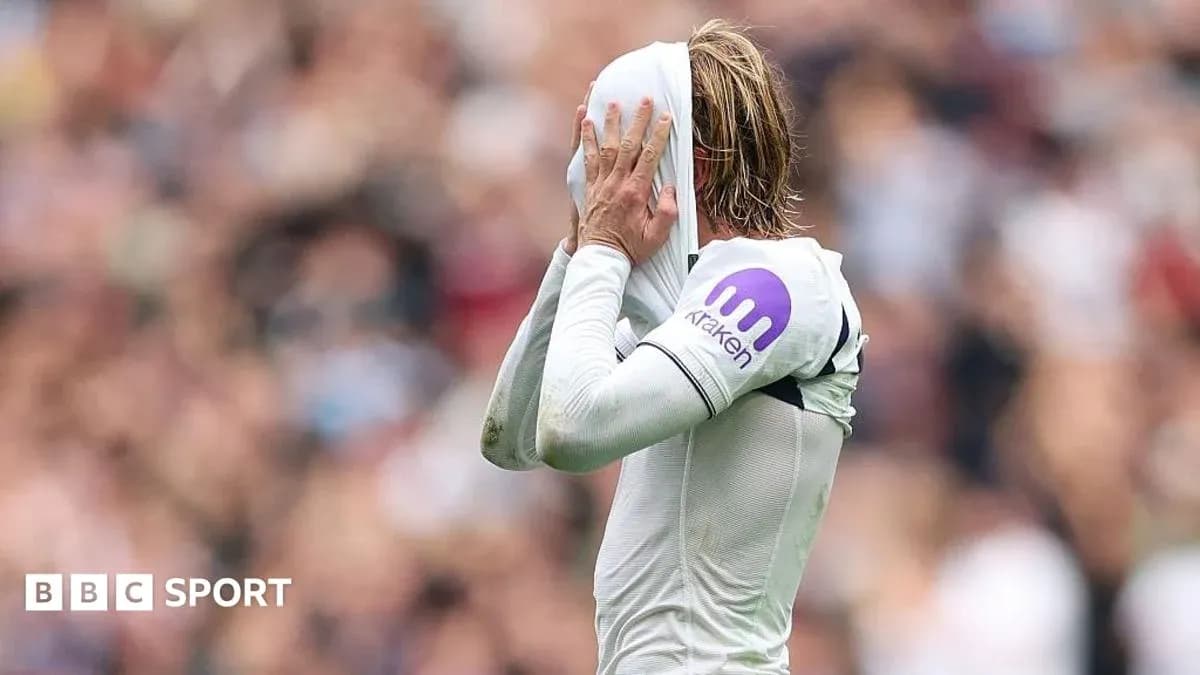
The table is damning. Spurs sit in the bottom three, still without a league win, heading into a three-week international break. They have spent more than £300m in the summer and look no closer to solving the problems that dragged them into two relegation battles.
This is their worst start to a top-flight season since 2008-09, when they also had two points from five games. Back then, Juande Ramos survived only three more defeats before Harry Redknapp arrived and dragged them up to eighth. Spurs have now gone five league matches without a win at the start of a season for the first time since 1986.
The recruitment headline was Sandro Tonali, a £100m midfielder from Newcastle, but he was overshadowed by Villa captain McGinn, signed for just £2.75m from Hibs eight years ago. Savio, the Brazil winger brought in to add spark, was denied three times by Suzuki then faded badly. Omar Marmoush, signed to bring goals, offered nothing.
The numbers paint a softer picture than the league table. Former Brighton striker Glenn Murray urged patience on BBC’s Final Score.
“He is trying to build something, it will take time,” Murray said of De Zerbi. “Taking the emotion out of it, looking at the stats, they have had more shots in three of the past four games, more possession and more touches in the opposition box.
“They are positives, be patient, the metrics are there to say he will turn it around. They need to be patient with Roberto De Zerbi, with all the signings, it takes time to gel and get to know each other.”
The metrics might comfort analysts. They do nothing for a fanbase watching another season tilt towards crisis.
Villa’s reset, Spurs’ reckoning
For Villa, this was a badly needed first league win of the campaign after three defeats in their opening four games. Their own rebuild, costing more than £250m, came on the back of high-profile exits and the natural turbulence of a Europa League-winning squad evolving.
They look like a team settling into their new shape. Tottenham look like a club still trying to buy their way out of an identity crisis.
De Zerbi insists the responsibility is his. He talks about compact defending, leaders stepping up, players working harder over the break. The words are strong. The evidence on the pitch is not.
Spurs now have three weeks to stare at the table, to stew on the chants from the away end, to wonder whether this is a blip in a long-term project or the start of something darker.
When they return, the question will be simple: are they finally ready to punch back, or is this just the next chapter in a season already threatening to spin out of control?