.svg&w=384&q=75 "GoalGist logo")
Luis Enrique Signs Contract Extension with PSG Until 2030
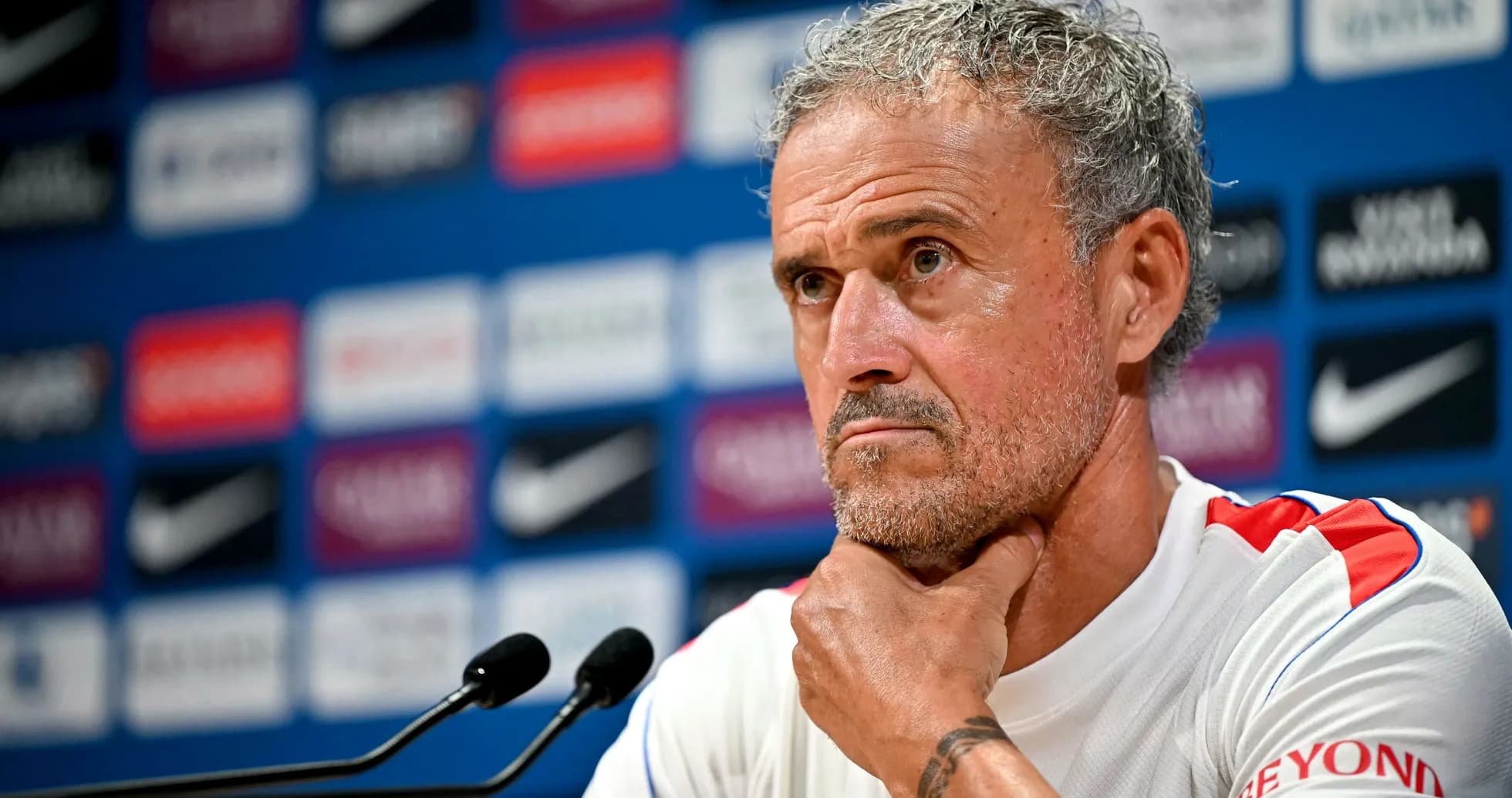
Paris Saint-Germain have nailed their colours to the mast. Luis Enrique is staying – and for a long time.
The French champions have confirmed that the Spaniard has signed a contract extension running until 2030, a statement of faith that cuts through months of speculation about his future and rips up the club’s old playbook of constant change in the dugout.
From short-term fixes to a long-term architect
For years, PSG lived on a managerial carousel: big names, short stays, quick judgments. Enrique’s new four-year extension signals something very different. The hierarchy, led by Nasser Al-Khelaifi, have effectively chosen their cornerstone and decided to build the entire sporting project around his ideas.
The message is clear: this is Enrique’s project now, not just Enrique’s team.
Their conviction comes from what they have seen on the pitch. Since arriving in 2023, Enrique has shifted PSG away from a star-studded collection of individuals into a drilled, high-energy unit. The football is defined by aggressive pressing, clear structure and a ruthless commitment to tactical discipline. The egos remain, but the spotlight has moved from the marquee names to the collective.
Inside the club, there is “total satisfaction” with his work. The extension is simply the formal proof.
A staggering haul of silverware
The numbers behind that satisfaction are brutal for any rival to read. In just over three seasons, Enrique has stacked 12 trophies in the PSG cabinet.
- Three Ligue 1 titles.
- Two French Cups.
- Two French Super Cups.
- Two UEFA Super Cups.
- The FIFA Intercontinental Cup.
And then the one that changed everything.
In 2025, Enrique delivered what so many of his predecessors chased and failed to secure: PSG’s first-ever Champions League title. It broke a psychological barrier as much as a sporting one, finally aligning the club’s vast resources with the trophy they craved most.
He did not let it stand alone. The following season, PSG defended the Champions League, turning a long-running narrative of European underachievement into a spell of dominance. Back-to-back continental crowns recast the club as the team to beat in Europe, not just the wealthy outsider trying to crash the party.
A project built to last
The new deal is not just a reward for that trophy rush. It is the framework for what comes next.
PSG’s leadership have made it clear they want to abandon the era of short-term patches and reactive decisions. The plan now is a sustained sporting project built on a defined playing identity, the development of young talent and tactical continuity from season to season.
Enrique sits at the centre of all of it. He has already begun to reshape the squad profile, bringing promising youngsters into the first team and giving them meaningful roles rather than token minutes. The idea is simple: the style stays the same, even as the names on the teamsheet change.
His handling of big personalities has underpinned this shift. High-profile players still fill the dressing room, but the culture has tilted towards a “team-first” mentality. Results and trophies have reinforced that message in a way no speech ever could.
Power, trust and a five-year horizon
The length of the contract gives Enrique something rare in elite football: time.
With security through 2030, he can now plan recruitment and academy integration on a five-year horizon instead of living from window to window. His influence stretches well beyond the technical area. He works closely with the recruitment department to target players who fit the specific technical and tactical demands of his system, rather than simply chasing the biggest available names.
That alignment between coach and board has turned PSG into a more coherent operation. The squad is being built to serve an idea, not an impulse.
Now, with the uncertainty over his contract stripped away, Enrique can focus entirely on the next evolution of his team’s football. The challenge is no longer to prove that his methods work – two Champions League titles have settled that argument – but to keep innovating, to stay one step ahead of Europe’s elite as they attempt to break PSG’s grip on the biggest stage.
The dynasty has its architect. The real question is how far he can take it by 2030.