.svg&w=384&q=75 "GoalGist logo")
Loudoun United's Statement Victory Over Richmond Kickers
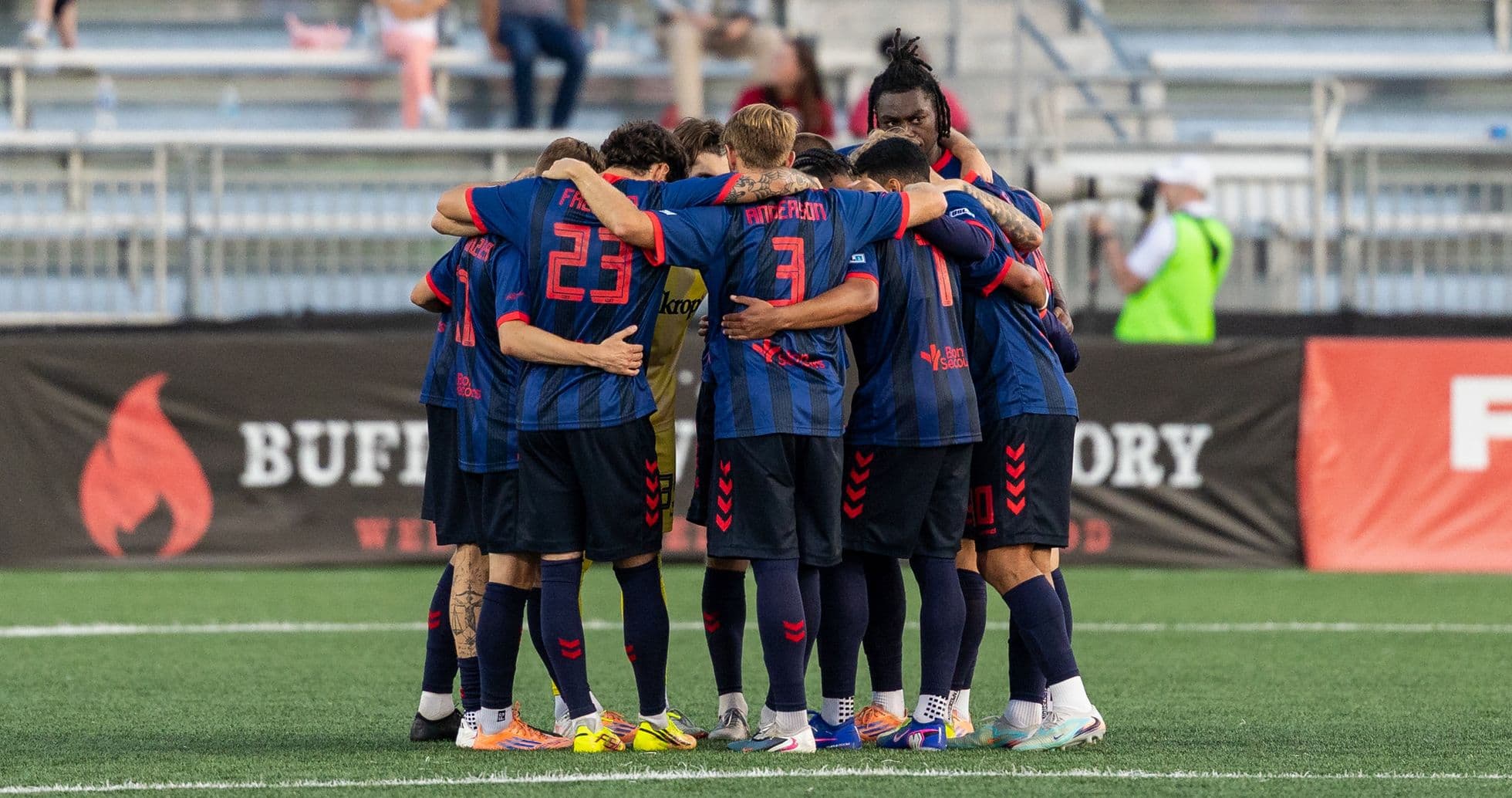
Under the Segra Field lights, Loudoun United’s 2–0 victory over Richmond Kickers felt less like a routine group-stage result and more like a statement about where these two squads are heading in the USL League One Cup.
I. The Big Picture – Group 6 lines are drawn
Following this result, Loudoun sit in 4th in Group 6 on 3 points, with a goal difference of +1 after scoring 3 and conceding 2 overall. All of their football in this competition has come at home: 2 matches, 1 win, 1 loss, 3 goals for and 2 against. Their seasonal profile is compact and controlled – at home they average 1.5 goals scored and 1.0 conceded, with 1 clean sheet in 2 outings and no games where they have failed to score.
Richmond’s picture is far bleaker. They are 6th in the group, bottom of the table, on 0 points with a goal difference of -7, having scored 1 and conceded 8 overall across 3 matches. At home they have played 2, losing both, with 1 goal for and 6 against; on their travels, they have lost their single away match 2–0, scoring 0 and conceding 2. Overall they average just 0.3 goals for per game and 2.7 against, with 2 matches where they have failed to score and no clean sheets. The Cup has exposed a side short on conviction at both ends.
II. Tactical Voids – discipline and the invisible absentees
There is no explicit injury or suspension list, so the tactical voids here are structural rather than personnel-driven. Both coaches, Anthony Limbrick for Loudoun and Darren Sawatzky for Richmond, had access to deep benches, but the underlying disciplinary trends shape how these squads have to manage games.
Loudoun’s card profile is sharply back‑loaded. All of their yellow cards in this competition have arrived after the break: 3 between 46–60 minutes (60.00% of their total yellows) and 2 between 76–90 minutes (40.00%). That late‑game spike hints at a side that grows more aggressive as they protect leads or chase margins, and it forces Limbrick to think carefully about who is left on the pitch in the final quarter‑hour.
Richmond’s discipline curve is more continuous, and more concerning. They have spread their yellows almost across the full 0–75’ window: 1 card in 0–15 (12.50%), 1 in 16–30 (12.50%), 2 in 31–45 (25.00%), 3 in 46–60 (37.50%), and 1 more in 61–75 (12.50%). This is a team that is constantly on the edge, especially right after half‑time, when the game should be settling into patterns. Sawatzky’s midfielders and defenders are being dragged into reactive fouls rather than controlling the tempo.
Neither side has taken a penalty in the competition so far; both show 0 total penalties, 0 scored, 0 missed. That absence of spot‑kick moments underlines how little time Richmond are spending in the opponent’s box, and how rarely Loudoun are forcing desperate last‑ditch defending.
III. Key Matchups – Hunter vs Shield, and the engine room
With no top scorers or assist charts available, the “Hunter vs Shield” duel is framed at unit level rather than through one talisman.
For Loudoun, the attacking “hunter” is a collective led by the spine of J. Murphy and P. Santos, supported by the movement of A. Aboukoura and the physical presence of T. Ulfarsson. At home this Cup campaign, Loudoun have scored 3 in 2 matches, with their biggest win a 2–0 result on their own turf. The pattern suggests a side that builds pressure rather than blowing teams away: 1.5 goals per home game overall, but crucially, they have yet to fail to score at Segra Field.
The Richmond “shield” that must absorb this pressure has been porous. Across the competition, they have conceded 8 goals in 3 matches, 6 at home and 2 away. Their worst home defeat, a 0–4, and their away reverse, 2–0, show a back line that can be overwhelmed in different ways – either stretched and broken at home or gradually suffocated on their travels. The central trio of M. Murana, B. Howell, and D. Moore must find a way to compress space in front of J. Sneddon, or Loudoun’s multi‑pronged front line will again find gaps between the lines.
In the “Engine Room”, Loudoun’s balance is defined by B. Akinyode and J. Panayotou. They sit between the back four of C. Torres, N. Adnan, A. Essengue, and S. Mazzaferro and the creative axis of Santos and Murphy. Loudoun’s numbers – 1.0 goals conceded per home game overall and 1 clean sheet in 2 – point to a midfield that screens effectively and limits clean entries into the defensive third.
Richmond’s engine is less settled. N. Seufert and A. Amer have to carry both progression and protection duties, feeding wide threats like T. Pannholzer and O. O’Malley while shielding the defence. Yet the statistics say they are losing that battle: 2.7 goals conceded per match overall, with no clean sheets, and 3.0 conceded per home game. The sheer volume of yellows between 31–60 minutes, where Richmond pick up 5 cards (62.50% of their total yellows), implies a midfield that is constantly arriving late into challenges, chasing runners instead of dictating the rhythm.
IV. Statistical Prognosis – Loudoun’s control vs Richmond’s spiral
If we translate these trends into an Expected Goals‑style prognosis, Loudoun project as a side whose xG at home should hover above the 1.5 mark, given they are already averaging 1.5 goals scored at Segra Field and are not reliant on penalties. Their defensive record – 1.0 goal conceded per home game overall – suggests an xG against profile closer to mid‑table solidity than to chaos.
Richmond’s numbers point the other way. With just 1 goal in 3 matches and a total scoring average of 0.3, their attacking xG is likely suppressed, especially away from home where they have yet to score. Defensively, conceding 8 in 3, with 3.0 goals against per home match and 2.0 away, indicates an xG against curve that remains stubbornly high regardless of venue.
Following this result, the narrative is clear. Loudoun look like a side whose structure, discipline, and home comfort can keep them in contention deep into the group stage. Richmond, by contrast, are trapped in a spiral: conceding early, fouling often, and rarely threatening. Unless Sawatzky can re‑engineer the midfield shield and cut down those 46–60’ yellow‑card surges, the Kickers’ statistical future in this Cup will remain as unforgiving as their present.