.svg&w=384&q=75 "GoalGist logo")
Liverpool's Gamble on Iraola Amidst Title Drift
Liverpool were supposed to be building a dynasty. Two Premier League titles in the 2024/25 season had reset expectations at Anfield: this was a club back at the summit, ready to stay there.
Then last season happened.
The Reds limped home 25 points behind champions Arsenal, their title defence collapsing long before the run-in. The football was flat, the mood turned sour and, by the end, Arne Slot paid with his job.
Now comes the risk.
Iraola era begins with questions everywhere
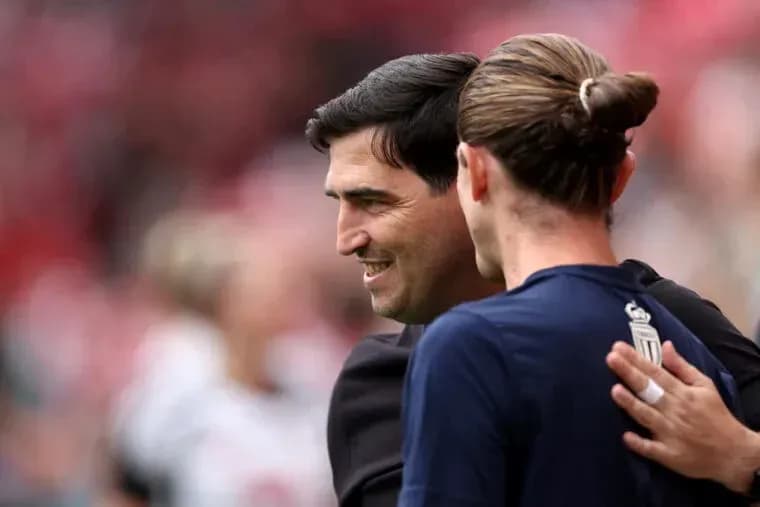
Liverpool have turned to Andoni Iraola, a coach admired for his work at Bournemouth but untested at a club of this size and scrutiny. It is a bold appointment. It is also a gamble.
He walks into a dressing room that has just underachieved badly: 17 wins from 38 league games, despite a lavish summer spend, is nowhere near the standard expected on Merseyside. Champions League qualification felt like a salvage job rather than a step forward.
The club has doubled down on change. The squad has been reshaped, the wage bill trimmed and some long-serving figures moved on. The message is clear: the reset is real.
Transfers: big money in, big names out
Liverpool’s summer business underlines the shift.
- IN: Jeremy Jacquet (Rennes, £60m), Victor Munoz (Osasuna, £34.5m), Samuel Martinez (Atletico Nacional, undisclosed), Ronald Araujo (Barcelona, loan).
- OUT: Andy Robertson (Tottenham Hotspur, free), Ibrahima Konate (Real Madrid, free), Mohamed Salah (released), Rhys Williams (released), Carter Pinnington (West Bromwich Albion, undisclosed), Kareem Ahmed (released), Emmanuel Airoboma (released), James Balagizi (released), DJ Bernard (released), Oakley Cannonier (released), Josh Davidson (released), Terence Miles (released), Jacob Poytress (released), Luca Stephenson (Bolton Wanderers, undisclosed), Armin Pecsi (TSV Hartberg, loan), Amara Nallo (HJK Helsinki, loan).
(Information correct on August 17.)
The headline departure is obvious. The long, messy sideshow around Mohamed Salah finally ended with his release. For months, the Egyptian forward’s situation hung over the club, an unwanted distraction in a season already veering off course. His exit, harsh as it sounds, had become necessary.
Robertson and Konate leaving for nothing underlines another problem: asset management has been poor. Experience has gone. So has depth. Iraola must now build something coherent from a squad that feels both expensive and incomplete.
A new style, an old defence
Iraola’s football is demanding. High intensity, aggressive pressing, constant work without the ball. It is a style that will thrill if it clicks – and expose anyone who cannot live with the pace.
“We need every player, every time, every minute, every action – and that's the commitment,” Iraola said. “I'm very happy with the attitude of the players.
“They are training really well. I am asking them to do things that are a little bit different – especially without the ball – and I think they are trying to get it.
“Obviously, we are still not perfect. We have things to improve, but I'm very happy with their attitude and their willingness to be on the same page. We will get there.”
The words are bullish. The reality is more complicated.
One of his biggest challenges sits at the heart of the back line. Virgil van Dijk, once the league’s dominant defender, is now 35. His decline has been clear over the past couple of seasons, yet Liverpool still stretched themselves financially to keep him.
That loyalty comes at a cost. Iraola must design a system that protects Van Dijk’s legs while still allowing the team to defend on the front foot. If he cannot, Liverpool’s high line could become a liability.
Van Dijk still has his moments. He helped the Reds to a clean sheet in a 2-0 friendly win over Como yesterday, a reminder that his reading of the game and presence in the box still matter. But the days when he erased danger on his own are gone, and his continued status as an automatic starter may ultimately cap Liverpool’s ceiling.
Pre-season flickers and familiar concerns
Pre-season has offered flashes rather than firm answers. Liverpool have been erratic, mixing promising spells with flat ones, as players wrestle with new instructions and new roles.
Iraola insists the adaptation will come. The players, he says, are buying in. The intensity of training has gone up. The structure is changing, especially off the ball. That kind of overhaul rarely happens smoothly, and the early months of the campaign could be bumpy.
Behind the optimism lies a blunt truth: this squad still looks short. Quality in some positions, yes. Enough depth to sustain a title push across 38 games and a Champions League campaign? That is far less convincing.
What counts as success now?
Strip away the noise and the picture is stark. Liverpool have:
- A new manager with no experience at an elite superclub.
- A squad that underperformed badly last season.
- Key veterans on the wane.
- Gaps in depth that one or two injuries could brutally expose.
A top-four finish is possible if the medical room stays quiet and Iraola’s ideas land quickly. The energy of a new project might carry them through patches where the football is still rough around the edges.
But a serious title challenge? On this evidence, that feels distant.
Liverpool have rolled the dice on a coach with fresh ideas and a squad in flux. The question now is not whether they can dominate England again.
It is whether this season becomes a genuine step forward – or just another chapter in a slow, uncomfortable drift away from the standards they once set.