.svg&w=384&q=75 "GoalGist logo")
Leeds United's Premier League Revival: A Return to the Elite
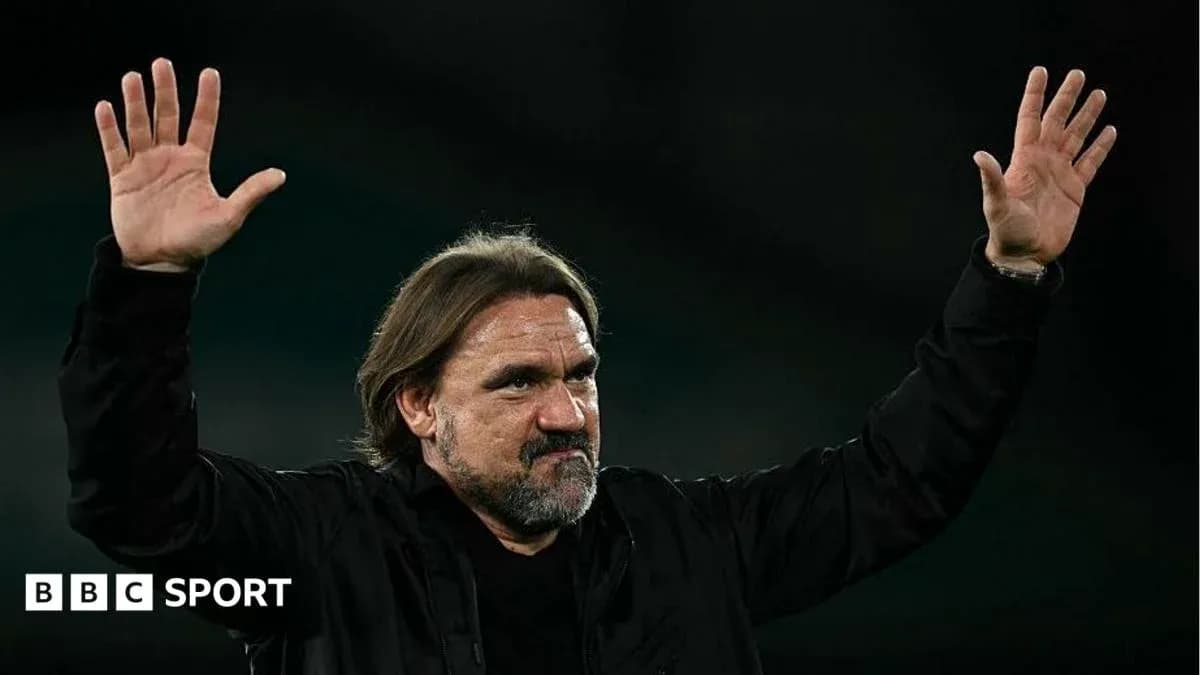
Four games into the Premier League season and Leeds sit third, a position that stirs memories of the club that once lived among England’s heavyweights, stringing together five straight top-five finishes around the turn of the century. Monday night’s 4-1 dismantling of Newcastle United at Elland Road didn’t just preserve Daniel Farke’s unbeaten start. It confirmed something deeper: this is no early-season quirk.
Eight points from four matches. Leeds’ best opening to a top-flight campaign since the 2001-02 season under David O’Leary. The surge, though, didn’t begin in August. It can be traced back to a single, gutsy decision almost nine months ago.
The night everything tilted
On 29 November at Etihad Stadium, Leeds trailed Manchester City 2-0 at half-time and looked on the brink of another long evening. Farke ripped up his back four, moved to a back three and rolled the dice.
The reaction was immediate. Leeds fought back to 2-2, pushed City to the brink and only fell to a stoppage-time goal. They left Manchester with nothing, but they had found something.
From the following match – a home win over Chelsea on 3 December – the numbers tell the story. Leeds have lost just five of their past 29 league games. Across that span, their record would place them fifth in a hypothetical table. That’s not a hot streak. That’s sustained form.
So how have they done it? And can it really carry them back into Europe for the first time in 24 years?
Built for the Premier League fight
The transformation is tactical, but it is also physical. In the 2025 summer window, Farke and new sporting director Adam Underwood set out to change the profile of the squad. Taller, stronger, harder to bully.
Of the 10 permanent signings, eight stand over 6ft: Jaka Bijol, Sebastiaan Bornauw, Dominic Calvert-Lewin, James Justin, Lukas Nmecha, Noah Okafor, Lucas Perri and Anton Stach. Leeds, one of the smallest sides in the Championship, were being rebuilt for the aerial and physical demands of the Premier League.
Farke was blunt about it in July 2025: this wasn’t an accident. Joining the top flight with a diminutive squad meant extra pressure in both boxes. If you’re going to survive, you have to defend crosses. You have to compete.
This summer, after losing centre-back Pascal Struijk to Brighton, Farke doubled down. In came World Cup defenders Tarik Muharemovic of Bosnia-Herzegovina and Switzerland’s Nico Elvedi to reinforce the back line.
Muharemovic has already emerged as a key figure. He has played every league minute so far, marshalling the defence in front of 6ft 5in England international James Trafford. Trafford, who became the most expensive British goalkeeper in history for the second time when he joined from Manchester City for an initial £40m, gives Leeds both presence and pedigree between the posts.
Even his one notable blemish – an error that contributed to Bazoumana Toure’s late consolation for Newcastle – did little to alter the sense that this Leeds defence now has structure and steel.
Add Harry Wilson, snapped up on a free from Fulham after standing out as one of the league’s best performers last season, and the recruitment looks sharp, targeted and ruthless.
From crisis to control
It wasn’t always this coherent. Go back to the early months of the 2025-26 season and Leeds were in trouble. They lost eight of their first 13 league games and sank to 18th, staring at the prospect of an immediate return to the Championship after pipping Burnley to the second-tier title.
Reports swirled that Farke’s job was on the line. The switch to a back three was born out of that pressure. It has since reshaped the club’s trajectory.
Defensively, the improvement is stark. Among the ever-present Premier League clubs over this period, only Arsenal, Manchester City and Nottingham Forest have conceded fewer goals since Farke’s tactical shift. Leeds, once porous and fragile, now look organised and hard to break down.
The change hasn’t just protected their goal. It has unlocked their main striker.
Calvert-Lewin unleashed
Dominic Calvert-Lewin arrived with a reputation and expectations to match, but his early months at Elland Road were a slog. Isolated as the lone forward in a 4-3-3, he fed on scraps, waiting for sporadic support from wide areas.
The new shape changed everything. With Leeds alternating between 3-4-3 and 3-5-2, Calvert-Lewin finally has company up front. A proper partner. Often it is Nmecha. Frequently it is Okafor, who has delivered seven goals and an assist in his past 11 league outings.
Calvert-Lewin has been the main beneficiary. Since last December, only Erling Haaland, Ollie Watkins and Joao Pedro have scored more Premier League goals than his 14. He looks like a centre-forward reborn: aggressive, confident, relentless.
He has been open about why this works. “I enjoy having bodies around me,” he has said. The evidence is there every week – knockdowns, combinations, runners close enough to turn his hold-up play into chances.
On Saturday, with Crystal Palace visiting Elland Road, Calvert-Lewin is chasing history. One more goal and he becomes the first Leeds player to score in six consecutive home league games since Arthur Hydes in 1932. Almost a century of waiting, hanging on the boot of a striker who looked lost not so long ago.
Eyes on Europe – and England
Leeds’ rise has inevitably revived talk of Europe. The numbers since December justify it. The current league position demands it. A club that flirted with relegation less than a year ago now looks like a side capable of going toe-to-toe with almost anyone.
For Calvert-Lewin, the stakes are personal as well. The former Everton forward missed out on England’s World Cup squad, a painful omission for a player once seen as a long-term option for the national team. With three goals in all competitions already this season, he has timed his resurgence well.
Thomas Tuchel names his England squad on Friday for a Nations League quadruple-header. Calvert-Lewin’s form, his fitness and his role in Leeds’ revival place him firmly back in the conversation.
Leeds, rebuilt and emboldened, are climbing again. The question now is simple: is this just a stirring throwback, or the start of their return as a permanent fixture near the top of the Premier League?