.svg&w=384&q=75 "GoalGist logo")
Jude Bellingham Reflects on England's Heartbreaking World Cup Exit
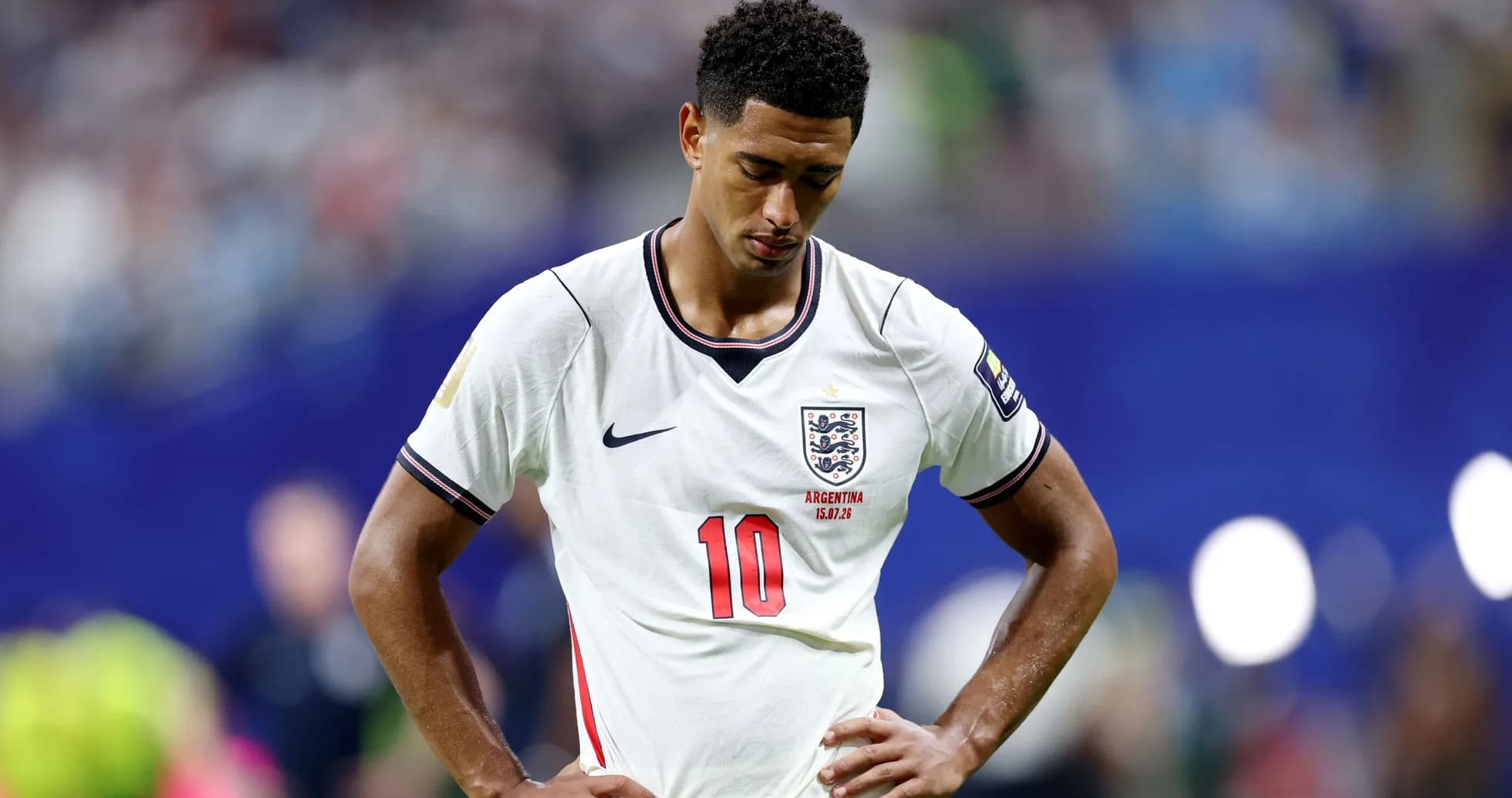
Jude Bellingham stood in front of the cameras, but his voice came from somewhere else entirely – from the wreckage of a night that had promised history and delivered heartbreak.
A 2-1 defeat to Argentina, sealed in the dying moments, slammed the door on England’s first World Cup final since 1966. For a player who had dragged his country to the brink with seven goal contributions and a blistering brace against Norway in the quarter-final, this felt like the cruelest cut yet.
He didn’t bother hiding it.
“I think we can take a lot of experience from this, but it is so gutting. I wanted to be a part of an England squad that finally done it and got it over the line,” Bellingham said, the words coming slowly, as if each one hurt. “To be here, telling the fans the same things they've heard for years, it's really gutting.”
The midfielder has carried a heavy load for club and country over the past year. A bruising campaign with Real Madrid, the anguish of losing the Euro 2024 final, and now this – another near-miss on the biggest stage of all. At 23, he looked momentarily older, drained by the weight of expectation and the familiarity of failure.
His frustration sat plainly on his face. The usual composure, the swagger, replaced by a young man searching for something to cling to.
“I wish I could give one more win or two more wins, but at the moment, my head is a bit fuzzy with disappointment, so I'm sorry,” he added, offering an apology that said as much about his standards as it did about the result.
On the touchline, Thomas Tuchel chose to carry the blame himself.
England had led through Anthony Gordon, a goal that seemed to tilt the night their way. They were on the front foot, playing with authority, the crowd sensing that this might finally be the moment the narrative changed.
Then came the turn.
Tuchel switched to a back five, a move designed to close the gaps as Argentina threw everything forward. Instead, it invited the storm. England retreated, the initiative slipped, and Argentina, emboldened by the space and the stakes, surged into the game.
“We decided to go to a back five because the gaps were far too open,” Tuchel explained afterwards. “Argentina played with more risk, played with more rhythm and played with the feeling maybe that they had nothing to lose any more, which freed them up and pulled us back.
“Because we obviously played suddenly with a feeling that we had a lot to lose. Of course the responsibility is on the coach and if it doesn’t go well it’s easy to say it was wrong.”
The honesty was stark. The tactical shift that was meant to secure the lead instead suffocated England’s ambition. They became passive, cautious, almost waiting for trouble. Argentina didn’t need a second invitation.
Tuchel now finds himself in a familiar position for an England manager after a major tournament exit: under the microscope, every decision replayed, every substitution dissected. This time, though, there is no sense of an impending axe.
FA chief executive Mark Bullingham is understood to be firmly behind the former Chelsea and Bayern Munich coach. The plan remains clear: Tuchel will lead England into the home European Championships in 2028. The manager himself left no room for doubt.
“We keep on going with the contract until the home Euros,” he said, drawing a line under any talk of resignation.
So the project continues, even as the scars of this World Cup cut deep. England now head into a third-place play-off against France on Saturday, a fixture that offers history but little solace. A bronze medal would mark their best finish in 60 years, yet it will feel like a consolation prize in a tournament where they stood a step away from the final.
For Bellingham and his teammates, that is the hardest part. The sense not of failure, but of something unfinished, something snatched away at the last.
The rebuilding starts now, long before the first whistle of Euro 2028 on home soil. The question is no longer whether this generation is good enough. It’s whether they can finally turn nights like this from trauma into fuel.

