.svg&w=384&q=75 "GoalGist logo")
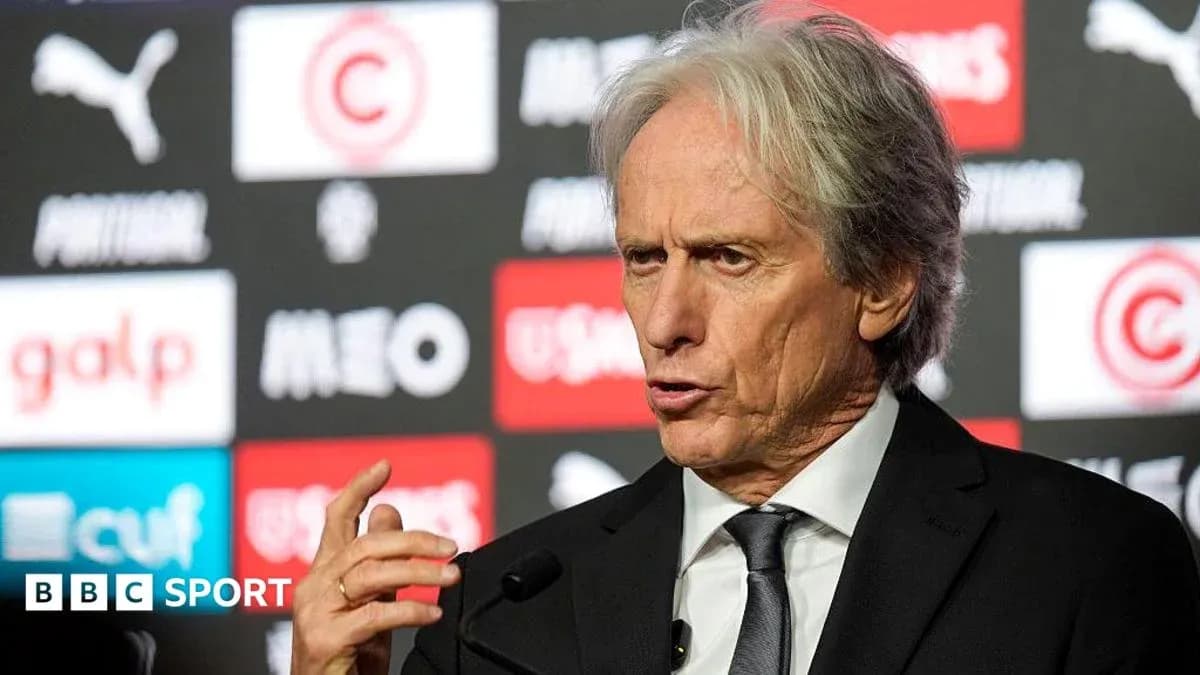
Jorge Jesus Takes Charge of Portugal with Ronaldo in Focus
Portugal have turned to one of their most seasoned tacticians for the next World Cup cycle, handing Jorge Jesus a four-year contract that runs through to the 2030 tournament the country will co-host with Spain and Morocco.
The 71-year-old steps into the role in the wake of Portugal’s painful exit from this summer’s World Cup, a 1-0 defeat to Spain in the last 16 that closed Roberto Martinez’s brief spell in charge. Martinez, appointed in January 2023, had already made clear he would step aside after the tournament.
Now the job belongs to Jesus – a coach with a bulging CV, a sharp edge, and one very familiar face at the heart of his new project.
Jesus and Ronaldo, reunited
Jesus arrives with a ready-made relationship with the national team’s captain. He worked closely with Cristiano Ronaldo during his year in charge of Al Nassr, the pair winning the Saudi Pro League title last season as the veteran forward continued to stretch the limits of longevity at the elite level.
Ronaldo, 41, confirmed after Portugal’s elimination that this World Cup was his sixth and final appearance at the tournament. What he did not confirm was a full retirement from international football. His contract at Al Nassr runs until 2027, and Jesus made it clear on Friday that, as far as he is concerned, the door to the Seleção remains wide open.
The new coach described Ronaldo as a “symbol of Portuguese football” and did not hesitate when outlining his stance.
As long as Ronaldo is playing and in the right condition, Jesus said, he will pick him – on his terms, under the conditions he believes best serve the national team. No sentiment, but no doubt either.
He stressed he has not yet spoken directly with Ronaldo since taking the job, but dismissed any suggestion that the forward could complicate the dressing-room dynamic. Ronaldo, he insisted, will never be a problem for Portugal. Nor for him. Their season together in Saudi Arabia, Jesus added, was a pleasure and made easier by the forward’s professionalism.
A demanding first test
Jesus will not have to wait long to feel the weight of the role. His first game in charge comes on 24 September, when Portugal open their Nations League Group D campaign against Wales.
That match will offer the first clues about how he intends to shape a side that has long leaned on Ronaldo’s goals and aura. Does he build a new structure around the captain one last time, or start to harden the team for a future without him while he is still available?
Either way, the stakes are obvious. Portugal are not just preparing for qualifying campaigns; they are preparing to host the world.
A career built on trophies and pressure
If any coach understands expectation, it is Jorge Jesus. His career has been forged in high-pressure environments and measured in silverware.
With Benfica, he lifted three league titles during his first spell in charge, in 2010, 2014 and 2015, turning the Lisbon club into a relentless domestic force and a regular presence deep in European competitions.
He then exported that intensity to South America. At Flamengo, he delivered a sensational 2019, winning five major trophies in a single year, including the Brazilian title and the Copa Libertadores, and leaving Rio de Janeiro as a cult figure.
His recent work in the Middle East has been just as ruthless. With Al Hilal in the 2023-24 season, Jesus completed a domestic treble, underlining his knack for walking into ambitious clubs and leaving with the biggest prizes.
Now he takes on a different kind of giant: a national team that has grown used to travelling to major tournaments with serious expectations, and that will stage the World Cup in four years’ time.
Portugal have chosen a coach who does not shy away from big personalities or big stages. They have given him time, a four-year runway to 2030, and, for now at least, the greatest player in their history still in the frame.
How long Ronaldo remains at the heart of that story is uncertain. What is clear is that Jesus intends to write the next chapter with him, not after him.