.svg&w=384&q=75 "GoalGist logo")
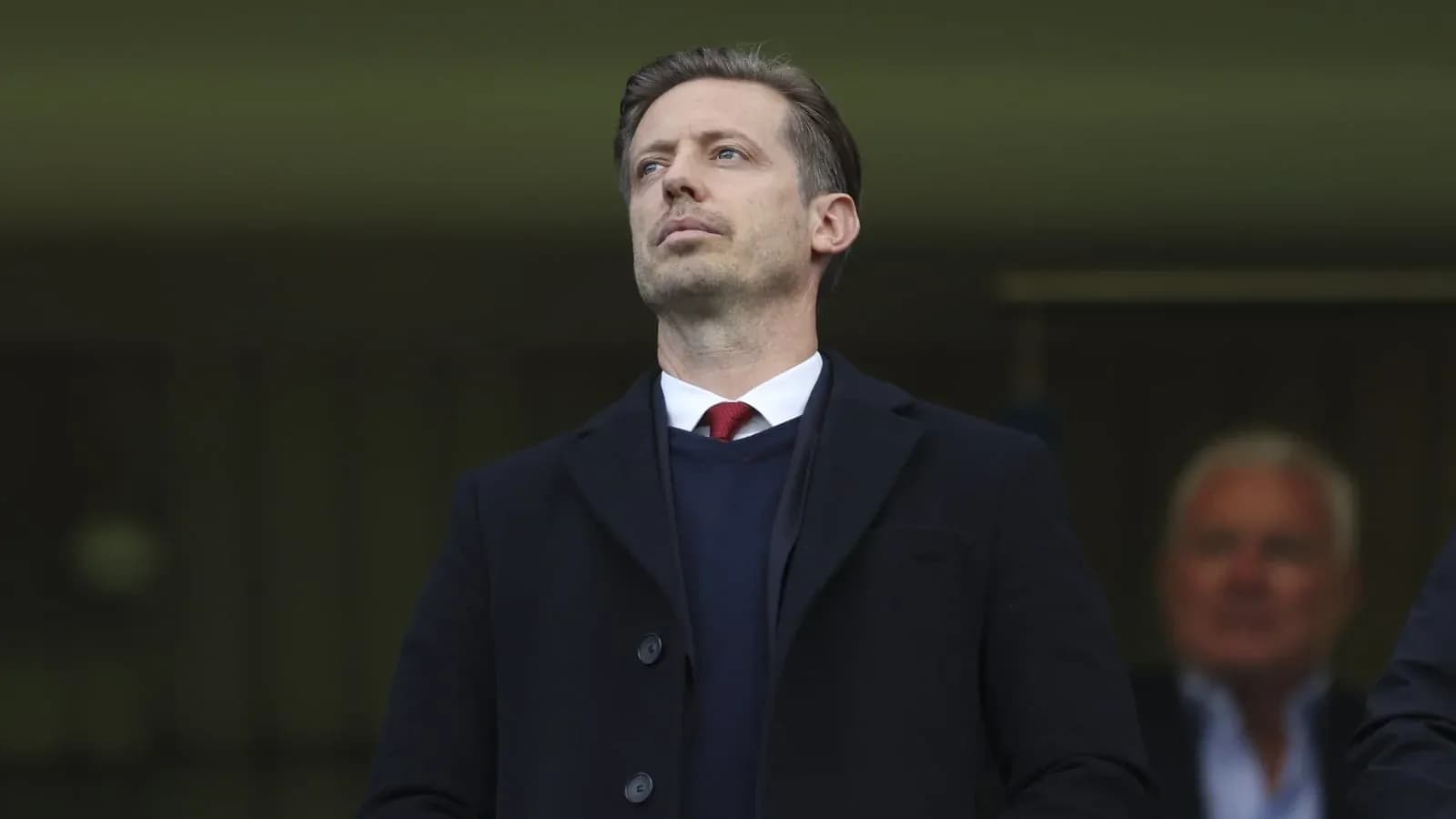
Michael Edwards Resigns from Liverpool: A Second Exit and Its Impact
Michael Edwards walks away from Fenway Sports Group for a second time, and once again leaves a sizeable hole at the heart of Liverpool’s football operation.
The architect of much of the club’s modern success has resigned from his role as FSG’s chief executive of football, a position he took up only two years ago with a brief to build and oversee a multi-club model for the American owners.
That grand plan never truly got off the ground. Late last year, FSG quietly parked the multi-club project. Not long after, Edwards made clear he wanted out. Senior figures tried to change his mind. They failed.
So Liverpool, still adjusting to life after Jurgen Klopp, must now absorb another high-level departure. And with current sporting director Richard Hughes continually linked with a move to Saudi Arabia, the questions over who actually shapes the club’s football future grow louder.
A second exit, a familiar void
Edwards’ first spell at Anfield as sporting director helped underpin the Klopp era: smart recruitment, clear strategy, a structure that allowed the manager to thrive. His return in 2024, this time above club level and across FSG’s wider football interests, was framed as the next evolution of that model.
"When I returned, I was excited not only by the opportunity to help guide Liverpool through an important period of transition, but also by the chance to help shape FSG’s wider football ambitions," Edwards said in a statement confirming his exit, with a year still left on his contract.
Those ambitions shifted. The owners stepped back from the multi-club route, and with that, the role Edwards had been sold changed shape. He leaves insisting the club remains well placed.
"I leave believing Liverpool is in a strong position, with outstanding people, a clear direction and the foundations in place for continued success," he said. He also stressed his pride in the work done to present FSG with "a broad range of thoughtful and well-developed options for the future," even if ownership chose a different path.
His words carry the tone of a man who believes he has delivered his part of the bargain, even if the project he signed up for never fully materialised.
FSG turns back to Gordon
Inside FSG, the response has been to turn to a familiar face. President Mike Gordon will now assume Edwards’ duties, just as he has so often operated as the key link between Boston and Liverpool over the past decade.
Gordon hailed Edwards’ "extraordinary contribution" across both spells, underlining how central he has been to the club’s recent history.
"When Michael returned in 2024, he did so at a pivotal moment for Liverpool, embracing a broader leadership role across our football interests in the process," Gordon said. He praised Edwards’ "exceptional judgement, integrity and an unwavering commitment to building a strong football organisation for the long term."
Gordon also pointed back to Liverpool’s historic English league title, describing Edwards as having made "an important contribution" to navigating a major period of transition before that triumph.
The tone from FSG is clear: disappointment at losing a trusted strategist, but also an attempt to project continuity and calm. "We will always be grateful for everything he has given," Gordon added, before offering the standard well-wishes to Edwards and his family.
Leadership questions at a delicate time
Strip away the polite statements and the reality is starker. FSG have lost the senior figure they brought back specifically to steer them through a new era, just as the club continues to reshape itself after Klopp.
Edwards’ exit, combined with the ongoing noise around Hughes and Saudi interest, leaves the ownership group facing renewed scrutiny over succession planning and football governance. Supporters, already wary of instability at executive level, will want to know who is setting the strategy, who is making the big calls, and how coherent that vision really is.
Edwards, for his part, departs with gratitude and a nod to the fanbase that watched his work from afar.
"It has been a privilege to return to Fenway Sports Group and Liverpool Football Club at such an important moment," he said. "I’d like to thank Mike, John, Tom and everyone across FSG and Liverpool for their support and friendship and, most importantly, the supporters, whose passion makes this club so special. I will always be grateful to have been part of its story."
The story now moves on without him. The question for FSG is simple: who writes the next chapter of Liverpool’s football strategy from here?

