.svg&w=384&q=75 "GoalGist logo")
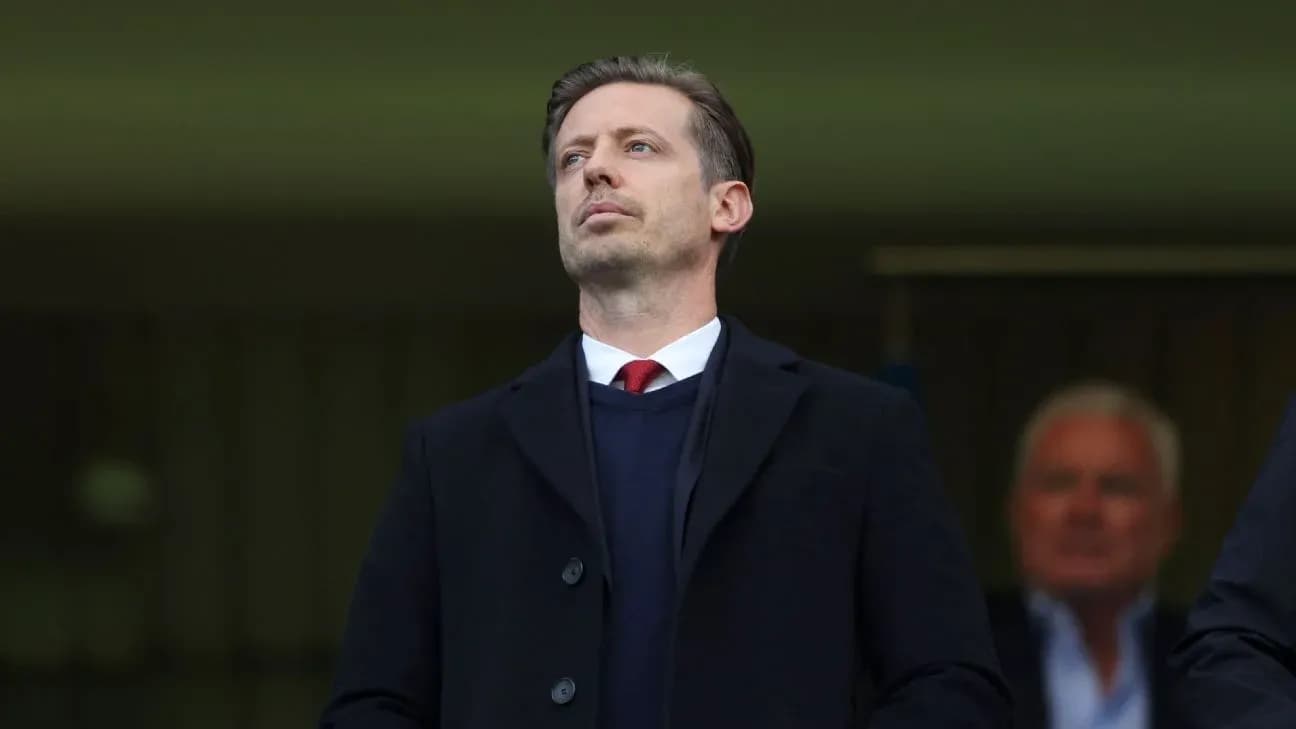
Turbulence at Anfield as Michael Edwards Resigns from FSG Role
Liverpool are bracing for another jolt behind the scenes after Michael Edwards resigned from his senior role with Fenway Sports Group, leaving a sizeable void at the heart of the club’s football operation.
Edwards, the architect of much of Liverpool’s modern-era recruitment under Jürgen Klopp, had returned to FSG in 2024 as chief executive officer of football. His brief was clear: drive the ownership’s push to acquire a second club and build a wider multi-club model. That project has stalled. With no meaningful progress and one year still left on his deal, Edwards has chosen to walk away with immediate effect.
The timing is striking. Liverpool are already navigating a summer of sharp change. Arne Slot has gone, replaced by former AFC Bournemouth manager Andoni Iraola as head coach. The sporting director, Richard Hughes, who brought Iraola to Anfield and is contracted until 2027, is being linked with Al Hilal in the Saudi Pro League. Now the man charged with shaping FSG’s broader football empire has exited too.
In the vacuum, FSG president Mike Gordon is expected to step back into a more hands-on role in Liverpool’s day-to-day running, a throwback to earlier years when he was a constant presence in the club’s strategic calls. It underlines how quickly the landscape has shifted since Edwards’ celebrated first spell as sporting director, which culminated in Liverpool’s Premier League title win in 2025.
Publicly, FSG tried to frame the departure as orderly. In a statement on Friday, the ownership group called Edwards’ exit “the culmination of a planned transition following the completion of key strategic priorities.” Behind the scenes, the picture was far less neat. Sources told ESPN that Liverpool’s American owners pushed hard to keep him, only to run into Edwards’ growing frustration at the lack of movement on expanding their football portfolio.
The scale of that stalled ambition is revealing. FSG assessed more than 20 potential clubs, including Bordeaux in France and Málaga in Spain. The trawl was wide, the options varied. Then the plan was quietly shelved earlier this year, leaving the executive hired to lead that charge with little to show in terms of concrete progress.
For Edwards, whose reputation was built on clarity of thought and decisive action in the transfer market, that drift proved too much. His decision to resign closes a second chapter with FSG that never came close to matching the impact of his first, when Liverpool’s recruitment model became a benchmark for Europe.
He leaves, though, with his standing at Anfield intact. In his parting words, Edwards called it “a privilege to return to Fenway Sports Group and Liverpool Football Club at such an important moment,” insisting the club remains “in a strong position, with outstanding people, a clear direction and the foundations in place for continued success.”
He acknowledged that the broader FSG project “ultimately evolved differently to how we had originally envisaged,” but pointed to the “broad range of thoughtful and well-developed options” presented to ownership as a source of pride. His thanks extended to Mike Gordon, John Henry, Tom Werner, colleagues across FSG and Liverpool, and, pointedly, the supporters “whose passion makes this club so special.”
The words were gracious. The implications are anything but gentle.
Liverpool now move into a pivotal season with a new head coach, uncertainty around the sporting director, and the key strategist of FSG’s wider football vision gone. Mike Gordon’s renewed involvement may steady the ship. The question is whether stability will be enough in an era when rivals are racing ahead with multi-club networks and aggressive expansion.
Anfield has lived through bigger storms. But this feels like another hard reset at a time when Liverpool can least afford to stand still.