.svg&w=384&q=75 "GoalGist logo")
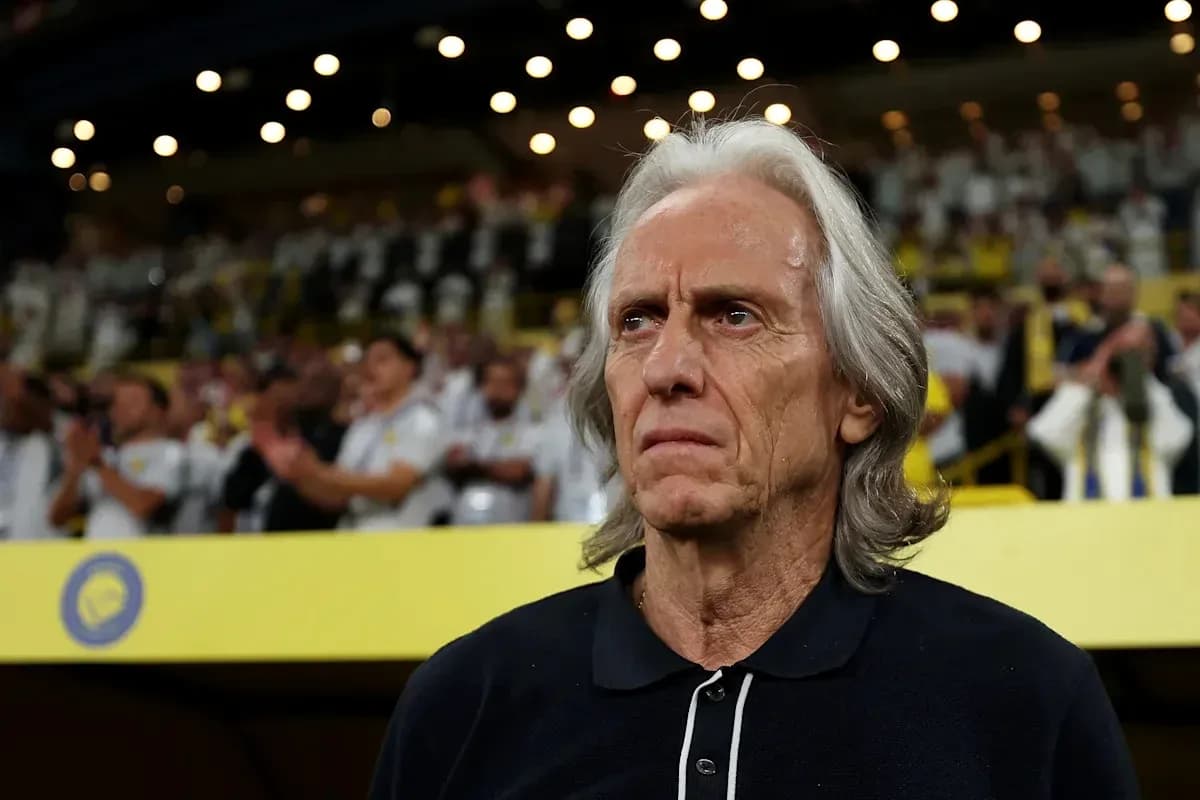
Jorge Jesus Set to Lead Portugal After Martínez Exit
Portugal is turning the page. Hours after Roberto Martínez’s departure was confirmed in the wake of World Cup elimination, Jorge Jesus is poised to become the new national team coach, according to Portuguese newspaper “A Bola”.
Fresh from his spell in Saudi Arabian football and currently unattached, Jesus has emerged as the clear, almost unanimous choice to lead the next cycle. The veteran coach, known for his demanding standards and aggressive, front-foot football, is expected to meet Pedro Proença, president of the Portuguese Football Federation (FPF), in the coming days. That meeting, once the federation’s delegation returns from the United States, should seal the agreement.
It marks the start of a new era, but it comes on the back of a bitter ending.
Martínez bows out after late heartbreak
Portugal’s coaching shake-up follows a brutal exit in the round of 16 at the 2026 World Cup, where Spain snatched a 1-0 win with a goal from Mikel Merino deep into second-half stoppage time. A tense, finely balanced Iberian duel was heading for extra time until Merino’s late intervention cut Portugal’s tournament short and, as it turned out, ended Martínez’s tenure.
Facing the media immediately after the final whistle, Martínez confirmed his departure.
“It is the end of the cycle. It is important now to have that again, and it is legitimate for the president to choose his national team coach. I am grateful for all the support they gave me,” he said, drawing a line under his spell in charge.
His exit felt inevitable once Portugal’s campaign, rich in talent but short on consistency, fizzled out.
A stuttering World Cup run
Portugal arrived at the World Cup with one of the most gifted squads in their history. They left with the feeling of a missed opportunity.
Their group-stage journey never quite caught fire. They opened with a draw against the Democratic Republic of the Congo, a result that immediately raised questions about their rhythm and cutting edge. A resounding win over Uzbekistan briefly eased the pressure and hinted at a side ready to click into gear, but a goalless stalemate with Colombia dragged them back into uncertainty. They still advanced, but only as runners-up in the group.
The knockout phase brought a flash of the resilience supporters had been craving. In the second round, Portugal came from behind to defeat Croatia in a bruising, highly contested match that suggested the team might finally be finding its edge when it mattered most.
Then came Spain. A tight, tactical contest, decided not by a collapse but by a single lapse in the dying seconds. A campaign that had never fully convinced was ended by the narrowest of margins.
New cycle, familiar expectations
Into that emotional landscape steps Jorge Jesus. The stakes are obvious. Portugal still boasts a core of elite players, with more emerging from one of Europe’s most productive talent pipelines. The demand is not just to compete, but to impose themselves.
Jesus will inherit a side that has shown flashes of dominance without sustaining it on the biggest stage. His task is to turn sporadic brilliance into a defined identity and a ruthless habit of winning knockout matches.
The deal is not yet officially signed, but the direction is clear. A new coach, a new cycle, and the same unforgiving question hanging over Portuguese football: with this talent, how long can they afford to wait for a team that truly delivers when it matters most?

