.svg&w=384&q=75 "GoalGist logo")
Jeremy Doku's Family Choice Amid World Cup Pressure
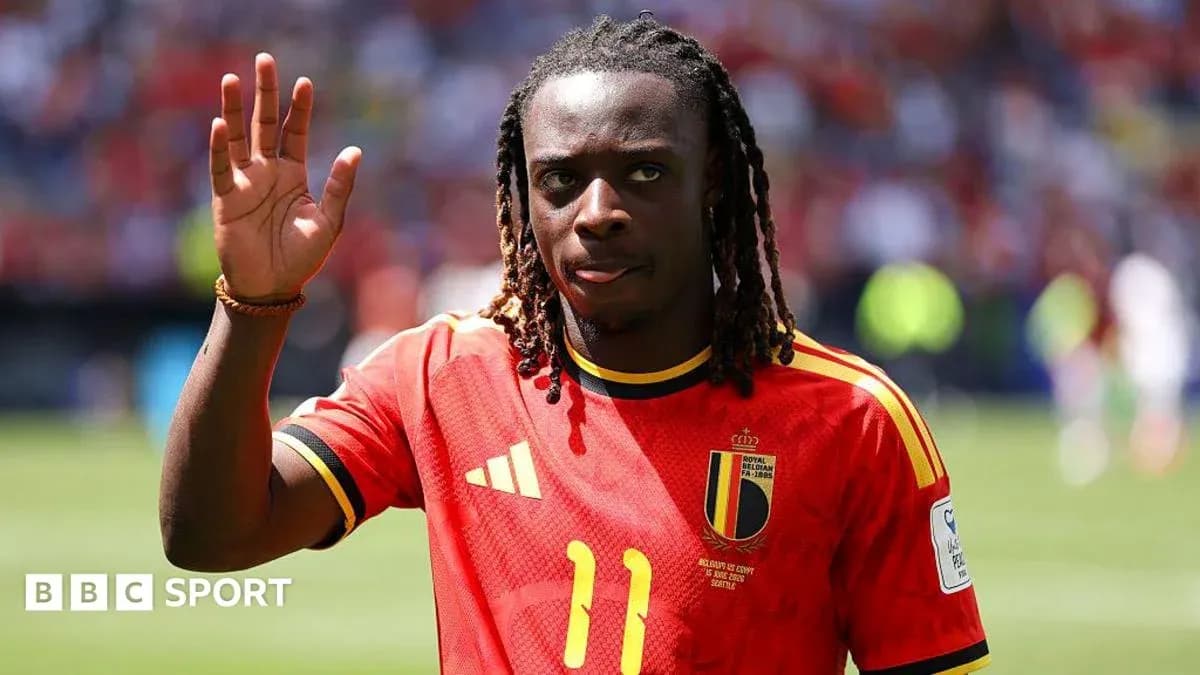
Jeremy Doku has already made his choice. Before a ball is kicked in anger in the knockout rounds, before Belgium know exactly how far this World Cup journey will run, the Manchester City winger has drawn a clear line.
Family first.
The 24-year-old is due to become a father next month. If Belgium are still alive in the tournament, he wants to leave camp to be at the birth of his first child. No caveats. No softening of the message.
"If you ask me what I want, my answer is that nobody wants to miss the birth of their first child," he told Reuters. Then the reality of elite football crept in. "But I also know that football involves many other considerations. I know the federation supports its players and understands their situations. We'll see what we can do."
That tension – between the demands of the game and the pull of home – has ignited a debate that burst far beyond football this week.
A TV rant, a backlash, and a climbdown
The spark came from French television. On L'Equipe's channel, presenter France Pierron dismissed the idea of Doku leaving the World Cup for the birth, calling a father "completely useless" at that moment and describing childbirth as a "disgusting" time.
The reaction was instant. And unforgiving.
L'Equipe issued a statement distancing itself from the comments, calling them "very far removed" from the organisation's values. Pierron apologised. Reports in France said she would not present her show on Monday.
In a sport often split by club loyalties and tribalism, the response from within football was strikingly united. Players, unions, and organisations lined up behind Doku’s stance.
Teammates in spirit, if not in shirt
England striker Ollie Watkins knows the trade-off. He has two children and understands the calendar that drags footballers away from home and into hotels and dressing rooms.
"I think someone labelled it disgusting and I think for a start that's not a way to label a birth," he said. He spoke of what his wife went through, calling the arrival of a first child "a blessing" and the thought of missing it "tough".
He recognised the reality Doku is staring at: a career that constantly demands distance. "There's a lot of times where you're away from family and friends during the season and it's very difficult, so to miss that would be tough and I see where he's coming from."
The Professional Footballers' Association backed that view. The union stressed that the demands placed on players should not come at the expense of "fundamental family moments", arguing that footballers must be treated as people, not just performers.
"Supporting players as people, not just athletes, is an important part of creating a healthy professional working environment," a PFA spokesperson said.
Gladiators, but still human
For the Fatherhood Institute, which works to support men as active, involved parents, the Doku storm carried a familiar echo.
"It makes me think of gladiators in the Colosseum," deputy chief executive Jeremy Davies told BBC Sport. Men pushed forward as heroic figures, he said, existing for the crowd’s entertainment. They earn vast sums, but some things still sit above the pay cheque.
"We want these men to be these heroic figures who exist for our entertainment. They get paid lots of money but there are some things that are worth a lot more."
The laws of the game have not kept pace with that reality. Fifa regulations are clear on maternity leave for female footballers – a minimum of 14 weeks’ paid absence, with at least eight after the birth. For fathers, there is nothing specific. No formal paternity leave. No framework. Just an unwritten expectation that players and clubs will find their own way through.
So they improvise.
One club kept a car idling outside the stadium, ready to race a player to hospital if his partner went into labour. A manager at a top-flight European side once skipped an away match entirely to stay with his wife as she prepared to give birth to their second child.
He watched the game on television, earpiece in, feeding instructions to his bench. Ten minutes into the match, labour pains began. His team led 2-1 at half-time as the contractions intensified. He phoned the hospital to say they were coming in, then paused the call because his team had a penalty.
They scored. He knew the result was secure. Only then did he leave for the hospital. Their daughter arrived two hours later.
"The game doesn't stop... you need to win the next game," he reflected. That’s the job. But the story underlines the balancing act managers and players are forced to perform.
Doku’s dilemma in context
Doku has already felt the physical toll of this tournament. He played 86 minutes of Belgium's opening 1-1 draw with Egypt in Group G, then missed the 0-0 stalemate with Iran because of illness. His wife Shireen is due to give birth in the second week of July. If Belgium reach the quarter-finals, that timing collides directly with their campaign.
He would not be the first to step away.
In 2018, Fabian Delph left England's World Cup camp in Russia to fly home for the birth of his daughter. David Silva missed two matches for Manchester City the same year after the premature arrival of his son. During the Covid pandemic in 2021, David de Gea was given extended leave by Manchester United when his partner Edurne gave birth to their daughter.
Others have watched from afar, forced into remote fatherhood by circumstance or scheduling.
Just this weekend, Norway defender Leo Ostigard saw his son born via FaceTime while he remained at the World Cup. In January 2021, Ruben Neves watched the birth of his third child on his phone, sitting on Wolves’ team bus after a 1-0 defeat at Crystal Palace. Travel restrictions during the pandemic blocked his plans to join his wife in Portugal, where her doctor was based.
The pattern stretches across sports.
Last week, cricketer Jamie Smith missed England's second Test defeat by New Zealand after the birth of his daughter. In 2010, Sir James Anderson flew back between Ashes Tests in Australia to be present for the birth of his second child. In basketball, Anthony Edwards left at half-time of a game in 2024 to be there for his daughter's arrival.
Tennis has faced the same question on an even bigger stage. In 2016, Sir Andy Murray made it plain he would walk away from the Australian Open if his wife Kim went into labour.
"I'd be way more disappointed winning the Australian Open and not being at the birth of the child," he said then.
Not everyone has stepped away. Darts player Rob Cross missed the birth of his third child in 2017 to secure qualification for the World Matchplay. The choice cut the other way, and he lived with it.
A World Cup, a birth, and a choice
That is where Doku now stands. Between a World Cup quarter-final and a delivery room. Between a nation’s expectations and a family’s first chapter.
The sport around him is slowly waking up to the idea that the old image of the untouchable, all-sacrificing gladiator no longer fits. Players are asking different questions. So are unions, institutes, and teammates who have already paced hospital corridors at 3am.
The World Cup will march on, with or without Jeremy Doku. The real test is whether football is ready to accept that, when the call comes from the maternity ward, some games simply do not matter as much.