.svg&w=384&q=75 "GoalGist logo")
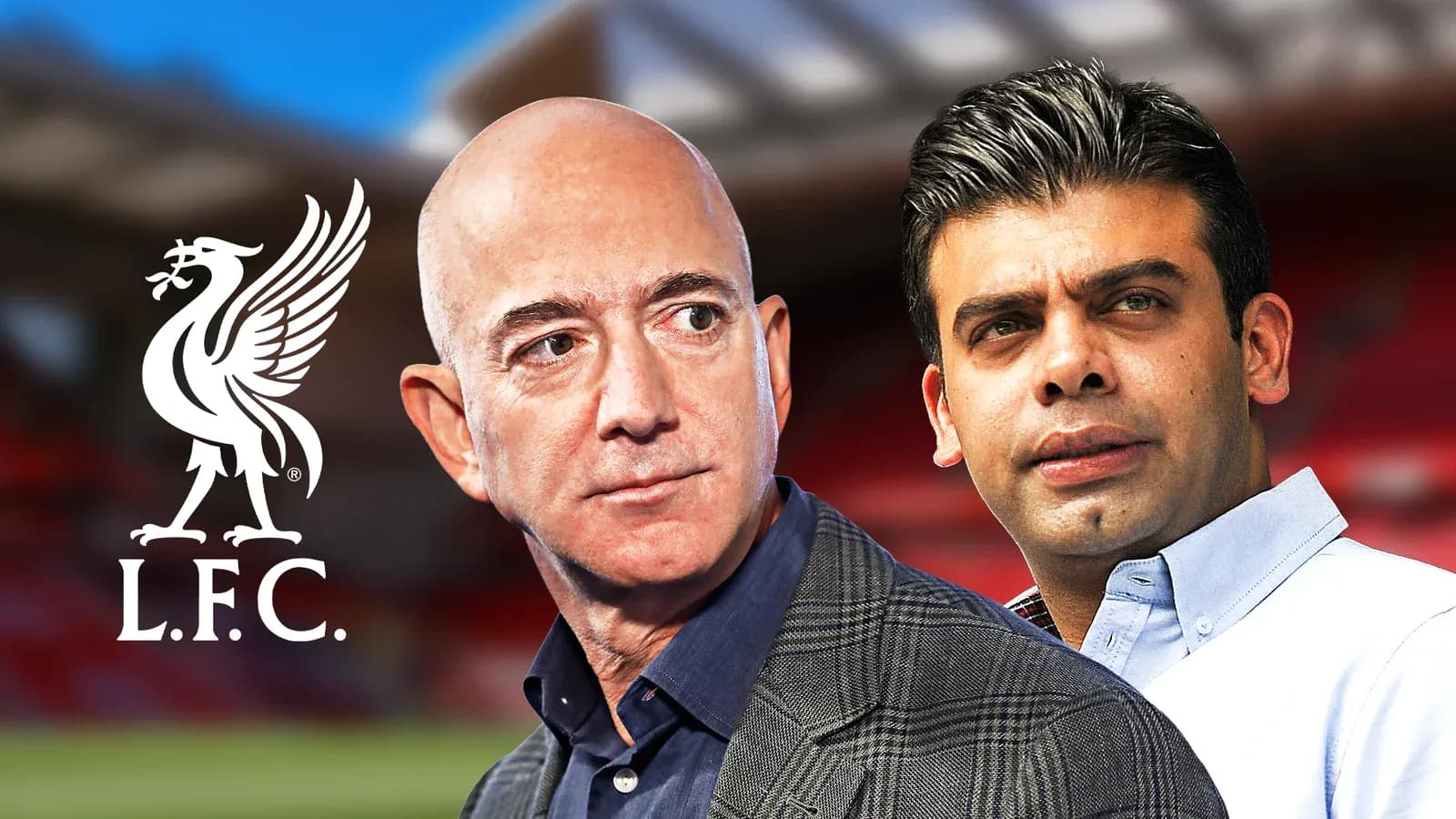
Jeff Bezos Joins Liverpool Investor Group in £6bn Deal
Liverpool have sold around a third of the club to a heavyweight investment consortium featuring Amazon founder Jeff Bezos, in one of the richest deals football has ever seen.
Fenway Sports Group (FSG) remains in charge, but the arrival of Bezos and a syndicate led by entrepreneur Amit Bhatia drags Liverpool into a new financial stratosphere. The agreement values the club at roughly £6bn ($6–7bn), placing the six-time European champions firmly among the most valuable sporting institutions on the planet.
Bezos steps into football – but stays off the board
Bezos, whose personal fortune Forbes estimates at more than £207bn ($280bn), is making his first move into sports ownership. He will not sit on Liverpool’s board. That role in the new structure goes to Bhatia, who will become vice-chair.
Bhatia, 46, is a British Indian investor with an investment banking background and a broad portfolio through his multi-asset firm AyBe Capital, which operates across technology, media, real estate, consumer retail and health. He is the son-in-law of steel magnate Lakshmi Mittal and was, until recently, a shareholder in Championship side Queens Park Rangers.
The deal installs some of the world’s wealthiest and most influential business figures as minority co-owners of Liverpool, already one of the most successful and globally recognised clubs in English football history.
FSG: Power stays in Boston, ambitions grow on Merseyside
FSG have been keen to stress what this deal is not. It is not a takeover. It is not a fire sale. And it is not, they insist, a quick fix for the transfer market.
The group confirmed that it “continues to retain majority ownership and operational control of Liverpool”. Day-to-day decision-making, including sporting operations, remains unchanged.
In a statement, FSG framed the move as a strategic step rather than a rescue act, saying the investment “supports Liverpool’s long-term growth ambitions by bringing together experts from across global business, technology, and investment.
“The consortium partners will work with FSG and the club's leadership team to evaluate opportunities that enhance the club's objectives on and off the pitch.”
Mike Gordon, FSG president, underlined that long-term vision.
“Liverpool has always been built by thinking beyond one season and making decisions with the club's long-term interests in mind,” he said. “That approach continues to attract interest from respected investors and business leaders around the world.
“As we considered this opportunity, it became clear that Amit and the consortium shared our long-term philosophy and appreciation for what makes Liverpool special.
“Their experience and perspective will complement the strong foundation already in place, and we look forward to working together.”
Bhatia called the group “proud to be investing in Liverpool”, signalling an alignment with FSG’s strategy rather than an attempt to rip up the current model.
A minority stake, a major statement
Sky Sports News’ Vinny O’Connor described the agreement as a “long-term partnership”, with the consortium taking around a 30 per cent stake and valuing Liverpool at just over $7bn.
Crucially for supporters scanning for clues about transfer fireworks, O’Connor was clear: “There is no new or separate transfer budget associated with this investment at all. Transfer decisions and budget setting will continue to be led by Liverpool's sporting operation and within the financial sustainability model that they have got.
“So, the transaction does not change Liverpool's transfer strategy or football philosophy in the slightest.”
Liverpool were not, O’Connor stressed, hunting for cash out of necessity. They were courted by the calibre of the names at the table. That prestige – Bezos, Bhatia, and the financial muscle and networks they bring – is what convinced FSG that this was the right moment and the right group.
Who are the new power players?
Bhatia’s track record in investment stretches across sectors, and his previous involvement in English football with QPR gives him at least a feel for the landscape he is stepping back into at a far higher level.
Bezos, meanwhile, is already a towering figure in global business. He founded Amazon in 1994 from a garage in Seattle and turned it into the e-commerce giant that reshaped retail. His interests extend to aerospace company Blue Origin and Nash Holdings, the vehicle through which he owns The Washington Post.
Now his name sits alongside Liverpool’s on a share register.
The ownership dynamic at Anfield does not flip overnight. FSG still call the shots. The sporting model remains rooted in data, sustainability and long-term planning. But with one of the world’s richest men and a high-powered consortium now invested, the question lingers over the Premier League and Europe: just how far can Liverpool push this new era of financial and technological clout?