.svg&w=384&q=75 "GoalGist logo")
Footballers Are Not Superheroes: The Mental Toll of the World Cup
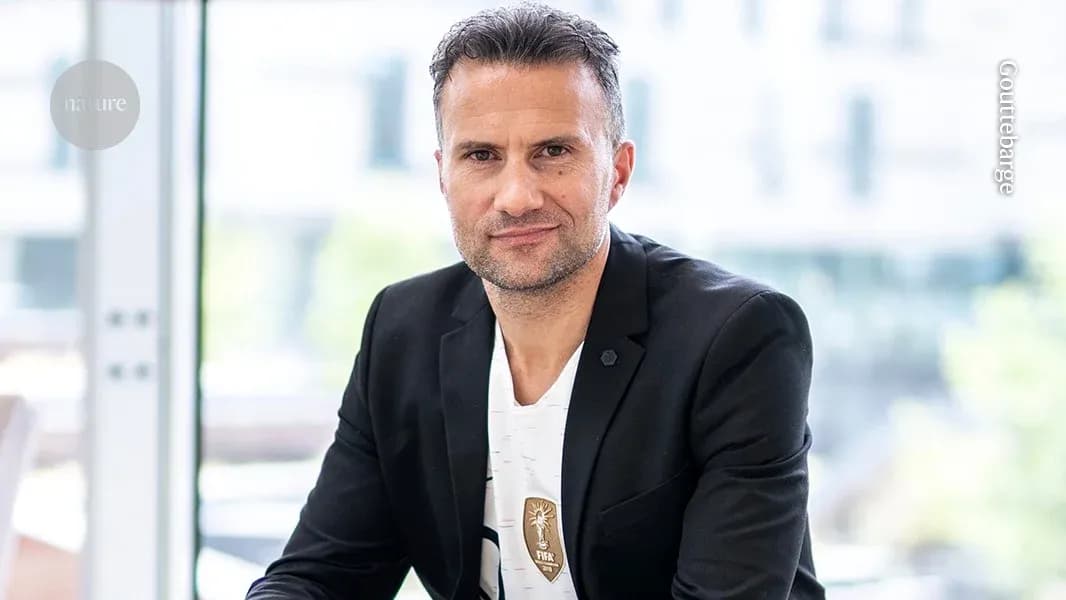
Vincent Gouttebarge knows what it feels like when the body breaks down and the mind starts to follow. He lived it.
For more than a decade, he played professional football in France and the Netherlands before retiring in 2007. The injuries he carried out of the game pushed him towards medicine. Now he sits at the heart of the sport’s health debate: medical director at FIFPRO, the global players’ union, chair of the IOC’s Mental Health Working Group, and a researcher at the University of Pretoria and Amsterdam University Medical Centre.
As the 2026 men’s World Cup kicks off across the United States, Canada and Mexico, the world sees the spectacle. Gouttebarge sees something else: a group of athletes pushed to the edge, physically and mentally.
The World Cup Dream – and Its Dark Edges
Being called up for a World Cup should be the pinnacle of a career. For many, it is. The anthem, the shirt, the chance to write your name into a nation’s history.
But the emotional reality is far more fragile.
Whether a player starts or sits on the bench. Whether the team advances or crashes out early. Whether a mistake goes viral or a goal turns them into a temporary icon. All of that shapes their mental state long after the trophy has been lifted.
And there is barely time to process any of it.
Once the World Cup ends, players are rushed straight back to their clubs. If they are fortunate, they squeeze in a week or two of rest. Many don’t get even that. There is effectively no breathing space between one season and the next. No true recovery. No reset.
That is not just a performance concern. It is a health issue.
A Calendar That Doesn’t Let Up
At the elite level, the calendar has become relentless. Domestic leagues, continental competitions, national-team fixtures, commercial tours. Matches stacked on top of matches.
Two or three games a week. Back-to-back. Sometimes without a proper day off.
Gouttebarge and FIFPRO, together with the World Leagues, went public in 2024 with a clear demand to FIFA: reschedule tournaments, build in genuine recovery windows between major competitions, protect players from overload.
Because the burden is not just muscular or cardiovascular. It is emotional. It is cognitive. It is the constant demand to perform under scrutiny, to live inside a cycle that never slows down.
And that cycle now includes a powerful new force: social media. Criticism, abuse, adoration, expectation — all of it available on a phone, all year round, holidays included. There is no off-switch.
Behind the Image: How Often Players Struggle
On the outside, professional footballers are wrapped in myth: wealth, fame, resilience. On the inside, Gouttebarge’s research tells a different story.
“Footballers are not superheroes,” he stresses. They are exposed to a wide range of health conditions. Musculoskeletal injuries are obvious. Mental-health symptoms are not.
In his epidemiological work since 2012, across professional football and elite sport, he has tracked self-reported adverse thoughts, feelings and behaviours. Full clinical diagnoses are rarely practical in that environment — they take too much time and structure for a group that lives on tight schedules and constant travel. But the patterns that emerge are clear.
Players face the same generic stressors as anyone else: relationships, family issues, financial worries, life events away from the pitch. Those pressures then collide with sport-specific factors that can magnify the damage.
Injury sits at the centre of that storm. The evidence points to a two-way relationship: poor mental health can increase the risk of musculoskeletal injury, and a serious injury, with a long spell out of training and competition, is often the single most significant adverse event in an athlete’s career. Unexpected poor performances, dips in form, or losing a place in the team only add to the weight.
The Stigma That Still Won’t Shift
Despite the progress, football remains, in many ways, an old sport with old attitudes.
In parts of Europe, the stigma around mental health is beginning to crack. Players speak a little more openly. Clubs experiment with support programmes. The conversation exists.
Yet across other football-obsessed regions — South America, Africa, large parts of Asia — admitting to depression or anxiety is still widely seen as a weakness. The dressing room culture often reinforces that. So does the fear of consequences.
If a player tears a hamstring or rolls an ankle, they talk about it freely in press conferences. The injury is visible, understood, accepted. Mention depression or anxiety, and the tone changes. Many players worry that a coach, once aware of a mental-health struggle, will quietly push them out of the starting XI.
Breaking that cycle, Gouttebarge argues, needs pressure from both directions.
From the bottom up: mental-health literacy programmes, education for players and coaches, open conversations that put mental health on the same level as physical injury.
From the top down: structural change. National federations routinely fill their medical committees with sports physicians, orthopaedic surgeons, cardiologists. Mental-health professionals are rarely at the table. That absence sends its own message.
Education That Moves the Needle
In 2018, FIFPRO rolled out a mental-health education programme aimed at players. It was not a gold-standard randomized controlled trial. But it was a start.
After the programme, attitudes improved. Behaviours shifted. Players showed better understanding and openness around mental-health challenges.
For Gouttebarge, that matters. It is evidence, however modest, that investing time in mental-health literacy works. When you explain that depression, anxiety and related issues deserve the same attention as a torn ligament, you change how players see themselves — and how they seek help.
Isolation as Punishment
One practice in the modern game particularly angers him: the quiet exile of unwanted players.
A new coach arrives. The squad is too big. Some players do not fit the tactical plan. The solution, at many clubs, is brutal in its simplicity: train alone, or with the youth team, away from the main group.
From a trade-union standpoint, it is a breach of the spirit of a contract. From a medical standpoint, it is worse.
Social support is one of the strongest protective factors for mental health. Strip a player of their daily environment — teammates, shared routines, the normal rhythm of training — and the risks climb sharply. Isolation is not just a professional humiliation. It is a health hazard.
In almost any other industry, deliberately sidelining an employee in that way would be unthinkable. In professional football, it still happens with depressing regularity. For Gouttebarge, that points to one thing: poor leadership at club level.
As the World Cup plays out across three countries and billions of screens, the spectacle will dominate the conversation. The goals, the controversies, the tactics. But for the players living inside it, the real test might come later — when the lights fade, the schedule tightens again, and the game asks, as it always does: how much more can you give?