.svg&w=384&q=75 "GoalGist logo")
Fixture Release Day: Premier League 2026/27 for Manchester United and City
The World Cup is still rumbling on, last season has barely slipped into memory, and yet English football is already reaching for its next calendar. Fixture Release Day. One of those mornings when hope feels logical and every club looks a little taller on paper.
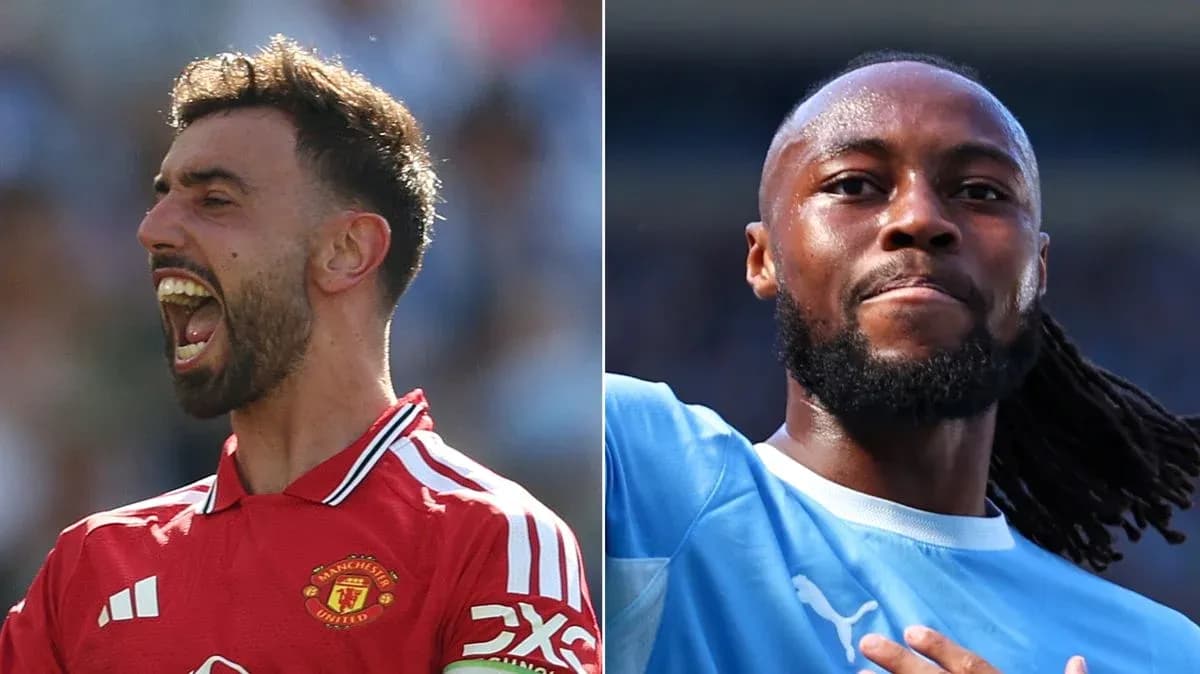
At 10am, Manchester United and Manchester City will discover the shape of their 2026/27 Premier League season. Who they start against, where the crunch runs fall, which weeks will test their depth and nerve. The fine print of a title race, or another year of frustration, is about to be typed out.
Carrick’s United look for lift-off
Old Trafford goes into this announcement with something it hasn’t had for a while: momentum that feels real.
Michael Carrick stepped in for Ruben Amorim in January and quietly changed the mood of the club. Results followed. Performances sharpened. United not only hauled themselves back into the Champions League places, they did it “with plenty to spare”, a phrase that hasn’t often been associated with them in recent years.
Now he’s permanent. No interim caveats, no “let’s see”. His first full season starts here, on a screen, in a list.
United finished last season nine points behind City and 14 adrift of champions Arsenal. That gap is the measuring stick. For a club of this size, third place is not a trophy and Carrick knows it. The objective is blunt: close the distance, step into the argument, and make “title challenge” more than a soundbite.
To do that, they’ll want a kinder opening stretch than last year’s ordeal. Arsenal, City and Chelsea all arrived in the first five fixtures then; United scraped seven points from 15. Respectable in context, nowhere near enough in a league where the top sides punish every dropped point.
This time, the hope at Old Trafford is simple: a manageable start that lets them surf the wave of positivity from Carrick’s first months, not drown in it. Get out fast, stay in touch, and belief grows. That’s the dream being pinned to a list of dates this morning.
City’s reset under a new face
Across town, the mood is different. Less buoyant, more uneasy.
For the first time in years, Manchester City are stepping into a season without Pep Guardiola. The era that defined the club has ended. The expectation has not.
Enzo Maresca is still to be formally confirmed, but inside and outside the Etihad he is widely regarded as the man chosen to follow Guardiola. The delay in finalising his appointment has left a faint haze over pre-season planning, yet the standards remain brutal. For City, “transition” is a word people use about other clubs.
This coming campaign might be their most important in a decade. They need to prove that the machine still runs, that Guardiola’s departure is a chapter break, not the end of the book. The clearest way to say that is to win the Premier League again.
Last year they began with a 4-0 dismantling of Wolves away, only to wobble with back-to-back defeats to Spurs and Brighton. A thumping 3-0 win over United steadied them, a 1-1 draw with Arsenal underlined the toughness of the early schedule. Fixture rhythm matters, even for a side as deep as City.
Maresca’s first league game, whoever it is against, will carry weight. The first run of fixtures around his early weeks in charge will tell him how quickly he must settle, how ruthless his adaptation to Guardiola’s shadow needs to be.
New faces, old stage
The fixture list will also confirm when City and United meet the new arrivals to the division.
Coventry City are back. Champions of the Championship, 11 points clear of Ipswich Town, guided by Frank Lampard, who has finally navigated his way back to the Premier League in the dugout. The Sky Blues’ return adds a fresh narrative, and a nostalgic name, to the schedule.
Ipswich sealed automatic promotion on the final day under Kieran McKenna, the highly regarded former United assistant. His decision this summer to step down and take time away from football has jolted the club. Ole Gunnar Solskjaer, a United legend, is one of the names in the frame to replace him, a storyline that would add its own emotional twist when United head to Portman Road.
Hull City claimed the third promotion spot the hard way. Sixth in the table, they tore through the play-offs, knocking out third-placed Millwall and then winning a chaotic route to Wembley. Southampton were expelled from the play-offs for spying on Middlesbrough in the semi-finals, Boro reinstated, and still Hull emerged. Oli McBurnie’s last-minute winner at Wembley sealed their return to the top flight. Another awkward away day for the big clubs, another fanbase dreaming of scalps.
Wolves, Burnley and West Ham have gone the other way. Three familiar trips off the calendar, three different challenges in their place.
Inside the “supercomputer”
The drama of the day is emotional, but the process behind it is cold and meticulous.
Work on the 2026/27 fixture list started six months ago. The Premier League fed in Champions League dates, police guidance, local events, stadium logistics and the demands of broadcasters. A scheduling system – the so-called “supercomputer” – then arranged the order, but within strict parameters.
No club plays more than two home or two away games in a row. Across any block of five fixtures, the split must be either three home and two away, or the reverse. Clubs will not start or finish with two at home or two away, in the name of fairness.
The league also tries to keep a Saturday home-away rhythm, and they are especially careful around FA Cup ties and international breaks, aiming to avoid stacking fatigue on one side of the schedule.
Christmas, that traditional pressure point, has been reshaped by the expanding European calendar. Last season there was only one Boxing Day match, a decision that angered many, even as United fans filled Old Trafford for an 8pm kick-off against Newcastle. The Premier League has already promised more Boxing Day football this year, helped by the fact the date falls on a Saturday.
Clubs are guaranteed extra rest between the packed festive rounds 18, 19 and 20, with no team playing within 60 hours of another match. Player welfare, the league insists, sits at the centre of these tweaks, even as the schedule groans under the weight of new competitions.
A later start, a crowded year
One key detail is already known: the season will start later.
The 2026/27 Premier League campaign kicks off on Saturday, August 22, a week later than last year. The league has built in 89 clear days from the end of the previous season and 33 days from the FIFA World Cup 2026 final, a nod to the physical toll on players.
The final round of fixtures lands on Sunday, May 30. A week later, on June 5, the Champions League final will be played at the Metropolitano Stadium in Madrid. Both Manchester clubs expect to be in that competition again, and the fixture release will quietly reveal where their domestic tests sit around those European nights.
The Champions League league-phase dates are already locked in:
- 8–10 September
- 13–14 October
- 20–21 October
- 3–4 November
- 24–25 November
- 8–9 December
- 19–20 January
- 27 January
For United, eight specific Premier League fixtures – the ones that follow these European games – will be circled in red. Long away trips after a midweek continental assignment are the nightmare. Big-six clashes in those slots are almost as bad. City will be thinking the same, especially as Maresca tries to bed in his ideas under maximum strain.
Title talk and tension
Inside Old Trafford, the ambition has already been voiced. Omar Berrada has spoken openly about United targeting a Premier League title “perhaps as soon as next season”. On the surface, that sounds bold. Given the gap to Arsenal and City, it is.
Yet this is exactly the kind of day when such statements take shape. A favourable run-in here, a brutal winter there, and the tone of a season can be altered before a ball is kicked.
For City, the message is harsher. They “need to be back at the top”. Anything less than a serious title push would invite questions they have largely avoided for a decade. How much of their dominance was Guardiola? How much is the club’s structure? Fixture congestion, new rivals, a different voice in the dressing room – all of it will be tested.
And there is still that thin layer of uncertainty. Guardiola has gone. Maresca is expected, but not yet announced. The longer that limbo continues, the more the first batch of fixtures will be scoured for early tripwires.
Two hours of possibility
As the clock ticks towards 10am, both halves of Manchester are doing the same thing: guessing.
Who on the opening weekend? A newly promoted side at home to ease into the campaign, or a heavyweight clash that sets the tone? A derby early, or a title decider feel late in the year? Where do Arsenal, Liverpool, Chelsea drop into the sequence?
The answers arrive in a neat, clinical list. The reaction will be anything but.
United will look for a platform to turn Carrick’s promising half-season into something more substantial. City will search the schedule for evidence that the post-Guardiola era can still be defined by trophies, not transition.
By tonight, fans will have mapped out the danger runs, the dream spells, the nightmare Decembers. By May, only one question will matter: whose season did the computer favour, and who was strong enough to bend the calendar to their will?