.svg&w=384&q=75 "GoalGist logo")
Everton's League Cup Journey: A History of Heartbreak
The League Cup has never felt like Everton’s competition. It has felt like a trap.
Since the tournament began in 1960-61, they have reached just two finals. Two. For a club of Everton’s size, that record borders on the absurd. The first, in 1977, dragged on for three matches against Aston Villa before ending in heartbreak – the decisive replay lost in the final minute of extra time. The second, in 1984, went to Liverpool.
That’s the story in miniature: long waits, longer nights, and the wrong ending.
The 1990s only deepened the scar tissue. Portsmouth. Millwall. York. Oxford. Each name still lands like a grim punchline, a reminder of trips where the bigger club turned up, blinked, and went home embarrassed. The competition became a running joke, except nobody at Goodison was laughing.
Since that 1984 final, Everton have managed just three semi-final appearances, the last of them in 2016. Even that ended in familiar fashion: a 3-1 aggregate lead against Manchester City squandered. The chance of a Wembley return slipped away.
The decade since has brought only flickers. Three quarter-finals, yes, but also a pattern that speaks louder: four exits at the third-round stage in the last five seasons, and five shoot-out defeats in their last eight ties. When the League Cup comes around, Everton either stumble early or fall apart late.
So why should this year be any different?
Preston, the Cameras and a Manager Under Scrutiny
Sky’s cameras will be at Deepdale on Wednesday night. That alone tells you the mood music. They sense a story. Usually that means one of two things: a giant-killing, or a giant in trouble.
David Moyes’ recent comments have only added to the tension. Asked the familiar question about balancing a cup run with Premier League survival, he bristled.
"This is a question every journalist asks every manager and, in some ways, I think: 'Are those journalists dead stupid? Do you think none of the managers want to win the cups?'
"If I asked you: 'Would it be more important than staying in the Premier League?' – what would your answer be? Your answer will half answer your own question.
"I can't think of any manager who wouldn't want a good run in a cup competition."
The words themselves are clear enough. The reaction has not been. Many Everton supporters have heard them as a softening of priorities, a hint that the League Cup sits firmly behind the relegation battle. After years of underachievement in knock-out football, they wanted a manager to lean into the cups, not treat them as a problem to be solved.
Last season’s evidence doesn’t help Moyes. He made sweeping changes for a third-round trip to Wolves, a side that had lost five of their opening six league games. Everton still went out. It felt like a wasted opportunity, a night where rotation trumped ambition.
This time, the context is different. Everton are not in Europe. The schedule is lighter. The squad, on paper, should be able to absorb extra matches. A cup run can generate momentum that seeps into the league. It can change the temperature around a club.
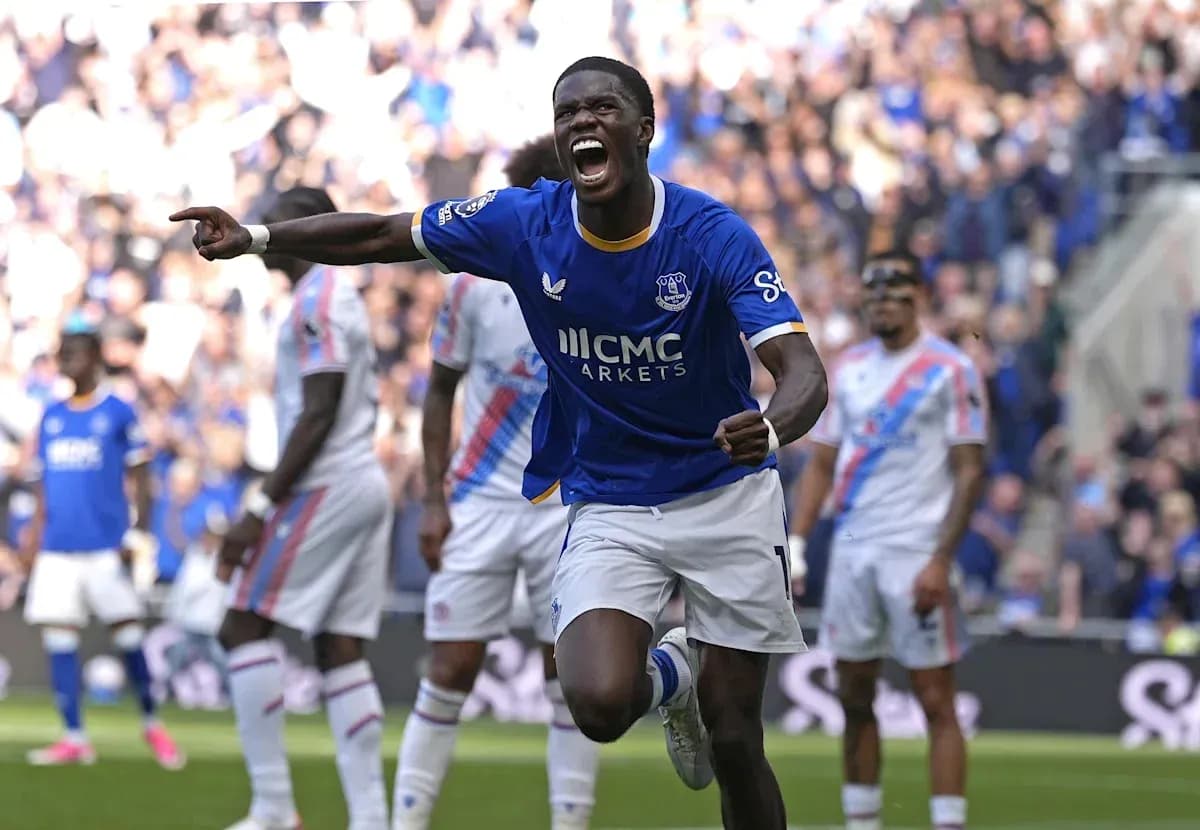
Lose at Preston, and that early feel-good factor from the opening-day win over Crystal Palace starts to evaporate.
An Old Fixture in a New Era
Preston v Everton is one of English football’s oldest fixtures, a throwback to the game’s earliest days. Yet in the modern era, it has almost vanished from view.
Both clubs were founder members of the Football League in 1888. Preston set the standard from the very start, winning the first league title and the FA Cup in the same season to complete the domestic Double. They went unbeaten in the league that year, earning the nickname the ‘Invincibles’. Only Arsenal, in 2004, have matched that achievement.
Preston retained the title the following season and then finished runners-up three years in a row. The honours slowed after that. The FA Cup arrived again in 1938, but the league title never did. Even so, they remained a top-flight presence, finishing Division One runners-up twice in the 1950s and holding their place among the elite until relegation in 1961.
That relegation carries a footnote: 1961 was the last time Everton played a competitive game at Deepdale.
Since then, the fixture has almost disappeared. Just two meetings in more than six decades, both at Goodison, both ending 2-0 to Everton – one in the FA Cup, one in the League Cup.
The closest Preston have come to returning to the top flight came via the play-offs, losing finals in 2001 and 2005. The first of those had a familiar face in the dugout: David Moyes. Before he became synonymous with Everton, he spent five years as a player and then four as manager at Preston, leading them to promotion to Division One – now the Championship – in 2000 and to that play-off final a year later.
His relationship with Deepdale is long and layered. On Wednesday, he walks back in as the Premier League manager under pressure to avoid an upset.
Preston’s Cup Path and an Everton Twist
There is already a curious Everton thread running through Preston’s League Cup campaign. Their first-round tie against Huddersfield was played at Goodison Park, not Deepdale, because Preston’s pitch was not ready.
They won that game. Since then, though, their league form has stuttered: defeats to Bolton and Wolves have checked any early-season optimism.
So they arrive at this tie with a mixed backdrop – a cup win on Merseyside, two league losses, and the sense that this match could tilt their mood one way or the other.
Everton’s last meeting with Preston came 22 years ago, a League Cup third-round tie at Goodison on 27 October 2004. Lee Carsley and Marcus Bent scored in a 2-0 win that felt routine at the time. Nobody then would have guessed it would be more than two decades before the clubs met again in a competitive game.
Team Selection and the Rotation Dilemma
Moyes is expected to rotate again. The names in contention underline the depth at his disposal: Tyler Dibling, Carlos Alcaraz, Beto, Brennan Johnson and Jake O'Brien are all pushing to come into the side.
On paper, those options should strengthen rather than weaken Everton. In reality, supporters are wary. Last season’s Wolves defeat still lingers as a warning about making too many changes, about disrupting rhythm in a competition where one bad night ends the story.
Moyes must now find a balance: respect the cup, respect the opponent, and still manage minutes in a squad that will be asked to fight hard in the league.
A Cup, a Question and a Nervous Fanbase
The manager insists he wants a cup run. The fans want proof, not theory. His comments, or at least how they have been interpreted, have sharpened the focus on this tie rather than dulled it.
Sky are there for a reason. Preston sense a chance. Everton know their own history in this competition all too well.
Nerves are understandable. The question is simple: does this Everton side finally break the pattern, or does the League Cup write another miserable chapter?