.svg&w=384&q=75 "GoalGist logo")
Enzo Maresca Takes Charge at Manchester City: The Challenge Ahead
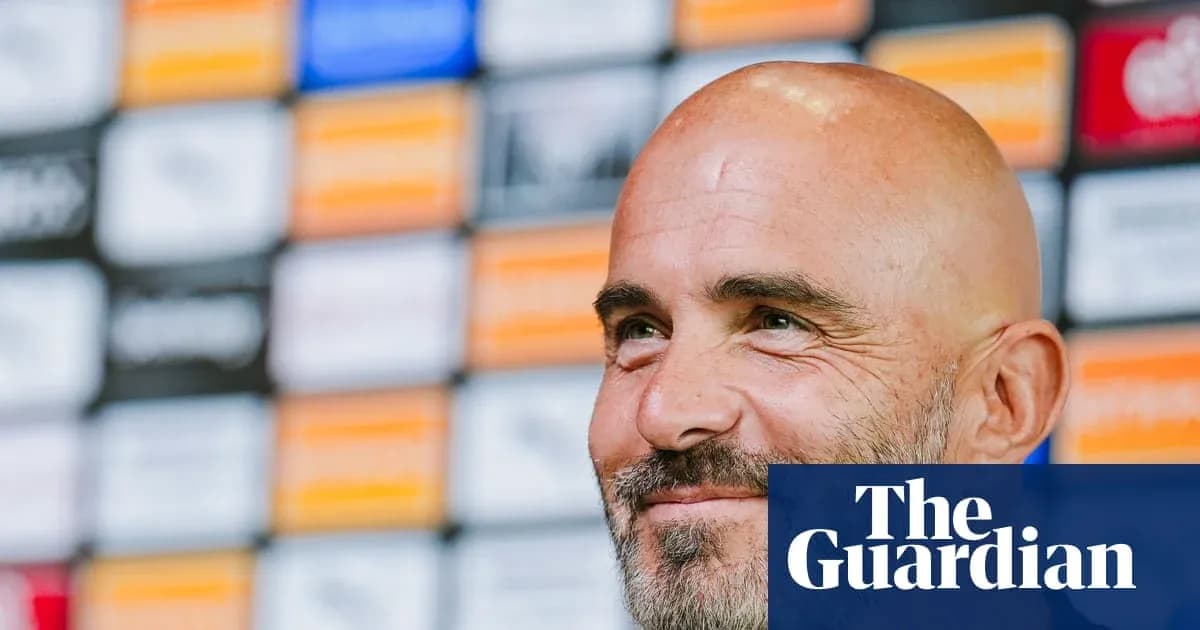
Enzo Maresca walked into Manchester City looking like a man back from holiday, not one about to inherit the most intimidating job in club football. Relaxed, tanned, smiling. Then his first words cut straight through the sunshine.
“Before we start, I would like to send a message and a big hug to Kevin Keegan’s family for this moment.”
A gentle opening, a nod to a man who helped shape City long before Abu Dhabi money and Guardiola’s genius turned the club into a machine. Keegan’s death on Monday hung over the room, and Maresca chose to feel it rather than ignore it.
But sentiment only delays the inevitable question. How do you follow Pep?
Naming the giants
Maresca, 46, took his place on the same dais Guardiola occupied for a decade, under a giant “Welcome back Enzo” banner. It referenced his previous spell in charge of City’s elite development squad in 2020-21 and his role as Guardiola’s assistant in the 2022-23 treble season. It also served as a reminder: this is not a stranger walking into the building. He knows the corridors, the politics, the expectations.
He also knows history.
“The history of the manager with many years in the same club always struggled a little bit. After Sir Alex, after Arsène,” he said, unprompted, dragging Ferguson and Wenger into the room alongside Guardiola. Say their names, confront the shadow. “But also, it’s a challenge to try to do the right things immediately for this organisation, for the fans, for everyone.”
This is the elephant in the room dressed in a tracksuit. Guardiola leaves with 20 trophies in 10 years and a place alongside Ferguson in English football’s pantheon. Anyone who comes after him is walking a tightrope over a canyon of comparison. Maresca did not flinch from that. He tried to own it.
A club that does not panic
The new manager knows goodwill at City, especially from the stands, is conditional. Lose a couple of games, look confused on the touchline, and the warm welcome will cool quickly. So he pointed somewhere else for reassurance: upstairs.
“This club has had three managers in 17 years,” he said, leaning on the stability that has defined City under chairman Khaldoon al-Mubarak and chief executive Ferran Soriano. “This is not normal, so this is one of the things that I’m confident we can do a great job and continue to do the job that has been done in the last years. Roberto [Mancini] was here, then Manuel [Pellegrini] and then Pep – for 10 years.”
Mancini’s era began in December 2009 and ended in May 2013, a combustible, often chaotic period that brought the title but also frayed nerves in the boardroom. Pellegrini calmed the waters. Guardiola then redefined what City – and English football – could look like.
Al-Mubarak and Soriano have already worked closely with Maresca across his two earlier stints at the club. They clearly believe he combines tactical sharpness with the temperament they prize. Not volatile like Mancini. Not simply steady like Pellegrini. Someone they think can carry the Guardiola legacy without being crushed by it.
Yet Maresca arrives with baggage of his own. His departure from Chelsea on New Year’s Day was messy enough to require an apology from him and a £17m compensation cheque from City to prise him away from west London. When his behaviour at Stamford Bridge came up, the shutters came down.
“I feel quite lucky in terms of my former clubs – Leicester, Chelsea – I think we did a great job,” he said, firmly closing that door. “In both clubs, the identity of the team was clear, the success of the team was clear, and I feel very lucky to be part of these clubs. But now we are here today. That is the most important thing, just about City. And nothing to add.”
No elaboration. No defence. Just a pivot back to the present.
Titles, talent and a £116m statement
If there was any doubt about his ambition, Maresca removed it with one word: “titles”. He spoke openly about chasing them this season. City expect nothing less.
To help him, the club have already delivered a marquee signing. Elliot Anderson, a £116m buy from Nottingham Forest, arrives to reinforce midfield. Powerful, technical, versatile – he will be asked to patrol the area that has so often been the beating heart of Guardiola’s City.
More may follow. City are pushing to bring in Lille’s Ayyoub Bouaddi, who lit up the World Cup for Morocco and would add another layer of energy and control in midfield. Maresca still likes Malo Gusto, one of his right-backs at Chelsea, and is keeping that option alive. If Omar Marmoush leaves, City will move for a similar, rapid forward to stretch defences and keep the attack unpredictable.
This is not a quiet handover. It is a squad being tuned for another assault on every front.
The Rodri question
One player Maresca is desperate to keep sits at the centre of everything. Rodri. World Cup winner with Spain on Sunday, Golden Ball recipient, and arguably the most important outfield player in the English game.
His ability to control tempo in the chaos of modern football is priceless. City know it. So do Real Madrid.
Rodri, now 30, will undergo surgery on a back problem on Monday. The issue is not considered serious, but it will rule him out of the opening weekend when City host Bournemouth. The real tension sits elsewhere: his contract.
He has a year left on his deal and is refusing, for now, to sign the new terms on the table. The clock ticks towards 1 September, the day the transfer window closes. Will Madrid test City’s resolve? Can City afford to lose the man who knits their entire structure together?
Maresca will not say it publicly, but his first season could hinge on that answer.
Asia, youth and a ticking clock
Before any of that, there is work to do. On Tuesday, Maresca and his squad fly out for a pre-season tour of Asia, with games against Inter in Hong Kong and K-League All Stars and Atlético Madrid in Seoul.
For now, the training pitches are filled with youth.
“I’m working at the moment with many young players,” he said. “That is always good because they are full of energy and some of them are very good. The last group of players are going to join three or four days before the Community Shield and we will have all the squad.”
The World Cup has delayed the return of some of City’s biggest names, but Maresca will be reunited on tour with those who exited early, including Josko Gvardiol, Mateo Kovacic and Abdukodir Khusanov. The full group will only come together on the eve of the serious stuff.
That starts with the Community Shield against Arsenal in Cardiff on Sunday 16 August. A curtain-raiser in name only. From that day, every tactical tweak, every selection, every dropped point will be measured against the Guardiola standard.
Evolve or be exposed
Maresca is not pretending he will simply press play on Pep’s old blueprint. He spoke about adaptation, about reading where the sport is heading.
“You need to adapt, evolve,” he said. “Set pieces, man to man – it’s a little bit the direction where football is going. We managers, it’s our duty to find solutions.”
He knows the trends: aggressive pressing, detailed set-piece routines, man-to-man pressing schemes that drag games into individual duels. He also knows City cannot just copy what worked last season and expect the same result. Opponents have spent years studying Guardiola’s model. They will come for the successor hard.
Maresca has won the Championship with Leicester. He has taken Chelsea to fourth in the Premier League and lifted the Conference League. Last summer, his Chelsea side dismantled Paris Saint-Germain 3-0 in the Fifa Club World Cup final, a performance that felt like a job application written in neon.
Now he has the job that comes after the job. The one nobody truly wants and everybody secretly craves.
He has the platform, the squad, the backing. He has the shadow of a genius looming over his shoulder.
What he does next will tell us whether Manchester City are entering a gentle afterglow or the start of a new era with a different voice, but the same ruthless edge.

