.svg&w=384&q=75 "GoalGist logo")
DR Congo's World Cup Journey Amid Ebola Crisis
The Democratic Republic of the Congo’s return to the World Cup stage has been jolted by a brutal reminder of reality at home.
With Ebola spreading in the east of the country, the federation has scrapped a three-day training camp and farewell ceremony in Kinshasa, forcing Sébastien Desabre’s side to complete their preparations away from their own people.
Farewell cancelled, journey rerouted
The plan had been simple and symbolic. First, a gathering in the capital to train, to wave goodbye, to let a football‑starved public see the Leopards up close before they flew out. Then Europe, then America, then the World Cup.
Only the first act has been torn from the script.
“There were three stages of preparation: in Kinshasa to say goodbye to the public, Belgium and Spain with two friendly matches … and the third stage from 11 June in Houston. Only one stage was cancelled – the one in Kinshasa,” team spokesman Jerry Kalemo said.
The decision comes after an outbreak of a rare strain of Ebola, Bundibugyo, which is believed to have killed more than 130 people and led to nearly 600 suspected cases. The World Health Organization has already declared it a public health emergency of international concern, and football has had to bend to that reality.
Some staff members still based in the DRC “are leaving in the next hours”, Kalemo added. The players and Desabre, all based abroad, will link up without setting foot in the country.
Warm‑ups go ahead, World Cup path unchanged
On the pitch, the schedule remains intact. The DRC will face Denmark in Liège on 3 June and Chile in southern Spain on 9 June, with Kalemo confirming both fixtures are on as planned.
From there, the team heads to Houston on 11 June to begin the final phase before their first World Cup appearance since 1974, when they travelled as Zaïre.
The opening game is a daunting one: Portugal in Houston on 17 June. After that, Colombia await in Guadalajara on 23 June, then Uzbekistan in Atlanta on 27 June. It is Group K, a new era and a steep test all at once.
The route to get here was hard enough. The Leopards clinched their place by beating Jamaica in a playoff in Mexico, a statement victory that snapped decades of absence from football’s biggest stage.
Health controls and a narrow corridor to the US
Off the field, the team’s path to the United States has been shaped by public health policy as much as by fixture lists.
The Centers for Disease Control and Prevention announced this week that the US will bar entry to all foreign nationals who have been in the DRC, Uganda or South Sudan in the previous three weeks. The measure, set for 30 days, could have threatened the DRC’s World Cup dream before a ball was kicked.
A US official has confirmed that the squad will not be caught by that net. Having trained in Europe for several weeks, players, coaches and officials who have not returned to the DRC in the last 21 days will be allowed to enter, though any delegation member who did go back during that period will face the same quarantine rules as US citizens returning from affected countries.
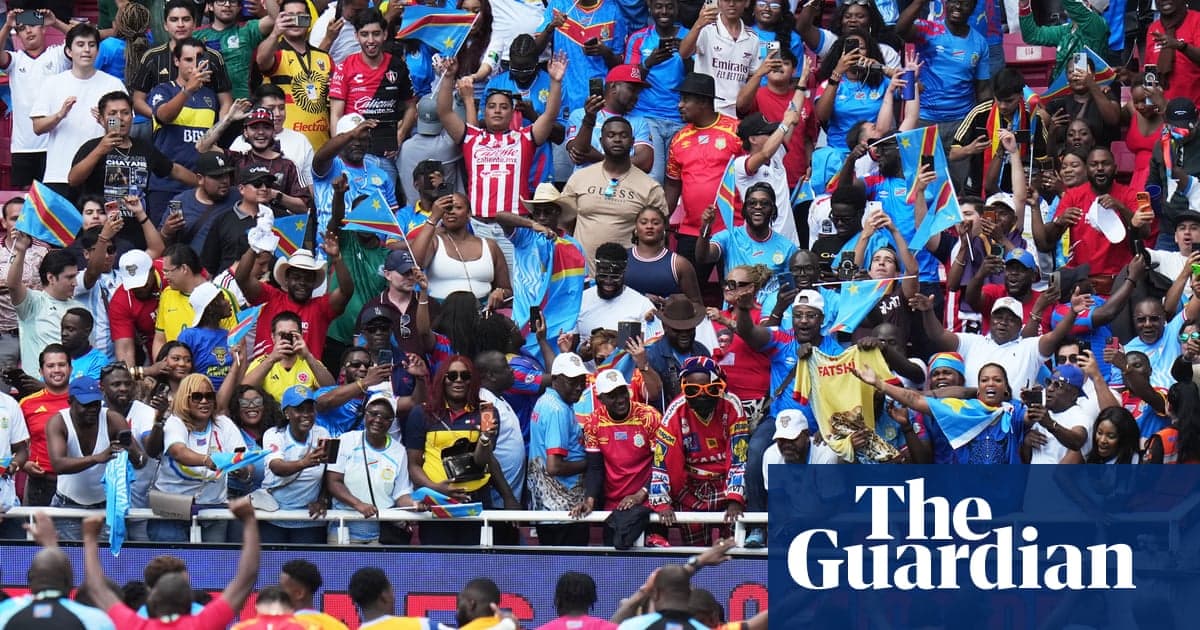
Fans will not be so fortunate. The exception carved out for the team does not extend to supporters hoping to travel, a cruel twist for a country that has waited half a century for this moment.
Fifa, for its part, said it “is aware of and monitoring the situation regarding an Ebola outbreak and is in close communication with the DRC football association [Fecofa] to ensure that the team are made aware of all medical and security guidance.”
Inside the US government, the White House World Cup taskforce, operating under the Department of Homeland Security, has stressed that it is “coordinating closely” with agencies on health and security and “closely monitoring” the outbreak.
The message is clear: the World Cup will go on, but not at the expense of public health.
Desabre’s squad and a late defensive reshuffle
Desabre’s 26-man squad blends Premier League steel with European experience. Newcastle forward Yoane Wissa, Sunderland midfielder Noah Sadiki and West Ham full-back Aaron Wan-Bissaka headline a group that has quietly grown in stature across the continent.
There has already been disruption, though. Hibernian centre-back Rocky Bushiri, initially named in the squad, has withdrawn with a suspected achilles injury. His place goes to another Scottish Premiership player, Kilmarnock’s Aaron Tshibola, as the coach reshapes his defensive options on the fly.
The absence of a send-off in Kinshasa strips away one emotional layer from their preparation, but it does not lessen the scale of what awaits. A nation that last walked onto this stage under a different name now returns under a different flag, with a different generation and a different burden.
New power at Fecofa
While the national team adjusts its plans, power has shifted at the top of the country’s football hierarchy.
Véron Mosengo-Omba, former general secretary of the Confederation of African Football, has been elected president of Fecofa. Running unopposed, he secured 60 of a possible 65 votes to take control of a federation trying to modernise under the glare of a World Cup year.
Mosengo-Omba stepped down from his Caf role in March after five years. A long-time ally of Fifa president Gianni Infantino, and a university friend, he followed him from Uefa to Fifa in 2016 before moving to Caf in 2021. Now he returns home with significant political capital and a global network at his back.
The timing is striking. As the Leopards prepare to step back into the World Cup spotlight, their federation is being reshaped by a figure with deep ties to the game’s corridors of power.
The farewell in Kinshasa will have to wait. The question now is whether this team, travelling light and training far from home, can carry the weight of a country that has not seen itself on this stage since 1974 – and do it while a health crisis rages behind them.

