.svg&w=384&q=75 "GoalGist logo")
Derek McInnes Leaves Hearts for Rangers: The Nearly Man's Journey
Derek McInnes walked into Hearts last May talking like a man who had finally come home. “This is the job I felt I should have had years ago,” he said. “Everything I wanted.”
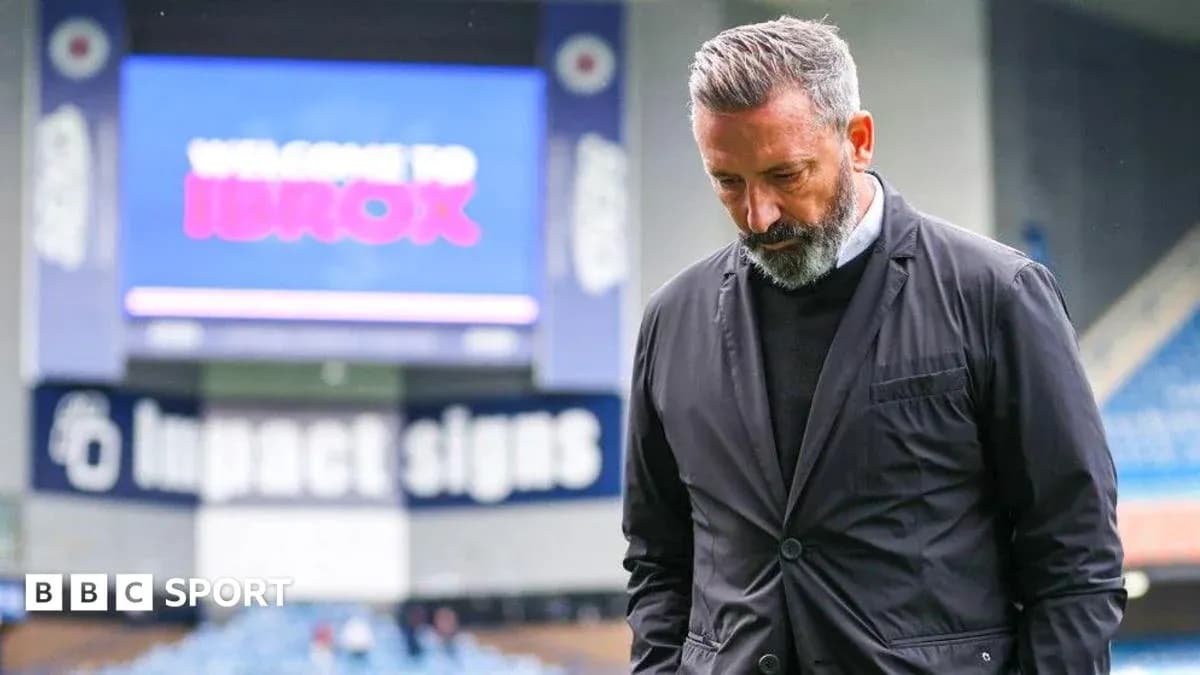
Thirteen months later, he’s gone. Not for England, not for some exotic league, but for the one club everybody always knew would turn his head. Rangers called, and Hearts never stood a chance.
Hearts get the nearly title – and the nearly man
You don’t need to dig too deep to see why some at Tynecastle feel betrayed. McInnes came within three minutes of delivering the Scottish Premiership title. Three minutes from the greatest day in many Hearts supporters’ lives. Records fell all season, the club punching far above its financial weight, the stadium shaking under the weight of belief.
Yet even as he built something thrilling, there was always a distance. McInnes was admired, respected, even liked. But he was never truly “one of them”. Not in the way a legacy manager has to be. Not with the Rangers job hovering in the background like a recurring dream.
Hearts fans knew the score. So did McInnes. So did Rangers. Sooner or later, he was going to Ibrox. The only surprise is that it took this long.
What tempers the anger in Gorgie is the sense that this was always a stepping stone, not a love affair. Hearts got a season of daring football, a title race nobody saw coming, and a manager who lifted the club’s profile. They also got a reminder of where they sit in the food chain when Glasgow comes calling.
Clash of worlds: data versus control
McInnes is old-school in one crucial way: he wants control. At Kilmarnock and, above all, Aberdeen, he ran the football department with a firm hand. Recruitment, team selection, tactical direction – his fingerprints were everywhere.
Hearts, in their new incarnation, are different. Jamestown Analytics hold serious sway in the way the club operates. Data shapes decisions, from signings to squad usage. For a manager who trusts his eye and his instincts, that’s a constant friction point.
He adapted. He worked within the structure. But he never looked entirely at ease with analysts effectively having veto power over players he fancied or pushing others into his team because their numbers shone on a screen.
At Rangers, that changes. This is his train set now.
He will have a strong grip on the football department. He will have money – more than he has ever had to spend as a manager. The owners have already poured significant sums into the club and are ready to go again this summer. For a coach who almost stole a title on buttons, that kind of backing is a powerful lure.
Yet every pound comes with a price.
The weight of Ibrox
The remit could not be clearer: win the Premiership. Nothing else will do.
Danny Rohl tried and fell short. Third place brought no sympathy. Philippe Clement finished second and still the fans wanted him gone. The patience at Ibrox is not thin; it’s almost non-existent. Talk, charm, and tactical diagrams mean nothing if Celtic are still the ones lifting the trophy.
McInnes knows this club. He understands the league. He communicates with clarity and conviction. His tactical acumen was on full display last season when his Hearts side repeatedly caused Rangers problems and exposed their soft spots. That, in part, is why he’s in the door now.
He’s tough. He’s self-assured. He’s a big enough personality to walk into that dressing room and that stadium and not shrink. Rangers demand a figure who can carry the weight of history and expectation on his shoulders. McInnes has spent most of his managerial life operating in that shadow. Now he has to live in it.
A career of almosts
For all his qualities, there’s a thread running through McInnes’ career that he has never fully cut: the sense of the nearly man.
He turned Aberdeen into a regular at Hampden. League Cup finals in 2013-14, 2016-17, 2018-19. A Scottish Cup final in 2016-17. For a club outside the Old Firm, that’s a serious body of work. Hampden almost became a second home.
Yet the silverware did not flow. Celtic repeatedly blocked his path, and nobody can fairly hammer him for losing to them in their pomp. The problem is the other exits. Cup defeats to Dundee United, Hibs, St Johnstone, Dundee, Hearts, Motherwell, Hearts again, St Mirren, Motherwell again, United again – they all sit on the record too.
In the years since he last lifted a trophy with a Premiership club, others have found a way. St Johnstone, Inverness, Hibs, St Johnstone again and Aberdeen have all won the Scottish Cup. Ross County, St Johnstone and St Mirren have all taken the League Cup. Tommy Wright, John Hughes, Alan Stubbs, Callum Davidson (twice), Jimmy Thelin, Jim McIntyre, Stephen Robinson – a roll call of managers outside the Old Firm who have gone the distance where McInnes has not.
That is the question that hangs over him now. At a club where second place is failure, can a manager with a history of near-misses finally turn “almost” into “done”?
From stepping stone to ultimate test
Hearts, in the end, were the right job at the right time, but not the one he dreamed of forever. A platform, not a destination. He gave them a season they will talk about for years, then walked away the moment the call he had always expected finally came.
Now he steps into Ibrox with authority, resources and an angry fanbase demanding titles, not explanations. The excuses that might have washed elsewhere will not survive a month in Glasgow if Celtic keep winning.
McInnes has the club he always wanted, the power he craves and the budget he has never had. The nearly man has run out of places to almost succeed.