.svg&w=384&q=75 "GoalGist logo")
Curaçao’s World Cup Journey: From the Netherlands to the Big Stage
The story of Curaçao’s World Cup squad begins far from the Caribbean island itself.
A former Dutch colony, Curaçao still belongs to the Kingdom of the Netherlands, but most of its footballing lifeblood now runs through Dutch streets and academies. Generations of Curaçaoan families moved to the Netherlands, and their descendants now form the spine of a national team only recognised by FIFA in 2010. Out of 26 players heading into this World Cup, just one was actually born on the island.
He also happens to be the most recognisable name: Tahith Chong.
An island’s exports
Chong’s path is familiar to anyone who follows European football. He broke through at Manchester United, made 16 competitive appearances, then drifted into the loan wilderness with a disappointing six-month spell at Werder Bremen in 2021. Today he is at Sheffield United, another stop in a career that has never quite matched the early hype but still carries the weight of expectation for Curaçao.
He is not alone in having traced a route through Germany. Six players in the current squad have Bundesliga or lower-league German experience. Gervane Kastaneer once turned out for 1. FC Kaiserslautern, Riechedly Bazoer for VfL Wolfsburg, Roshon van Eijma for Preußen Münster, and both Jürgen Locadia and Joshua Brenet wore the colours of TSG Hoffenheim.
It is Brenet’s journey, though, that stands out. For the wrong reasons as often as the right ones.
From Nagelsmann’s project to costly mistake
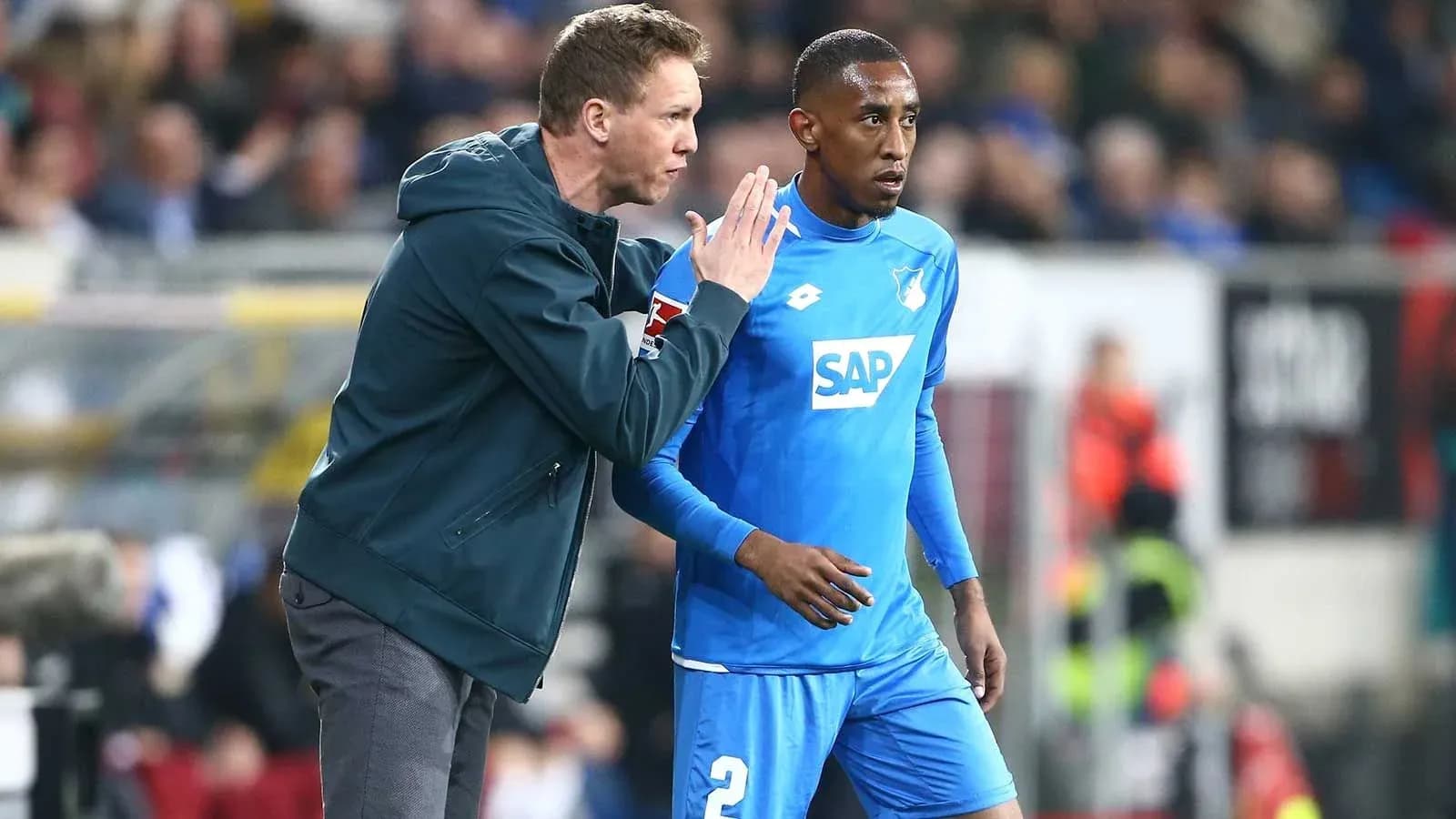
Back in 2018, Hoffenheim believed they were buying a proven winner. Brenet arrived from PSV Eindhoven for €3.5 million, a three-time Eredivisie champion with two senior caps for the Netherlands. Julian Nagelsmann, now in charge of Germany, pushed for the deal. He saw an athletic, attacking right-back who could thrive in his high-tempo system.
The reality unravelled quickly.
Brenet began his Bundesliga life on the bench. Then came the moment that defined his time at TSG. Ahead of Hoffenheim’s first-ever Champions League match, against Shakhtar Donetsk, he skipped a video session. Nagelsmann’s response was ruthless: Brenet was dropped from the squad.
He did fight his way back into consideration, but only in flashes. Cameos, not a career. When Nagelsmann left, his successor Alfred Schreuder – now Nagelsmann’s assistant with the DFB – barely looked his way. Sebastian Hoeneß went even further, banishing him to the reserves in the fourth-tier Regionalliga Südwest.
On the pitch, his stock had collapsed. Off it, his reputation was taking even heavier damage.
Chronic lateness, repeated disciplinary issues, a sense that Hoffenheim were desperate to move him on. Yet no buyer emerged. Only in 2022, when his contract ran down, did he finally escape on a free transfer to Twente Enschede.
A revival, then another crash
In Enschede, the story briefly changed. Brenet started to look like a footballer again. Strong performances, renewed confidence, a sense that he had finally steadied himself.
Then he blew it.
In January 2023, he was caught driving without a licence. Twice. In two weeks. He had already lost that licence in 2020 for drink-driving.
The courtroom verdict was scathing. “He clearly has no regard for authority. It seems to me as though he is continuing to play football after receiving a red card,” the presiding judge said, before handing down a one-month prison sentence in 2024. Three years earlier, Brenet had already received a suspended sentence, a fine and community service for domestic violence.
The prison term for driving without a licence was later converted to community service on appeal. The damage with Twente, though, was done. The club terminated his contract.
The defender’s career lurched again, this time towards football’s periphery. He joined Al-Rayyan in Qatar, managed only six appearances in the 2024/25 season, then resurfaced at Livingston FC in Scotland last autumn. By the second half of the campaign he had moved again, this time to Kayserispor in Turkey.
A career that once promised stability at the top level had become a restless shuffle across continents.
New colours, old ghosts
Now Brenet is back on the big stage, just not in the shirt many once expected.
Despite a long history with Dutch youth teams and a senior debut for Oranje during the 2016 World Cup qualifiers, FIFA granted his switch of allegiance to Curaçao, the country of his parents. It has given him something he had been missing for years: a clear role, and a team that needs him.
Since his debut for Curaçao in 2024, he has scored six goals in 17 appearances. In their final warm-up match against Aruba, he started at right-back and scored again, a reminder of the attacking threat that first caught Nagelsmann’s eye.
On Sunday at 7 pm, the circle tightens.
Curaçao will open their World Cup campaign against Germany. On the opposite bench: Nagelsmann and Schreuder, the coaches who once dropped him, sidelined him, and ultimately watched his Bundesliga career disintegrate.
For Brenet, it is more than a group-stage fixture. It is a collision of past and present, a chance to show that the player who kept sabotaging himself can still rise on the game’s biggest stage – and that Curaçao’s story in this World Cup will not just be about where its players came from, but where they are determined to go.