.svg&w=384&q=75 "GoalGist logo")
Colorado Springs Defeats El Paso Locomotive 2–1 in USL Cup Clash
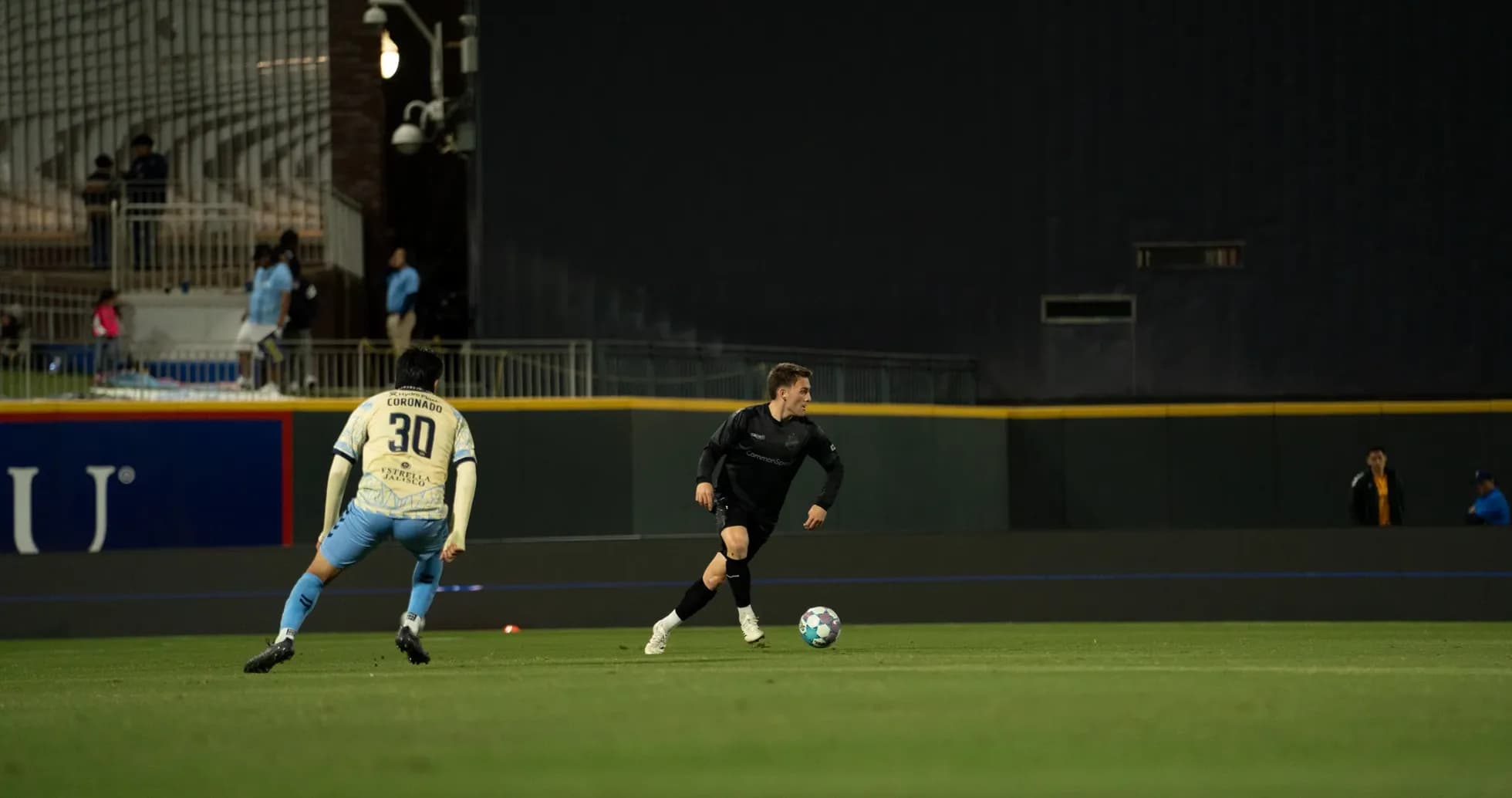
Under the thin Colorado night air at Weidner Field, Colorado Springs edged El Paso Locomotive 2–1, a result that felt less like a group-stage formality and more like a statement of hierarchy in USL Cup 2026, Group 2. Following this result, the table snapshots the story: Colorado Springs sitting first on 9 points, El Paso second on 6 – both already shaped by clear tactical identities that collided over 90 tense minutes.
I. The Big Picture – Group Leaders vs Challengers
Colorado Springs came into this tie as the group’s standard-bearers. Heading into this game, they had won all 3 of their matches in total, scoring 7 and conceding just 1, with a total goal difference of +6 (7 goals for, 1 against). At home, they were even more ruthless: 2 wins from 2, 6 goals for and 1 against, an average of 3.0 goals for and 0.5 against at Weidner Field. This is a side built on front-foot aggression backed by a miserly defence.
El Paso Locomotive arrived as the primary threat to that supremacy. Heading into this game, they had 2 wins and 1 defeat in total, 5 goals for and 3 against, a total goal difference of +2. Their away profile was balanced but less dominant: 2 matches, 1 win and 1 loss, 3 goals scored and 3 conceded, with an away average of 1.5 goals both for and against. This was the classic hunter-versus-leader scenario: El Paso trying to drag the group leaders down to their tempo, Colorado Springs determined to keep them at arm’s length.
The 1–1 scoreline at half-time suggested parity, but Colorado’s habit of sustaining pressure across 90 minutes – and their home scoring average – hinted that the second half would tilt their way. The 2–1 full-time score confirmed it.
II. Tactical Voids and Discipline – Edges at the Margins
There were no explicit absentees listed, so both coaches, Alan McCann for Colorado Springs and Junior Gonzalez for El Paso, appeared to have their core groups intact. That made this less about who was missing and more about how the existing pieces were arranged.
Season-long disciplinary trends framed the undercurrent. Colorado Springs carry a subtle warning light: their yellow cards cluster late. Heading into this game, 22.22% of their yellows came between 61–75 minutes, another 22.22% between 76–90, and a notable 33.33% in the 91–105 window. This is a side that gets increasingly combative as matches stretch, a double-edged trait that can fuel late surges but also invite danger.
El Paso’s discipline profile is sharper and more volatile. Half of their yellow cards arrive between 31–45 minutes (50.00%), with another 16.67% between 61–75 and 33.33% from 91–105. More starkly, they have already seen a red card between 16–30 minutes (100.00% of their reds in that slot). That pattern suggests a team that can boil over early, especially when pressed high or forced into recovery runs. In a tight group match, that volatility is a structural risk.
III. Key Matchups – Hunter vs Shield, Engine Room Battles
With no top-scorer list available, the “Hunter vs Shield” duel has to be read collectively. Colorado Springs’ attack is distributed across a dynamic front unit: Y. Hanya and J. Tejada started as clear forward threats, supported by the likes of F. Daroma and S. Masereka from deeper or wide zones. At home, this collective has produced 6 goals in 2 matches, at an average of 3.0 per game, and crucially, Colorado have failed to score in 0 matches in total. They always find a way through.
El Paso’s “shield” is built around a back line anchored by Tony Alfaro, with K. Twumasi and R. Ruiz flanking him and A. Quezada offering width and recovery. Heading into this game, El Paso had conceded 3 goals in total, all of them on their travels; at home they had yet to concede. On their travels, they were shipping 1.5 goals per game, a number that aligned uncomfortably with Colorado’s home average.
The engine room clash was equally telling. For Colorado Springs, S. Williams and A. Rocha formed the core of the midfield structure, with T. Magee and Daroma offering connective tissue between lines. They needed to set the rhythm, protect C. Shutler, and feed Hanya and Tejada quickly.
El Paso’s counter was built around E. Calvillo and D. Gomez, with Gabriel Torres and A. Mendez providing the vertical running and passing lanes into A. Moreno and R. Rubin. Heading into this game, El Paso had failed to score in 0 matches in total, averaging 1.7 goals per game overall and 1.5 on their travels. They are not a passive side; they punch back.
Over 90 minutes, the narrative suggested Colorado’s midfield had just enough control to tilt the xG balance. Their home scoring volume, combined with conceding only 1 goal in total before this match, points to a side that typically wins the territory and chance-quality battle.
IV. Statistical Prognosis – Why Colorado’s Edge Was Real
Even without explicit xG numbers, the season data draws a clear contour. Colorado Springs, heading into this game, were averaging 2.3 goals for and 0.3 against in total. El Paso sat at 1.7 for and 1.0 against in total. The gap in defensive solidity is stark: Colorado’s back line, fronted by the likes of T. Maples and G. Metusala in this fixture, had allowed just 1 goal in 3 matches; El Paso had allowed 3.
Translate that into expected territory: Colorado’s home attack, firing at 3.0 goals per game, against an El Paso away defence conceding 1.5, naturally projects a home side with the higher xG and more frequent high-quality looks. Conversely, El Paso’s away attack at 1.5 goals per game was always likely to find a moment – reflected in the 1–1 half-time score – but not to overwhelm a defence that had yet to concede at home heading into this tie.
The 2–1 final, then, feels like the logical intersection of those curves: Colorado Springs’ relentless, multi-angled home pressure nudging the xG ledger in their favour, El Paso’s capable but less stable away unit hanging on but not quite able to flip the script. Following this result, the group table mirrors the match: Colorado Springs as the measured, defensively secure protagonists; El Paso as dangerous pursuers who, on nights like this, simply run into a thicker shield than their own.