.svg&w=384&q=75 "GoalGist logo")
Chelsea W vs Manchester United W: FA WSL Clash Preview
Stamford Bridge stages a heavyweight FA WSL clash on 16 May 2026 as third‑placed Chelsea W host fourth‑placed Manchester United W in the final stretch of the regular season. With Chelsea sitting on 46 points and United on 40, this is a direct duel for European positioning and a statement fixture between two of the league’s most powerful attacks.
Chelsea’s title defence may be gone, but Champions League qualification is already secured and they arrive in London with momentum and a formidable home record. United, six points back, are chasing a signature away result to cement a top‑four finish and close the gap on the established elite.
Form and stakes
In the league, Chelsea are third with 14 wins, 4 draws and just 3 defeats from 21 matches, boasting a +23 goal difference (43 scored, 20 conceded). Their recent form line of “WWWDW” underlines a strong finish: four wins and a draw from their last five league outings.
At Stamford Bridge they have been particularly ruthless: 8 wins and only 2 defeats in 10 home games, scoring 19 and conceding 8. Five home clean sheets and just two home blanks point to a side that usually finds a way to control territory and chances in front of their own fans.
Manchester United W sit fourth on 40 points (11 wins, 7 draws, 3 defeats; 38 scored, 21 conceded; goal difference +17). Their form line of “DDLWD” is more uneven: one win, two draws and two losses across the last five league matches. However, the away record is outstanding: 6 wins, 3 draws and only 1 defeat from 10 away games, with 20 goals scored and just 8 conceded. Five away clean sheets underline how comfortable they are playing on the break and defending deeper when required.
So the stakes are clear: Chelsea are protecting their place in the top three and looking to extend their dominance in this rivalry, while United arrive with one of the league’s best away profiles and the chance to make a late‑season statement.
Tactical outlook: Chelsea W
Across all phases this season, Chelsea have been one of the WSL’s most balanced sides. They average 2.0 goals for and 1.0 against per game, with a clean sheet in more than a third of their fixtures (8 in 21). They have failed to score only twice, both at home, which hints at the occasional off‑day but generally a high attacking floor.
The tactical backbone has been flexibility around a possession‑dominant core. The most used shape is 4‑1‑4‑1 (6 matches), giving them a single pivot in front of the back four and a line of four creative and running threats between the lines. They have also used 4‑2‑3‑1 (3 matches), plus back‑three variants like 3‑4‑2‑1 and 3‑5‑2 when managing game states or accommodating extra attackers.
That variety makes them hard to prepare for. In a 4‑1‑4‑1 at home, Chelsea can press high with the front five, pinning United’s full‑backs and forcing longer passes into zones where Chelsea’s centre‑backs and holding midfielder can dominate second balls. The numbers back up their control: 43 goals scored, with the ability to win big (their largest home win is 5‑0 and largest away win 0‑4).
Alyssa Paola Thompson is central to that attacking threat. The 21‑year‑old has 6 league goals and 3 assists in 19 appearances, with 13 shots on target from 23 attempts and a healthy 21 key passes. Her 7.07 average rating reflects consistent end product and involvement. Thompson’s pace and willingness to run in behind will be crucial against a United side that has generally defended well away but can be stretched if their full‑backs are isolated.
Thompson’s 79% pass accuracy and 7 successful dribbles from 20 attempts show a player comfortable combining in tight areas as well as attacking space. Chelsea can use her either wide to attack the channels or more centrally as a runner off the No 9, particularly if they choose 4‑2‑3‑1 to overload United’s double pivot.
Defensively, Chelsea concede just 0.8 goals per game at home. They have shown they can keep games under control, but their biggest away defeat of 5‑1 suggests that when the structure breaks, it can break badly. At Stamford Bridge, though, the numbers and results point to stability.
Discipline could be a minor theme: Chelsea pick up a significant share of their yellows between 31–45 minutes and again late in games, which may influence how aggressive they can be in the press if the match is finely poised before half‑time or in the closing stages.
Tactical outlook: Manchester United W
United’s season profile is similarly strong, if a touch less explosive in attack: 1.8 goals scored and 1.0 conceded per game across all phases. The away figures are particularly impressive: 2.0 scored and 0.8 conceded on average, with 5 away clean sheets from 10.
Their tactical identity is more settled. The 4‑2‑3‑1 has been used 10 times, with 4‑1‑4‑1 and 4‑4‑2 as alternates. That base gives them a solid double pivot, allowing the full‑backs to advance when in possession but also providing cover when they sit deeper and counter.
Jessica Park is the creative metronome in midfield. With 4 goals and 3 assists in 21 appearances, 17 key passes and 83% pass accuracy, she is a reliable ball‑progressor and chance creator. Her 7.03 rating reflects a two‑way contribution: 18 tackles and 57 duels won from 115 underline her work off the ball as well.
Park’s ability to receive between the lines and then either slip passes into the channels or combine with the wide players will be vital if United are to break Chelsea’s structure. Against a side that can press high, United will likely look to Park as an outlet to help them play through pressure, then release runners into the spaces behind Chelsea’s advanced full‑backs.
Elisabeth Terland offers a more direct attacking threat. She has 4 goals from 17 appearances, with 17 shots on target from 27 attempts and 9 key passes. Her physicality and willingness to shoot early make her a natural focal point for fast transitions. If United can draw Chelsea onto them and then find Terland quickly, they can create the kind of open‑field situations that suit her.
Defensively, United have conceded just 8 away goals in 10 matches and kept 5 clean sheets, but they have also failed to score in 4 of those away games. That volatility suggests that when their attacking patterns don’t click, they can struggle to create enough high‑quality chances, especially against well‑organised defences.
Discipline is another angle: United have one red card this season, shown in the 61–75 minute window. Their yellow‑card distribution is spread across the match, with notable spikes between 46–60 and 91–105 minutes. In a tight contest, managing those emotional and physical peaks will be crucial.
Head‑to‑head: recent competitive meetings
The recent competitive history between these sides is dominated by Chelsea.
- 15 March 2026, WSL Cup Final at Ashton Gate Stadium (neutral): Chelsea W 2-0 Manchester United W – Chelsea won.
- 22 February 2026, FA Women’s Cup Round 5 at Kingsmeadow: Chelsea W 2-1 Manchester United W after extra time (1-1 in 90 minutes) – Chelsea won.
- 3 October 2025, FA WSL at Leigh Sports Village: Manchester United W 1-1 Chelsea W – Draw.
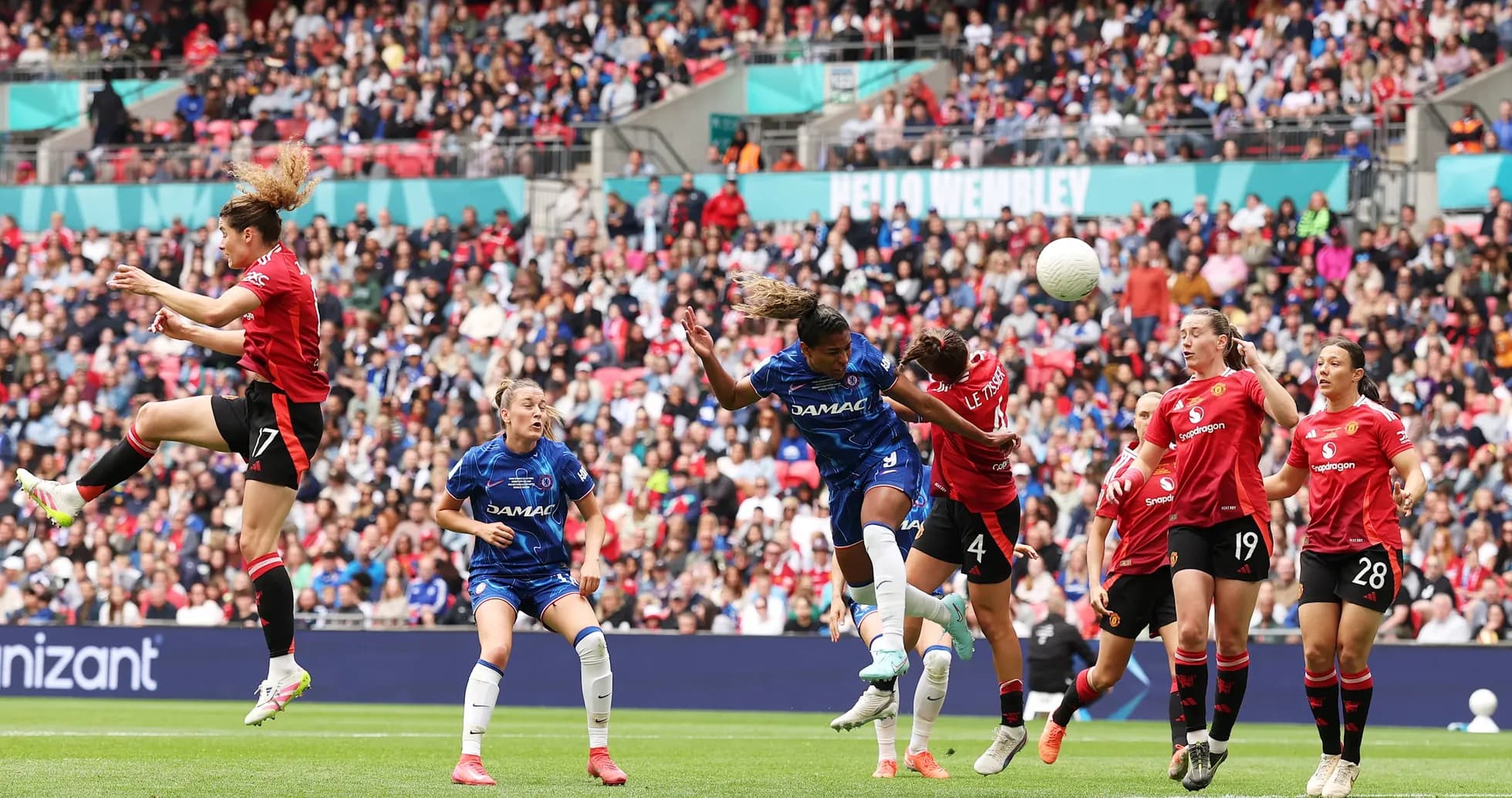
- 18 May 2025, FA Women’s Cup Final at Wembley Stadium (neutral): Chelsea W 3-0 Manchester United W – Chelsea won.
- 30 April 2025, FA WSL at Leigh Sports Village Stadium: Manchester United W 0-1 Chelsea W – Chelsea won.
Across these five, Chelsea have 4 wins, Manchester United have 0 wins, and there has been 1 draw.
The pattern is clear: Chelsea have found ways to win in both league and cup, at home, away and on neutral ground. United have been competitive at times – particularly in the league draw in October 2025 – but have yet to translate that into a victory in this recent run.
Key match‑ups
- Chelsea’s attacking structure vs United’s away defence Chelsea’s 19 home goals and 5 home clean sheets face a United side that concedes just 0.8 goals per away game. The battle between Chelsea’s fluid front line, led by Thompson, and United’s compact 4‑2‑3‑1 block will shape the territory of the match.
- Alyssa Paola Thompson vs United’s back line Thompson’s blend of pace, finishing (6 goals) and creativity (3 assists, 21 key passes) is tailor‑made to test United’s defensive line. If she can isolate defenders 1v1 or exploit the half‑spaces, Chelsea will generate high‑quality chances.
- Jessica Park vs Chelsea’s midfield screen Park’s 443 passes at 83% accuracy and 17 key passes make her United’s primary conduit. Chelsea’s choice between a single pivot (4‑1‑4‑1) or double pivot (4‑2‑3‑1) will determine how much time and space Park can find. If she is crowded out, United’s attack may become too direct and predictable.
- Set‑piece and late‑game discipline Both sides show spikes in yellow cards around half‑time and late on. In a high‑stakes match, a single lapse could swing momentum, especially if one team has to protect a lead under pressure.
The verdict
Data, form and recent history all tilt this fixture slightly in Chelsea’s favour. They are strong at home, score more freely overall, and have dominated the head‑to‑head in competitive matches, winning four of the last five. Their attacking depth, with Thompson as a headline threat, should ensure they create more sustained pressure.
Manchester United, however, are an excellent away side: only one defeat on the road, five clean sheets and 20 goals scored suggest they are well equipped to frustrate and counter. If Park can influence the game in midfield and Terland finds space in transition, United have the tools to take something from Stamford Bridge.
Given Chelsea’s home record and psychological edge in this rivalry, they look marginally more likely to edge a tight, high‑level contest. But United’s away resilience means this has every chance of being a close, tactical battle rather than a one‑sided affair.