.svg&w=384&q=75 "GoalGist logo")
Carlos Baleba: The Missing Piece in Manchester United's Midfield
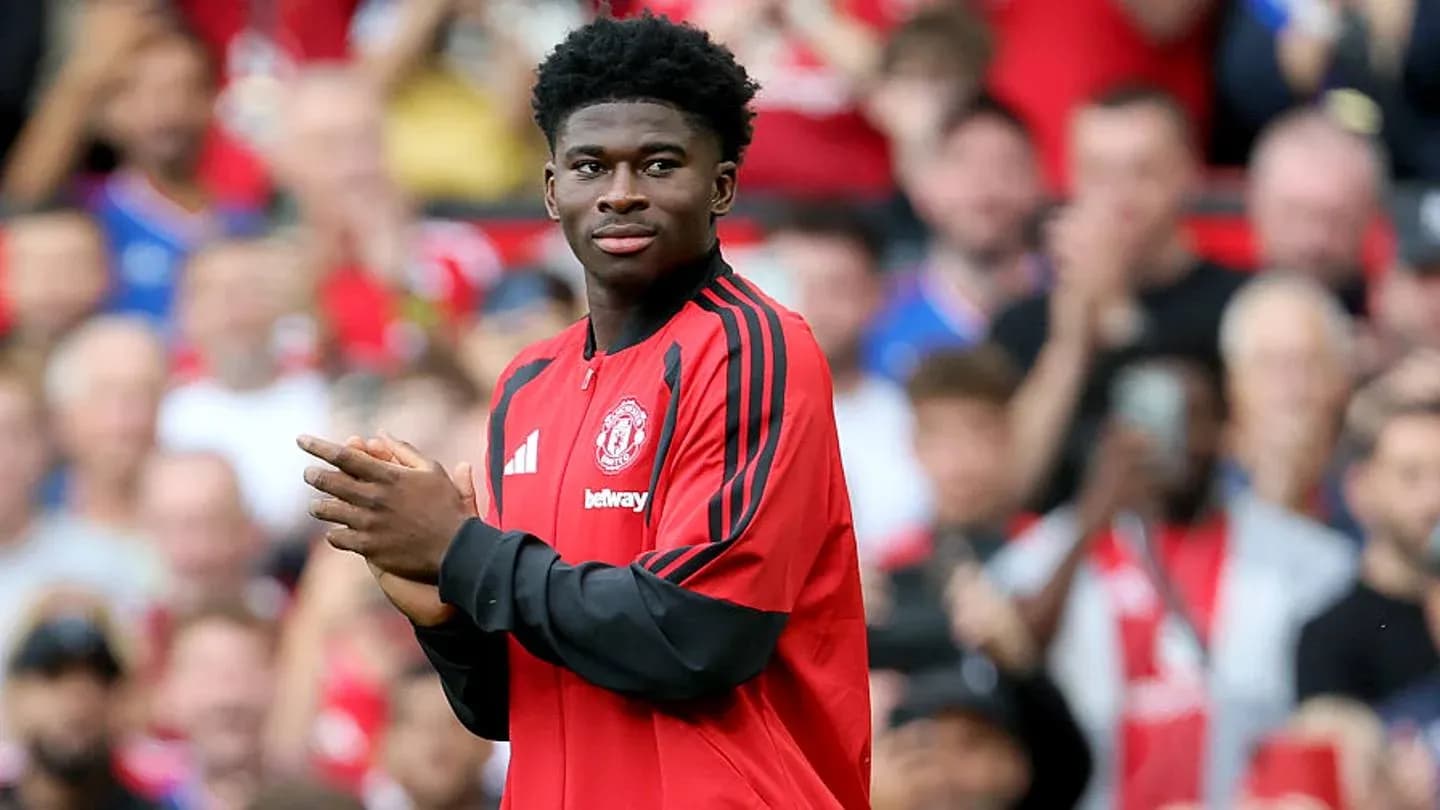
Carlos Baleba has spent his first weeks as a Manchester United player watching from the sidelines, a $94 million (£70 million) investment parked in the treatment room. That wait is nearly over.
The Cameroon international arrived from Brighton & Hove Albion already nursing an ankle injury, one serious enough to wipe out his entire preseason on the south coast. United knew they were buying both a midfielder and a rehab project. The internal hope was simple: get him through the opening stretch, then unleash him after the first international break.
Michael Carrick’s latest update suggests that plan is right on schedule.
“He’ll be back in and around the group at some point over the next week or so, so that means after [the] international [break], he should be in good shape,” the United manager told reporters, offering the clearest timeline yet.
For now, the wait continues. Baleba will play no part in the midweek Carabao Cup reunion with Brighton at Old Trafford. He will also miss Sunday’s trip to Fulham on Sept. 20, United’s final outing before the club calendar shuts down for the extended international window.
His absence from Cameroon’s squad for Africa Cup of Nations qualifiers against Comoros and Republic of the Congo comes as no shock. Instead of flying off to join his country, he will stay in Manchester, stacking training sessions and conditioning work, trying to turn weeks of individual graft into match readiness.
“He’s desperate to get out there, be part of the group and train fully with the boys,” Carrick said. The impatience is mutual. United did not spend this kind of money for a long-term spectator.
Debut on the horizon
The most logical stage for his first appearance is already circled: Tottenham Hotspur at Old Trafford on Oct. 10, United’s first game after the break. By that point, if everything goes to plan, Baleba will have close to three weeks of full-intensity training behind him, aided by an unusually long international window sanctioned by FIFA.
This pause is a stitched-together version of the traditional September and October breaks, with some national teams cramming in up to four fixtures across two-and-a-half weeks. For club managers, it is a headache. For a player in Baleba’s position, it is a gift.
Carrick may need every minute of it. Once United restart, the schedule turns brutal.
- Across one month, United are set to play eight times, potentially nine if they beat Brighton this week and advance in the Carabao Cup.
- The run begins with Tottenham on Oct. 10, followed by a Champions League trip to Atlético Madrid on Oct. 13.
- Then Leeds United away in the Premier League on Oct. 18, Como away in Europe on Oct. 21.
- Bournemouth at Old Trafford on Oct. 25, a possible Carabao Cup tie on Oct. 28.
- Chelsea at Stamford Bridge on Oct. 31, Roma at home in the Champions League on Nov. 3, and Aston Villa visiting Old Trafford on Nov. 7.
It is the kind of fixture list that exposes any weakness in the spine of a team. It is also the kind of period where a powerful, defensive-minded midfielder can change the temperature of a season.
The missing piece in midfield
United did not identify Baleba as a luxury signing. He was the final piece of a deliberate midfield rebuild, designed to complement the earlier arrivals of Andrey Santos and Youri Tielemans.
Santos offers versatility and energy. Tielemans brings passing range and creativity. Baleba is something else: more destructive, more defensive, a player signed to protect the back line and tilt the balance of the midfield in tougher games.
The 22-year-old had been on United’s radar a year earlier, but the numbers were prohibitive. In 2025, Brighton’s valuation would have made him only the fourth Premier League midfielder to command a fee of at least £100 million. United walked away. Twelve months later, with the price down to £70 million, the deal finally made sense.
“He’s obviously a quality player,” Carrick said this week. “It’s why we brought him here and he balances off the dynamics of the midfield particularly well.”
That balance is central to how Carrick wants his team to evolve. Against the league’s heavyweights, Baleba is expected to start, shielding the defence, snapping into duels, and allowing United’s more expressive players to operate higher up the pitch. Against weaker opponents, when United expect to dominate the ball, Carrick may decide he can afford to leave that defensive presence out and load the side with more creators.
The tactical picture is clear. The question now is simple: when the ankle finally allows him to step onto the Old Trafford pitch, how quickly can Carlos Baleba turn promise, price tag, and pent-up frustration into control of Manchester United’s midfield?