.svg&w=384&q=75 "GoalGist logo")
Barcelona’s Silent Coup: Deco’s Role in Rodri’s Transfer
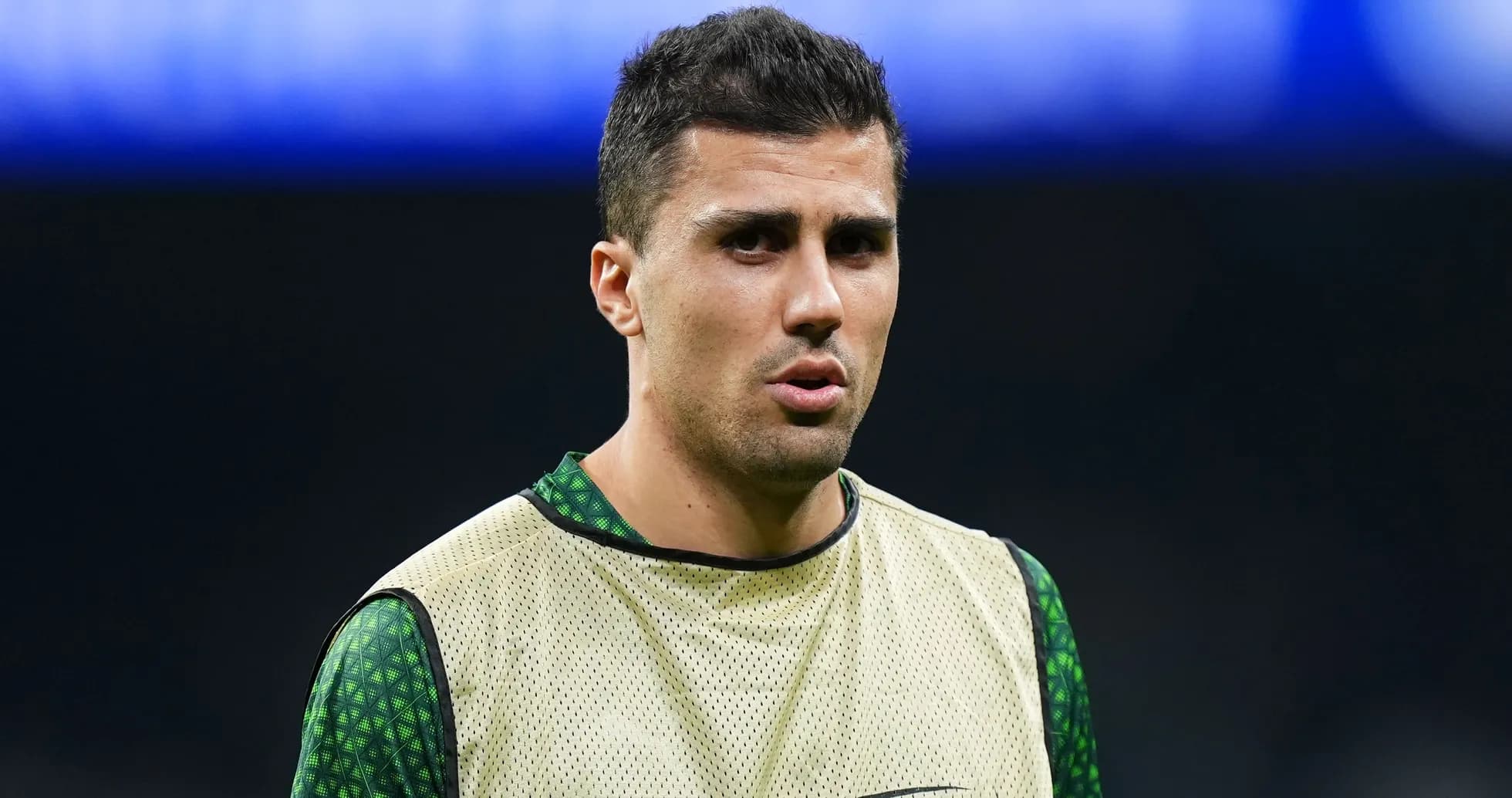
For weeks, the whispers said Rodri was heading to the Bernabéu. Real Madrid were in front, Manchester City’s midfield general was listening, and Barcelona looked like a distant, hopeful outsider.
Then the story moved into the shadows.
A Race Run in Silence
The battle for Spain’s premier holding midfielder unfolded almost entirely off-camera. No daily briefings, no staged airport photos, barely a hint of movement. While Madrid pushed with the confidence of a club used to getting its man, Barcelona chose a different route: total silence and absolute discretion.
According to Catalan outlet Sport, that strategy flipped the script.
Inside the club, the deal was tagged “strategic” from the start. This wasn’t just about adding a world‑class player. It was about reshaping a midfield, redefining a project, and landing a direct blow on their biggest rival’s plans.
The Day Everything Turned
The hinge point came on Thursday, 30 July.
Deco, Barça’s sporting director, was supposed to go straight from a short break in Croatia to England, where Hansi Flick and his staff were already with the squad, preparing for the new season’s friendlies.
He didn’t.
Instead, Deco flew back to Barcelona and stayed for more than a day before joining the team. Inside the club, people noticed. With the coach and players already in England, this wasn’t a casual detour. It was a choice.
That choice had a name: Rodri.
By then, Barcelona had already opened initial contacts with the player’s camp, sounding out conditions and the real chances of pulling off what many saw as an unlikely move. The message from the board was clear: this transfer was a priority, and it needed personal attention at the highest level.
A Wedding, a Hotel, and a Change of Heart
The opportunity arrived almost by chance.
Rodri was in Catalonia at the end of July, attending a wedding on the Costa Brava. For most players, a brief escape. For Barcelona, an opening.
A discreet meeting was arranged at a luxury hotel. No cameras, no leaks, no entourage circus. Just Deco and Rodri, face to face, for around two and a half hours.
In that room, Deco went to work. He laid out the sporting project in detail: the structure of the new Barça, the central role reserved for Rodri, the way Hansi Flick wanted to build a midfield around his intelligence and authority. This wasn’t a vague sales pitch; it was a roadmap for the next few years of the player’s career.
Until that point, Rodri had listened carefully to Real Madrid. Talks had taken place, the offer was on the table, and the path to the Bernabéu seemed open. But he had not given his final yes.
After that meeting, his calculations shifted.
Flick on the Line
Deco’s intervention was only the first wave.
Hansi Flick stepped in next, not through intermediaries but directly. The German coach made several calls to Rodri, explaining how he saw him tactically, where he would fit, and what kind of leadership he expected from him on and off the pitch.
Barcelona’s hierarchy considered that direct contact non‑negotiable. Against Real Madrid, they knew this wasn’t just a financial or institutional contest. It was about conviction. The player had to feel wanted, central, indispensable.
Those conversations underlined it. Rodri wasn’t being asked to join a squad. He was being asked to anchor a project.
The Hidden Operator
Behind the scenes, another name quietly shaped the talks: Dani Codina, Barcelona’s head of player services.
Publicly, he was invisible in the negotiation. Privately, he was a key bridge.
Codina had previously worked with Rodri during the midfielder’s time at Manchester City, where the two built a strong relationship. That familiarity mattered. In a process wrapped in secrecy, trust is currency.
He helped arrange the clandestine hotel meeting between Deco and the player, and he worked to strengthen Rodri’s comfort with the idea of returning to Spain for a Catalan project that demanded patience, responsibility, and faith.
No headlines. No quotes. Just influence.
The Call That Changed the Market
From there, Barcelona kept everything under lock and key. No strategic leaks, no public pressure. Contacts with Rodri’s representatives continued over the following days in almost total media silence.
Then came last Thursday.
The club received the call they had been waiting for from people close to the player: Rodri was convinced by the project. Talks were now at an advanced stage.
In that moment, the balance of power in this transfer saga flipped. A series of secret meetings, late‑night calls, and carefully managed relationships had taken Barcelona from the back foot to the brink of a major signing, pushing Real Madrid out of the position of strength they had enjoyed only days earlier.
A Strategic Strike in the Midfield War
Only the final details remain.
Inside Barcelona, the deal is viewed as a cornerstone move: a way to rebuild the heart of the team around a midfielder with experience, authority, and a proven record at the very top of the game. It is also, unmistakably, a direct hit on Madrid’s ambitions to secure one of the most influential midfielders in world football.
If the final signatures arrive as expected, this will not just be another transfer. It will be a statement that, even in a period of financial strain and sporting reconstruction, Barcelona can still step into the shadows, choose their moment, and walk out having taken the player everyone else thought was already lost.