.svg&w=384&q=75 "GoalGist logo")
The Art of Interceptions in Football
An interception lasts less than a heartbeat. A defender reads the pass, steps into the lane and gets there first. It looks instinctive. It isn’t. In that split second, the brain is judging speed, distance, angle; the body is accelerating, changing course, staying upright.
Miss the cue by a fraction and the defender is stranded, the back line torn open. Get it right and the move dies before it’s born.
The art behind a split-second
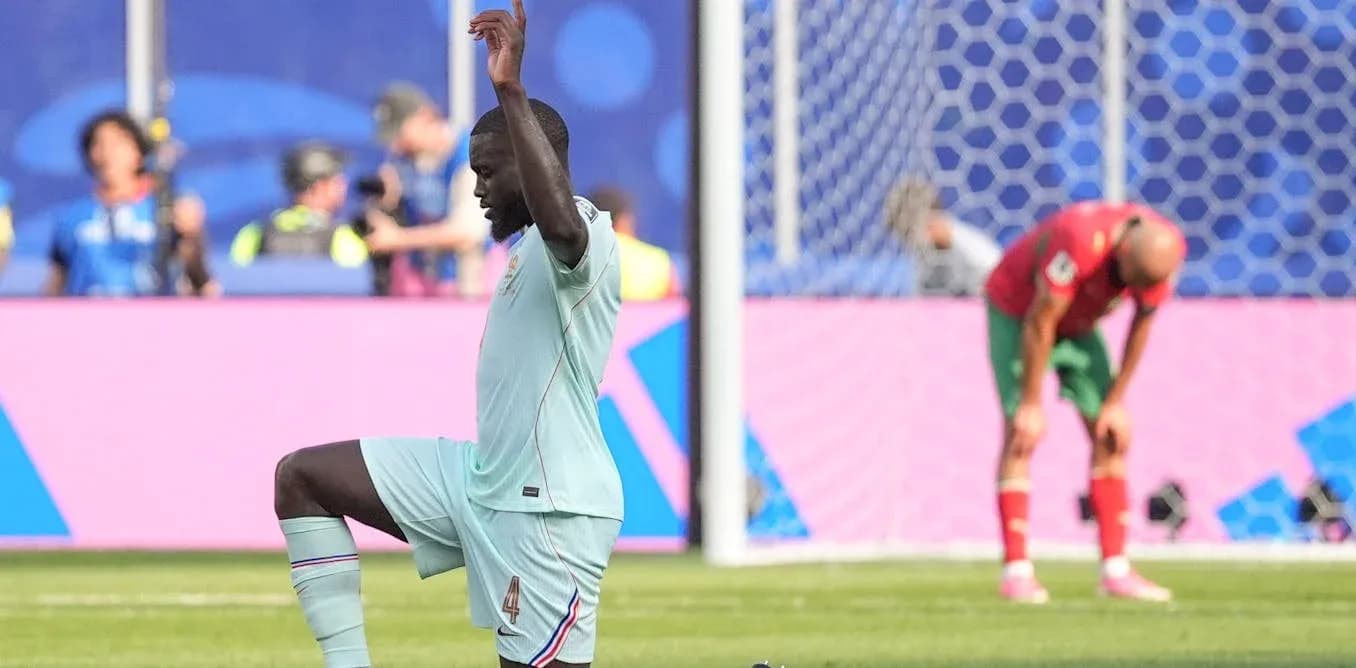
At the start of the 2026 World Cup semi-final week, Dayot Upamecano sat top of the interception charts with 12. That number is not just a line in a stats column. It is a record of how often an elite centre-back must run those rapid-fire calculations in the heat of a major tournament.
Every time a midfielder opens his body. Every time a winger drops a shoulder. Every time a striker peels off a marker. Read, decide, commit.
Cape Verde learned the value of that art on the biggest stage they have ever known. In their first World Cup campaign, the debutants threw themselves into passing lanes with a relentlessness that kept giants honest. They made 15 interceptions in their Group H opener alone, stifling Euro 2024 winners Spain in a 0-0 draw that announced them to the tournament.
Across four matches they averaged roughly 13 interceptions, scrapping their way out of the group before finally falling 3-2 after extra time to defending champions Argentina in the round of 32. The numbers don’t prove interceptions “caused” their run; they also hint at long spells without the ball. But those cut-out passes did something crucial: they broke opponents’ rhythm and opened doors to counterattack before the favourites could reset.
The pressure finally told, just not often enough to carry Cape Verde any further.
What the brain is really doing
To understand why this work frays as legs and minds tire, you have to strip an interception down to its parts.
First comes prediction. A player has to judge where the ball will travel and whether they can get there first. Research on anticipation in sport shows that skilled athletes blend what they know about the situation with what they see in front of them. A defender reads the passer’s posture, stride, angle of approach. Even before the ball leaves the boot, clues are there.
Once it does, speed becomes everything. In an experimental study on well-trained amateur footballers, players backed away from interceptions as passes got quicker. When they did go, their success rate dropped. The ball, quite simply, began to win the race.
Distance adds another layer. A study on senior male futsal players found that how far the defender started from the ball helped decide whether an interception was on. Yet even after the first step, the decision didn’t freeze. Players kept adjusting their speed and line relative to the ball’s path until the moment passed. An interception is not a single leap of faith; it is an evolving chase.
Experience sharpens these judgments but never makes them flawless. In a football-specific study comparing expert and less-expert athletes, both groups initially overestimated what they could cut out. Only after practice, and the feedback that comes with it, did their estimates line up more closely with reality. The brain, given honest information about the body, recalibrated.
When fatigue scrambles the wiring
That recalibration becomes harder once fatigue creeps in.
Mental fatigue is the dullness that follows prolonged concentration: slower reactions, fading sharpness, tiny lapses in focus. In one study of 20 professional male footballers, a demanding 30‑minute mental task before a training match led to poorer passing decisions. Another study on well-trained male players found that mental fatigue dragged down both the speed and accuracy of football-specific decisions.
Those experiments did not look at interceptions directly. They focused on passing and broader decision-making. Yet interceptions draw on the same circuitry: picking the right visual cues, judging speed and distance, predicting what comes next and choosing an action under severe time pressure. When the mind blurs, those micro-judgments blur with it.
Then comes the weight of physical fatigue. A pass that was reachable in the 20th minute may be a step too far in the 80th, even if the defender tries to move at the same speed. Research on 24 trained male players showed that acute physical fatigue cut how far and how intensely they moved, and altered elements of their positioning and team play.
A related study split players by their decision-making strength. Those with stronger decision-making skills held their positioning and effectiveness better under acute physical fatigue, partly by easing off the throttle. They moved less frantically but stayed in smarter areas. Those with weaker decision-making kept their physical output higher yet lost their bearings, becoming less effective defensively.
The lesson is sharp. The best decision-makers adjust how they move as their physical capacity drops. A tired defender is not just chasing the ball; he is constantly re-estimating what his body can still deliver without abandoning a vital zone.
The duel with disguise
Opponents, of course, are not passive pieces in this equation. They are trying to bend the defender’s perception.
Research on deception in competitive sport shows how attackers mask their intentions. A passer can shape towards one teammate, eyes and hips aligned, then slide the ball somewhere else entirely. By the time the real target reveals itself, the defender may already have shifted weight into the wrong lane, committed to a ghost.
Wait, and you see more. But the ball travels further. Jump early, and you might steal it – or you might be left lunging at air. Every interception attempt is a bet on imperfect information.
This cat-and-mouse shapes how teams should train. Work on realistic practice argues that sessions must preserve the key information and actions seen in real games. For interceptions, that means live opponents, varied pass speeds, true starting distances, and deliberate use of disguise. Static cones and scripted drills can’t recreate the chaos that makes or breaks a defender in competition.
Coaches also have to look beyond raw running data. Fatigue doesn’t just slow legs; in certain conditions it distorts the decision itself. A player might cover the same distance but choose worse moments to go. Monitoring only metres and sprints risks missing the erosion of that razor-thin judgment.
The goal is not to churn out defenders who launch themselves at every pass. The best learn which balls are truly reachable, then keep adjusting as the pass unfolds. They adapt again as fatigue redraws the limits of their bodies.
By the time Dayot Upamecano slides in front of a through ball or steps across a striker, the crowd sees only the tackle. The real work – the calculation, the anticipation, the battle against tired legs and a tired mind – has already been done.