.svg&w=384&q=75 "GoalGist logo")
The BlueCo Hangover: Chelsea's Failed Signings and Big Bets
Carney Chukwuemeka arrived at Stamford Bridge as a statement of intent. A £20m prodigy from Aston Villa, fresh from driving England’s Under-19s to European glory, he was supposed to be the future of Chelsea’s midfield. Instead, his time in west London barely registered.
Injuries clipped his rhythm, managers looked elsewhere, and the promise never translated into presence. Across two-and-a-half seasons he scraped together just 32 appearances before being sent to Borussia Dortmund, initially on loan, then for good last summer. A non-event of a spell for a player who once looked like the face of a new era.
Christopher Nkunku’s story carried even more weight. Chelsea moved early in 2023, paying £52m to prise him from RB Leipzig, convinced they’d found a ruthless Bundesliga finisher to lead the line for years. It felt smart. It felt decisive.
Then pre-season happened.
A serious knee injury, suffered just as he joined the squad, wiped out half of his debut campaign in 2023-24 and set the tone. By the time he returned, Cole Palmer had taken centre stage and Nkunku never looked like the same force. He drifted into a bit-part role in 2024-25, a supporting act in a team he was bought to headline. Twenty-seven Premier League appearances later, he was gone, sold to AC Milan last summer with barely a footprint left behind.
The Garnacho gamble was different. It was opportunistic, even provocative.
Chelsea pounced on a rift at Manchester United, paying £40m for Alejandro Garnacho after he fell out of favour under Ruben Amorim. On paper, it looked like a steal: a fearless winger with a highlight reel already packed at Old Trafford, now crossing the divide to torment his former club.
The reality? Bleak.
The swagger vanished. The direct running, the arrogance, the edge – all dulled. Garnacho never nailed down a starting place under Enzo Maresca or Liam Rosenior, drifting through matches on the left flank, leaving almost no imprint on a team crying out for incision. Chelsea are already ready to cash out, hoping for £43-£45m. They’ll be fortunate to find anyone willing to pay it. United, by contrast, will feel they’ve already won.
Pierre-Emerick Aubameyang’s Chelsea chapter was doomed before it started.
Thomas Tuchel wanted him. Chelsea went to Barcelona to get him in the summer of 2022. A day after Aubameyang’s debut, Tuchel was sacked. The logic of the deal collapsed overnight.
Graham Potter never truly trusted him. The goals never flowed. The Gabonese striker ended with just 21 appearances and three goals, eventually frozen out and then quietly released to join Marseille on a free. A marquee name, reduced to a footnote in a single, forgettable season.
Kalidou Koulibaly was supposed to be different.
A defensive colossus at Napoli, he arrived in that first BlueCo window in 2022 with the reputation of a leader, a plug-and-play solution for a back line in transition. Instead, he became another symbol of the chaos.
Manager after manager, system after system, and Koulibaly never settled. High-profile errors chipped away at his authority. In a season defined by churn in the dugout, he never became the anchor Chelsea needed. Within a year he was gone, sold to Al-Hilal and swept into the early wave of big-name moves to Saudi Arabia. Another big fee, another short stay.
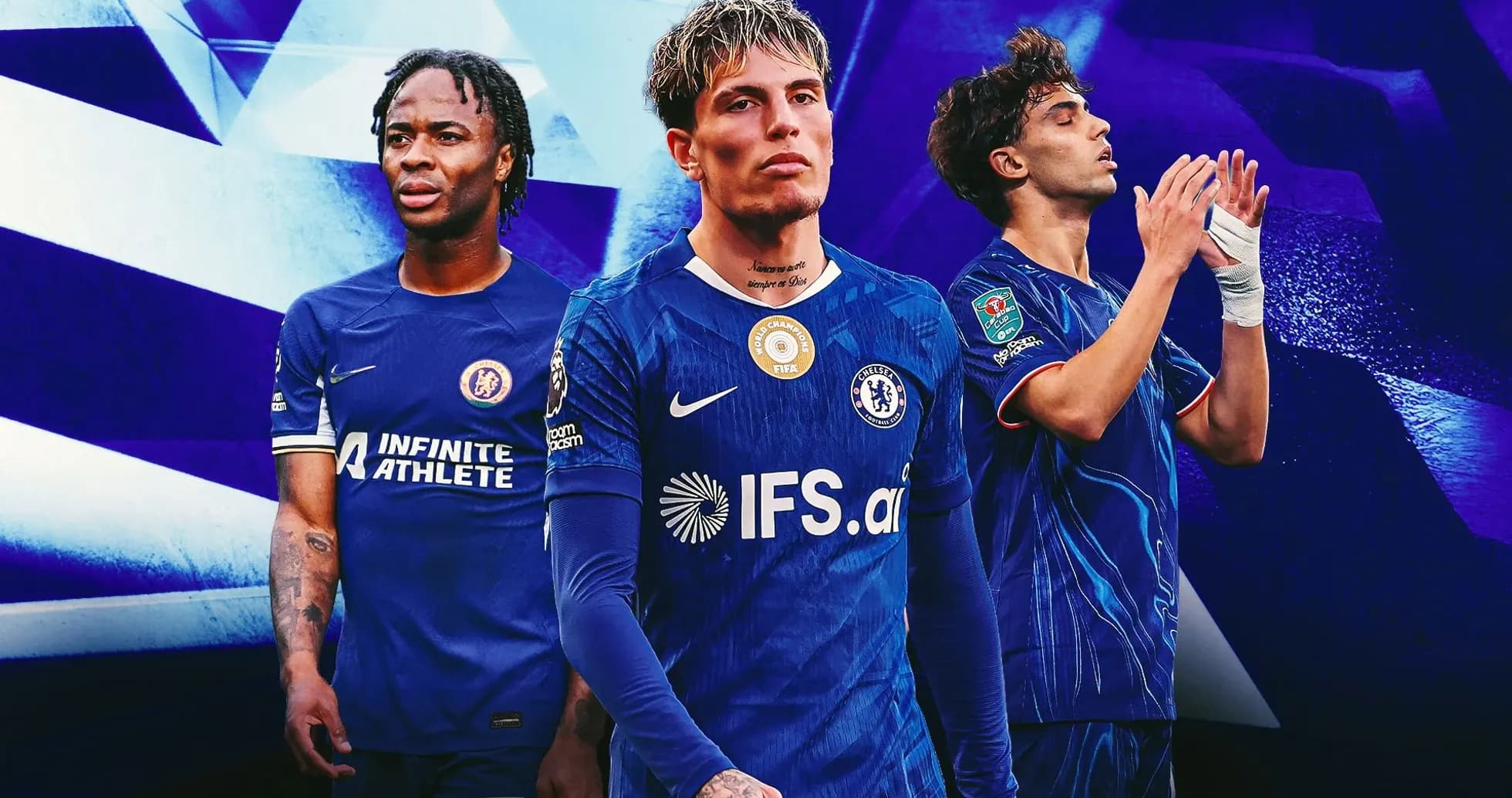
Raheem Sterling’s move should have been the flagship signing that announced a new Chelsea.
A proven Premier League scorer, multiple title winner, £47.5m from Manchester City. Sterling arrived in 2022 as a ready-made star, a player to set standards on and off the pitch. Instead, his time in blue fizzled out.
Two flat seasons, too few decisive moments, and then the final humiliation: banished to Maresca’s infamous “bomb squad” and loaned to Arsenal for 2024-25, where he failed to revive his career. When he returned in 2025, nothing had changed. Still on the outside, still surplus. By January 2026, Chelsea terminated his contract, 18 months after his last appearance. A marquee signing, ending in silence.
Joao Felix was the obsession Chelsea couldn’t quite shake.
They went for him first in that wild January 2023 window, taking him on loan from Atletico Madrid. The red card on his debut against Fulham should have sounded the alarm. The flashes of talent never quite outweighed the inconsistency that had followed him in Spain.
Chelsea walked away at the end of that initial spell – then came back.
After a productive stint at Barcelona, Felix returned to Stamford Bridge in 2024. This time, he didn’t even last the season. Under Maresca he faded quickly, never imposing himself, never justifying the second chance. By mid-campaign he was off again, loaned to AC Milan, then sold permanently to Al-Nassr in the summer of 2025. Two Chelsea stints, no lasting legacy.
Some signings barely even registered. Facundo Buonanotte is one of them.
Drafted in on loan from Brighton late in the 2025 summer window, the Argentine playmaker looked like a depth move, a squad piece for Maresca. He never became more than that.
Eight appearances in total. Just one in the Premier League. Often not even in the matchday squad. By January his loan was cut short, and he moved on to Leeds for another low-key half-season. His Chelsea spell came and went almost without anyone noticing.
Deivid Washington’s name rarely features in first-team conversations, but he is still technically a Chelsea player.
Signed from Santos for £17m in 2023, he was one of several youngsters tied to long-term deals as the club bet heavily on potential. First-team opportunities never followed. Across three years, he made only three senior appearances, all the way back in 2023-24.
Most of his time has been spent in the development squad. A loan back to Santos in 2025 offered a chance to reset, but he was recalled after failing to make an impact there as well. Now 21, he sits in limbo, clearly not part of Chelsea’s future plans, waiting for a permanent exit that feels inevitable.
Then there is Mykhailo Mudryk, the most haunting story of the lot.
His £89m arrival from Shakhtar Donetsk in January 2023 sent a jolt through the fanbase. Chelsea had beaten rivals to a dynamic, electric winger, a player with pace to burn and upside to match the fee. It was supposed to be the signing that defined a new attacking era.
Instead, it unravelled almost from the start.
Mudryk never looked like the fearless force he had been in Ukraine. Confidence drained, decision-making faltered, and he slipped in and out of the side as managers came and went. Just as he seemed to need stability, the club offered anything but.
In November 2024 came the hammer blow: a provisional suspension for a doping offence. He hasn’t played since.
In April 2026, the Football Association handed him the maximum four-year ban. Mudryk has appealed and reportedly believes he could yet return in 2026-27, but the damage is deep. For Chelsea, for the player, for the project he was meant to symbolise.
The odds on seeing him in a Chelsea shirt again feel vanishingly small. And that, more than any fee or failed gamble, captures the stark question hanging over the BlueCo era: how many of these big swings will ever truly connect?