.svg&w=384&q=75 "GoalGist logo")
Arsenal's Medical Department Overhaul: Mikel Arteta's Bold Move
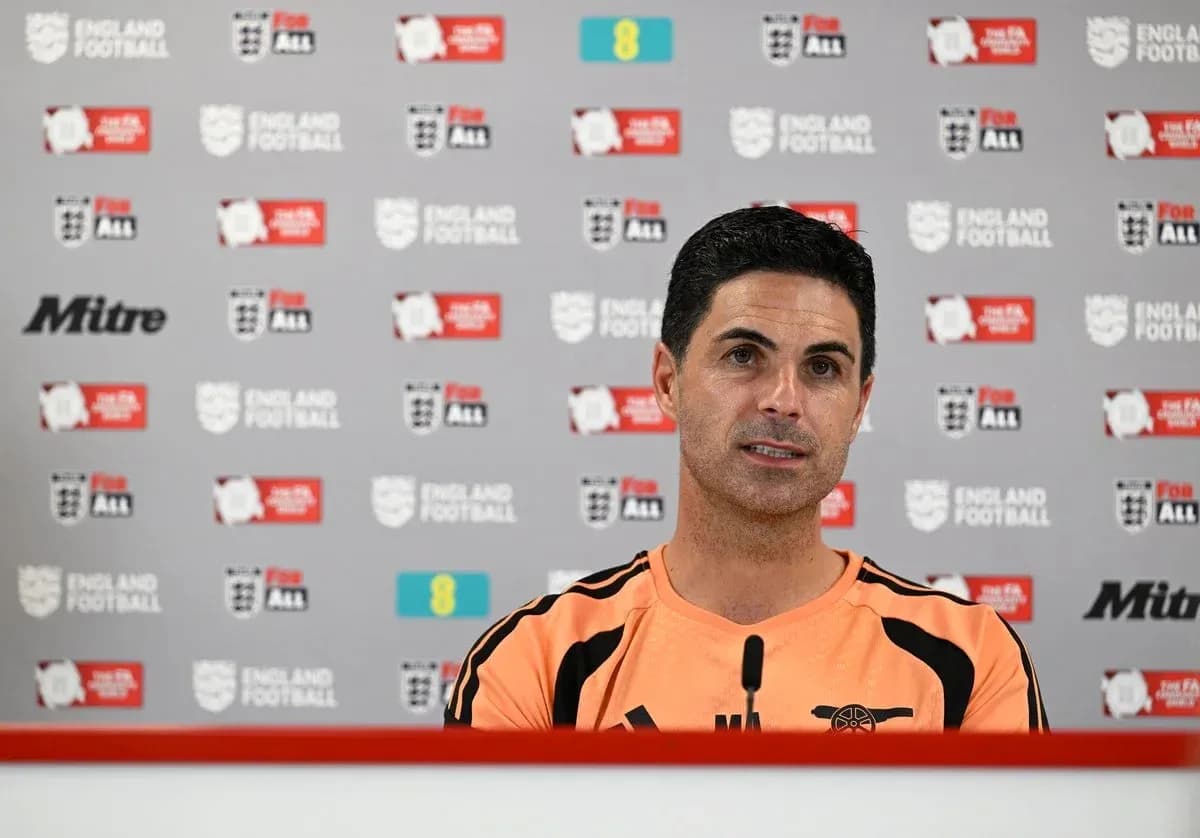
Mikel Arteta has lifted the lid on why Arsenal ripped up and rebuilt their medical department over the summer – a bold move driven by one simple obsession: keeping his best players on the pitch when it matters most.
For two seasons, the Arsenal manager has circled the same problem. The team has pushed deep into title races and European runs, only to see key figures disappear at crucial moments. Bukayo Saka, William Saliba, Kai Havertz – all have endured untimely absences that have left Arsenal stretched just when the pressure peaked.
That irritation has now turned into action.
A ruthless reset behind the scenes
The shake-up started swiftly after Arsenal’s Champions League final defeat to Paris Saint-Germain. Head of sports medicine Dr Zafar Iqbal was dismissed in the immediate aftermath of that loss, a clear signal that the club were prepared to make tough calls away from the spotlight.
Tom Allen, the club’s head of sports science and performance, soon followed him out of the door. Lead performance coach Sam Wilson left at the end of June, another significant departure in a department suddenly under intense scrutiny.
This wasn’t a series of isolated exits. It was the product of a full review of Arsenal’s medical and performance operations last season, a process in which Arteta leant heavily on Joaquin Acedo, a long-term confidant brought in to play a central role in reshaping the structure.
Arteta was keen to stress that this was not a cold clear-out, but a difficult evolution.
“First of all thank you to them for all the incredible work they have done for the club, for the players, for myself – and how well they have taken us and we will look to improve and evolve in certain areas,” he said, underlining the human cost of such decisions.
“We need to look across the club and we have made certain decisions that in our opinion will help us in medium and long term to be better.
“They are always difficult when you talk about people and you get such a strong relationship. It is always very, very tough.”
Tough, but in Arteta’s mind, necessary. Arsenal cannot afford another run-in undermined by soft-tissue problems and long absences.
New faces, new ideas
The overhaul has brought in fresh voices and different profiles. Eneko Angulo has arrived from Real Betis, where he served as head of rehabilitation, to strengthen the recovery and return-to-play side of the operation.
The headline appointment, though, is Arnaldo Abrantes as head doctor, recruited after his departure from Aston Villa. His CV stands out in a world of traditional medical pathways: before turning fully to medicine, Abrantes was a professional sprinter who represented Portugal at the 2008 Olympics.
Arteta clearly sees that as a major asset.
“He was a good athlete,” the Arsenal manager said, almost understating the point.
“When we're trying to evolve the squad, the team and the relationships and where the game is evolving, we wanted to recruit different qualities.
“That's one, when you've been there and sensed things in a different way. But as well because of his background, his knowledge about a lot of things that I was very interested in.
“We believe he was the right fit. I'm very happy with what he's bringing.”
A former Olympian in charge of the medical department is not a gimmick. It speaks to where Arteta believes the modern game is heading – towards marginal gains in speed, explosiveness, recovery and repeat efforts, all underpinned by a deep understanding of the athlete’s body from someone who has pushed his own to the limit.
Arsenal’s manager has already transformed the squad, the style, and the culture on the training ground. The question now is whether this ruthless reboot of the medical and performance set-up will finally give him what he has craved most in the run-in: a fully armed squad when the season’s biggest games arrive.