.svg&w=384&q=75 "GoalGist logo")
Andoni Iraola's High-Tempo Revolution at Liverpool
Andoni Iraola walks into Anfield with the volume turned back up.
Liverpool have hired a coach whose football is built on noise: high pressing, high tempo, and a refusal to let opponents breathe. It’s a sharp break from what came before, but in many ways a return to what the club believes it should be – a side that hunts in packs and plays on the edge.
A new shape, a familiar chaos
Iraola is expected to build around a 4-2-3-1, but this won’t be a copy-and-paste job from last season. The structure might look familiar on a tactics board; the behaviour inside it will not.
The back line will be asked to hold an aggressive, high line. The press will start early and bite hard. The forwards will chase, the midfield will swarm, and the defenders will live on a tightrope. It’s the kind of football that can ignite Anfield when it works – and expose it brutally when it doesn’t.
He believes this squad can live with that risk.
Defence on fast‑forward
The refresh at the back is already under way. Jeremy Jacquet, signed from Rennes, is expected to be pushed straight into the heart of the defence. There’s no gentle introduction planned here. His athleticism is the key: pace over the ground, the ability to defend huge spaces, and the courage to hold that high line Iraola demands.
Alongside him, Virgil van Dijk remains the reference point, but the recent loan of Ronald Araujo adds something Liverpool badly need in such a system: experience and authority in the chaos. Between those three, Iraola has the tools to build a back line that can squeeze the pitch and suffocate opponents.
On the left, Milos Kerkez is being handed a second chance to show why Liverpool moved for him. He now reconnects with the coach who unlocked his potential at Bournemouth. Under Iraola, full-backs do not just overlap; they drive, they press, they set the tone. If Kerkez settles, this could be the season he stops being a prospect and starts being a problem for opponents.
Guela Doue is expected to balance that on the right, giving the back four a blend of youth, legs and recovery speed that fits perfectly with the manager’s demands.
The engine room: built to press
The heartbeat of Iraola’s Liverpool will be in midfield and the band of three behind the striker.
Ryan Gravenberch and Dominik Szoboszlai are set to form the double pivot in that 4-2-3-1. It’s not a conservative pairing. It’s a launchpad. Gravenberch can carry the ball through pressure; Szoboszlai can chase, harry and then hurt teams with quality on the ball. The Hungarian’s elite pressing is central to the plan – he is tailor-made for a coach who wants intensity as a non-negotiable.
Ahead of them, Florian Wirtz looks poised for a starring role. His work without the ball is as important here as his creativity. Iraola wants his No.10 to set traps, not just pick passes. Wirtz’s relentless off-ball effort fits that brief. When Liverpool spring forward, he becomes the connector, the player who turns regained possession into real danger.
To his left, Rio Ngumoha is one of the most intriguing elements of this project. Iraola has spoken through his selections before, not his words: if you run, if you buy into the press, you play. Ngumoha’s emergence will be managed, but the intention is clear – this is a manager willing to trust young talent in big roles if they match his intensity.
On the opposite flank, the plan is bolder still.
Barcola the missing piece?
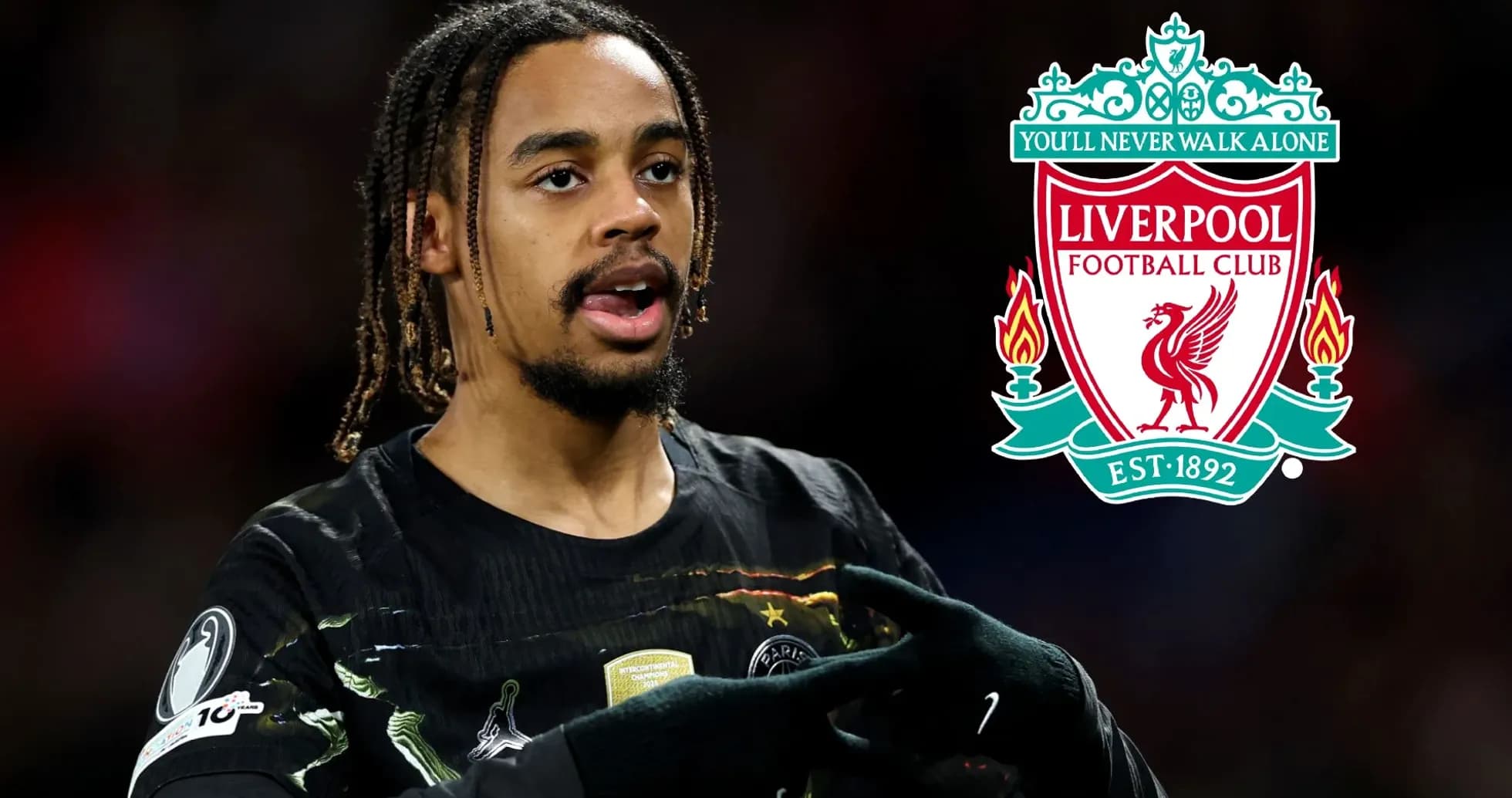
Liverpool’s recruitment focus has narrowed on the wings, and PSG’s Bradley Barcola remains a leading target. If the club get that deal over the line, Iraola gains a wide forward who can both stretch teams and join the press with real aggression.
Barcola would not arrive as a luxury winger. In this system, he would be a trigger. His pace and direct running would give Liverpool an outlet when they win the ball high, but his work off it is what makes him such a compelling fit for Iraola’s blueprint. A dynamic upgrade on the flank, yes, but also a cog in the pressing machine.
If the move happens, the front four almost picks itself: Wirtz between the lines, Ngumoha and Barcola wide, and a centre-forward built to thrive in this environment.
Isak at the tip of the spear
Alexander Isak will lead the line, and this version of Liverpool should suit him. Iraola’s commitment to intelligent pressing means Isak won’t just stand between centre-backs waiting for service. He’ll initiate the press, curve his runs, and force mistakes. When the ball breaks, he’ll find himself in the kind of central, high-value positions that can restore his most dangerous habit: finishing moves with cold precision.
Behind him, the talent is there to supply chances. Around him, runners will arrive from everywhere. For a striker of his movement and touch, this is an invitation.
A squad built to chase everything
On paper, the XI looks like this in Iraola’s favoured 4-2-3-1: Alisson; Guela Doue, Jeremy Jacquet, Virgil van Dijk, Milos Kerkez; Ryan Gravenberch, Dominik Szoboszlai; Florian Wirtz, Rio Ngumoha, Bradley Barcola; Alexander Isak.
In reality, it will often resemble something far less static – a swarm in red shirts, lines pushed high, distances compressed, and opponents forced into mistakes they don’t want to make.
The squad is still being shaped. Reinforcements may yet arrive, particularly out wide. Young players like Ngumoha will be tested, trusted, and, at times, exposed. But that is the point of this reset.
Liverpool have chosen a manager who refuses to sit back and wait. The question now is simple: can this group live with the relentless demands of Iraola’s football long enough to turn that gamble into trophies?