.svg&w=384&q=75 "GoalGist logo")
2026 Champions League Final: PSG Retains Title Amid Streaming Surge
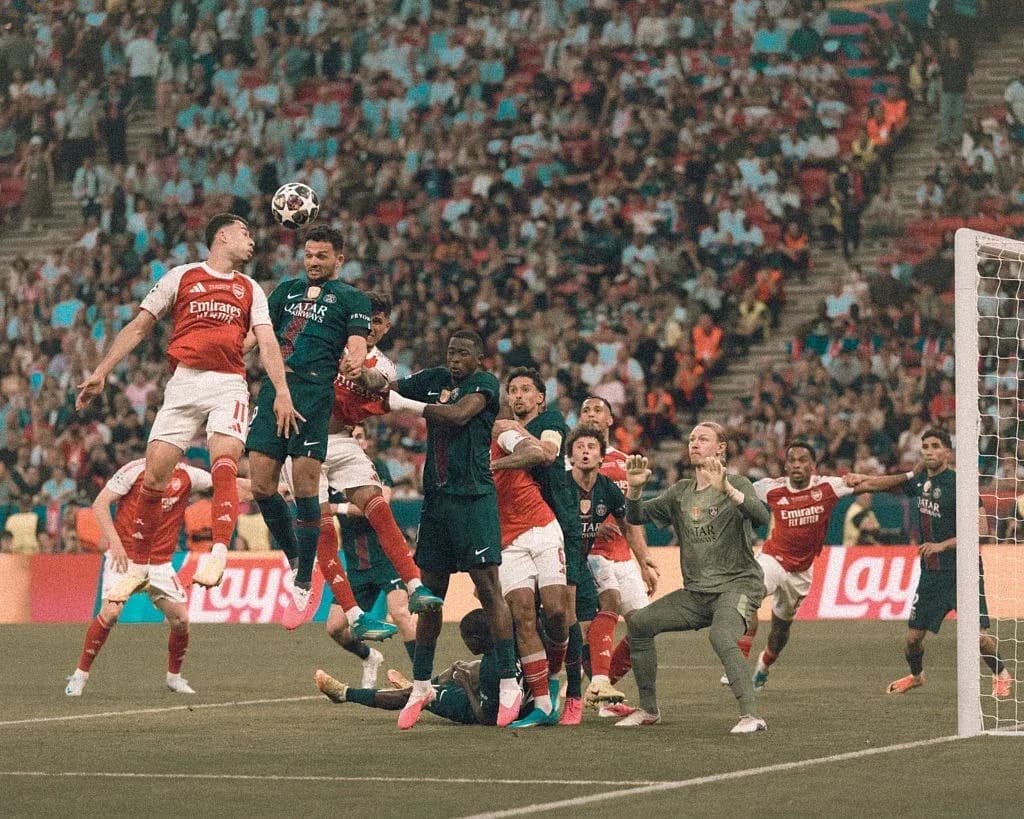
On a warm night in Budapest, PSG kept their hands on the biggest prize in European club football. The French champions edged Arsenal on penalties to retain the UEFA Champions League title, a 4-3 shootout win after a tense 1-1 draw at Puskás Aréna on 30 May 2026.
But the real shock of the evening didn’t come from the pitch. It came from the screens.
A final watched in living rooms – and in the shadows
Across four key markets – the UK, France, Hungary and the United States – the final pulled in a combined audience of 33.7 million. A huge number, befitting the occasion. Yet it was the source of those eyeballs that ripped up the script.
In the UK alone, 16.2 million people watched the game via illegal streams. Not fringe viewing. Not a niche corner of the internet. It was the single biggest audience source of the night, dwarfing the 12.9 million who tuned in through official broadcasters across all four markets combined.
With no free-to-air option in the UK, millions of fans simply refused to be shut out. They went online, found a stream and watched anyway. The message to rights holders and broadcasters could hardly be louder.
The UK delivered the largest overall audience at 19.4 million. Of that, 16.2 million came from illegal streaming, 3.0 million from TNT Sports and HBO Max, and 0.2 million from out-of-home viewing. France followed with 9.5 million viewers on M6 and Canal+, while the US added 4.8 million via CBS, Univision and Paramount+.
The final spilled beyond the living room too. YouGov Profiles data estimates just under 500,000 Arsenal and PSG supporters packed into bars and pubs across London and Paris, while 61,035 fans filled Puskás Aréna. It was a match consumed everywhere: on sofas, on smartphones, on city streets.
Arsenal lose the cup, Emirates wins the camera
On the pitch, Arsenal fell short. In the numbers that matter to sponsors, they didn’t.
YouGov Sport’s Brand Exposure analysis shows Arsenal’s front-of-shirt sponsor, Emirates, enjoyed 2 hours and 52 minutes of on-screen exposure with a Brand Impact Score (BIS) of 3.54. PSG’s front-of-shirt sponsor, Qatar Airways, registered 1 hour and 54 minutes and a BIS of 3.25.
The implication is clear: Arsenal’s players commanded more camera time in the moments that count – attacking waves, desperate defending, close-up reactions, slow-motion replays. The kind of footage that lingers in the memory and, crucially, keeps a logo in the frame.
Emirates didn’t just appear more often. It appeared better. The airline achieved a higher BIS than Qatar Airways (3.54 vs 3.22), powered by a slightly larger logo, stronger positioning on screen, a greater share of solus branding and less competing clutter around it. Each appearance tended to last longer, giving the brand more time to land with viewers.
For sponsors, that is gold. A losing team, playing a dramatic, front-foot final, can out-deliver the champions in pure commercial impact. This time, Arsenal may have walked past the trophy, but their shirt partner walked away with the bigger win.
Forty-two billion impressions: a final that wouldn’t switch off
The story didn’t end with the last penalty.
Over just 48 hours – 30 and 31 May – the Champions League final triggered more than 40,500 social media posts, 13,700 videos and 24,500 online articles. That torrent of content translated into 42 billion potential impressions, 1 billion video views and 10 billion in potential readership.
PSG dominated the digital noise. Across their official social channels, the French club generated 8.6 billion impressions and 418.6 million video views. Arsenal, by comparison, produced 3.7 billion impressions and 49.7 million video views.
PSG simply pushed out more content, and the payoff was obvious: their victory travelled far beyond Budapest, looping endlessly through timelines and feeds around the world. The trophy lift kept replaying in the scroll.
When fans become brand advocates
The value of the night wasn’t just measured in views and exposures. It showed up in how fans felt about the brands on the shirts.
Using YouGov BrandIndex, Recommendation levels for Emirates among Arsenal supporters in the UK and Qatar Airways among PSG supporters in France were compared with their respective general populations. In both cases, club fans were far more likely to recommend the sponsor than the wider public, underlining how tightly those brands are now tied to their teams.
Emirates saw an increase in Recommendation among Arsenal fans around the time of the final. The reasons can be layered – performance, emotion, long-term loyalty – but the timing matters. Qatar Airways, meanwhile, held consistently strong Recommendation levels among PSG supporters across the measured period.
Within YouGov Sport’s BIS-X framework, this uplift in fan sentiment becomes more than a soft, feelgood factor. It acts as an amplifier. Stronger advocacy and healthier brand perception increase the value of every second of exposure. For Emirates, the combination of higher visibility during the match and a sharper rise in Recommendation suggests a partnership that not only showed up on screen but embedded itself deeper in the fanbase.
Beyond the logo count
The 2026 Champions League final laid bare a new reality for sponsorship and broadcasting.
Audience figures still matter, but they no longer tell the whole story. Illegal streams can dwarf official channels. A beaten finalist can outshine the champions for shirt exposure. Social media can turn 90 minutes into 42 billion potential impressions. And a sponsor’s real win might be measured not in minutes on screen, but in how many fans would recommend the brand the next day.
Modern sponsorship measurement now has to blend audience data, Brand Exposure, social buzz and fan sentiment to get close to the truth. Who watched is only the opening question. How they watched, what they saw and how they felt about it may decide which brands really win on nights like Budapest – and which ones are left wondering how a title celebration slipped through their fingers.

