.svg&w=384&q=75 "GoalGist logo")
Behind the Scenes of World Cup Portraits: Capturing Football's Stars
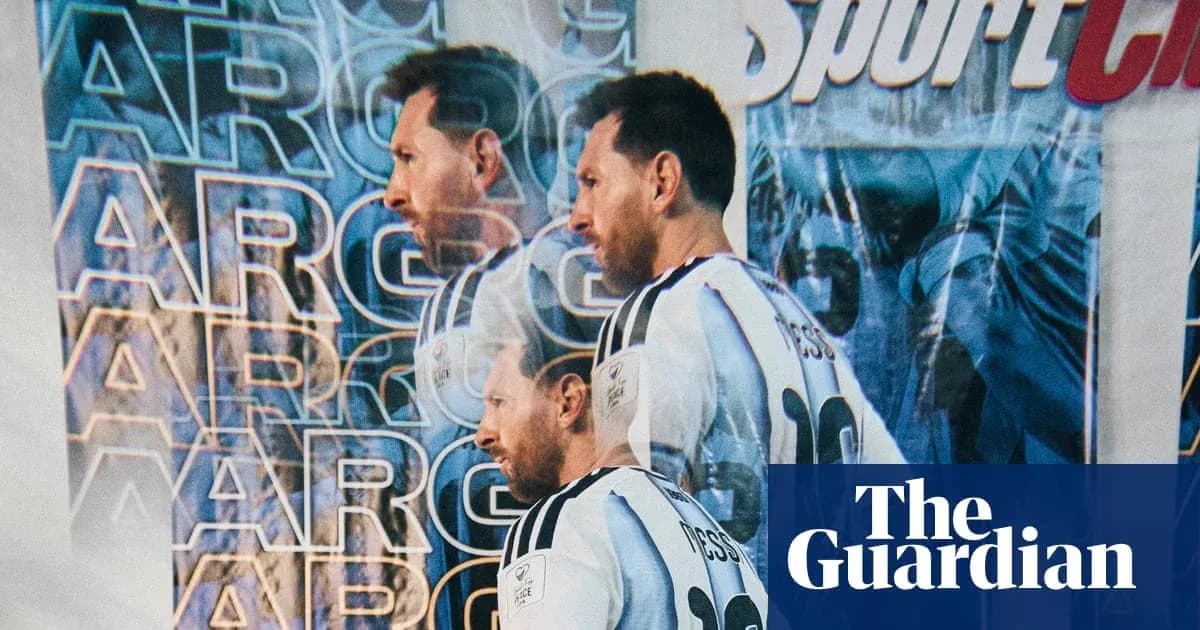
Lionel Messi stands bolt upright, expression locked, shoulders square to the lens. A still life in sky blue and white. A few feet away in another studio bay, Marc Cucurella whips his hair and half-dances through his frame, all curls and chaos. Diego Moreira lifts an arm across his face, hiding his eyes but flashing an unsettling tattoo. Harry Kane drops awkwardly on to one knee, unsure quite what to do with his limbs.
Welcome to the World Cup’s other production line. Not the one on the pitch – the one in front of the backdrop.
Across 1,248 players and 48 managers, nobody escaped the ritual. Every squad member, every coach, filed through the official portrait station, whether they had a signature pose ready or just the haunted look of someone who’d rather be anywhere else.
Shot by Getty Images on behalf of Fifa in the build-up to the tournament, the portraits form a sprawling visual census of modern football. Some players stare down the camera with a model’s assurance. Others fidget, grin, sulk or simply endure. Each frame, though, offers a tiny clue: how they see themselves, and how they want the world to see them.
Behind those clean, finished images lies a far less glamorous scene. The behind-the-scenes photographs, released by Getty, show the churn. Name cards stacked on tables. Assistants fussing with lights. Players stepping in, stepping out, checking the screens, adjusting a collar or a fringe. It’s part conveyor belt, part character study.
Two photographers were assigned to each national team. That allowed them to build twin sets – one plain, one more distinctive – and shuttle players and managers through with minimal delay. While one star posed against a simple backdrop, another could be dropped into a more stylised environment, the whole thing timed to the minute.
The lighting stayed deliberately straightforward. A big studio strobe with a softbox aimed squarely at the subject. A couple of rim lights behind to carve shoulders and cheekbones out of the background. No elaborate rigs, no sprawling grip departments. Just a clean, repeatable set-up that could survive the pace.
The real magic came from the glass. For this World Cup, the backdrops were dialled down, more muted than the bold colours of 2022. To compensate, photographers reached for special lens filters that bent the light into something stranger. Unpredictable blurs. Kaleidoscopic flares. Reflections that sliced a face into shards, as in the Messi portrait, where the world’s most scrutinised footballer suddenly looks like he’s been dropped into a dream sequence.
Tom Jenkins, The Guardian’s veteran sports photographer, knows the drill as well as anyone. Photographing elite footballers is rarely relaxed at the best of times. Turn it into a high-speed roster and the stress ramps up.
“With these kinds of shoots, you only get a few minutes with each player and you have to bash out various pictures and think incredibly quickly,” he says. There’s no gentle warm-up. No time for small talk. The player walks in, the clock starts.
You need the basics first. The “school photo”, as Jenkins calls it – the dead plain, front-on portrait that used to be the standard for media guides and sticker albums. But that’s not enough now. Modern football demands something else: images that feel emotive, playful, a little cinematic.
“A lot of players will have their own poses and goal celebrations already,” Jenkins explains. The knee slide, the arms out, the hand-to-ear. They know their angles from brand campaigns and social shoots. Even so, the photographer arrives armed with a mental list: crossed arms, side profile, half-turn, maybe a shout straight down the lens.
The power dynamic flips in these few minutes. On the pitch, these are global superstars. In the studio, the photographer calls the shots. “You’re in control of these superstars and every aspect of the shoot,” Jenkins says. That control comes with its own weight. Everything must be tested before the first player walks in. Lights metered. Backdrops fixed. Filters checked. Once the session starts, there’s no time for tinkering. The focus has to be on the human being in front of the camera.
Even Lionel Messi gets a name card. Every player does. The tags aren’t for the photographer – they’re for the production line that follows, the editors and archivists who will later sift through thousands of files. The idea that anyone could fail to recognise Messi is absurd, yet the card sits there all the same, a reminder that even the game’s greatest is just another entry in a vast database.
Players, though, are no longer passive subjects. They crowd around monitors between takes, asking to see the last frame, checking hair, angle, expression. “Most football players are very aware of their own image these days and they know how powerful it can be, especially through Instagram,” Jenkins says. The portraits are not just for Fifa’s archives. They will live on personal feeds, in sponsored posts, in memes.
Many have rehearsed this world. Eberechi Eze has fronted a Burberry campaign. Declan Rice has appeared for L’Oréal. By the time they reach a World Cup studio, they understand the language of lights and lenses. Some visibly relish it, playing to the camera as if it were another big-game crowd.
That doesn’t spare them from ridicule. England’s portraits, in particular, sparked a mini-storm. Rice’s sunburn became a talking point, his reddened face beamed across social media. Anthony Gordon drew comparisons with Princess Diana, his soft expression and haircut feeding a viral joke he never asked for. Dean Henderson’s intense side-eye veered from moody to mildly disturbing in the court of public opinion.
Still, the most inventive frames – Jude Bellingham and his teammates refracted, stretched, multiplied by filters – show what can be done without a single pixel of post-production wizardry. Even when a player brings little energy to the set, a clever lens or a daring angle can conjure something memorable.
The standout image of this World Cup cycle, though, does not belong to a player at all. It belongs to Marcelo Bielsa.
Uruguay’s head coach, shot by Michael Regan at the team’s base in Cancún, Mexico, refused to play along with the usual script. When instructed to face the camera, Bielsa instead dropped his gaze to his feet. No heroic stance. No steely stare. Just a man looking down, lost in his own thoughts.
The result is a portrait that feels almost accidental, yet says more than any carefully curated pose. It captures the essence of Bielsa: stubborn, uncomfortable with the theatre around the game, always slightly out of step with football’s polished façade. Later, he offered a blunt explanation. “I’m not a model,” he protested.
For Jenkins, that is exactly the point. “Ultimately I think the best portrait is one that displays the individual’s personality, and that’s why the Bielsa picture is so brilliant. It’s perfectly him.”
In a World Cup flooded with images – goals, tears, trophies, VAR screens – these portraits occupy a quieter space. No movement, no ball, no roar. Just a frozen second where the superstar, the squad player, the reluctant manager all have to decide who they are when the whistle is silent and the lens is the only thing watching.

