.svg&w=384&q=75 "GoalGist logo")
World Cup Knockouts: Canada vs. Morocco and France vs. Paraguay
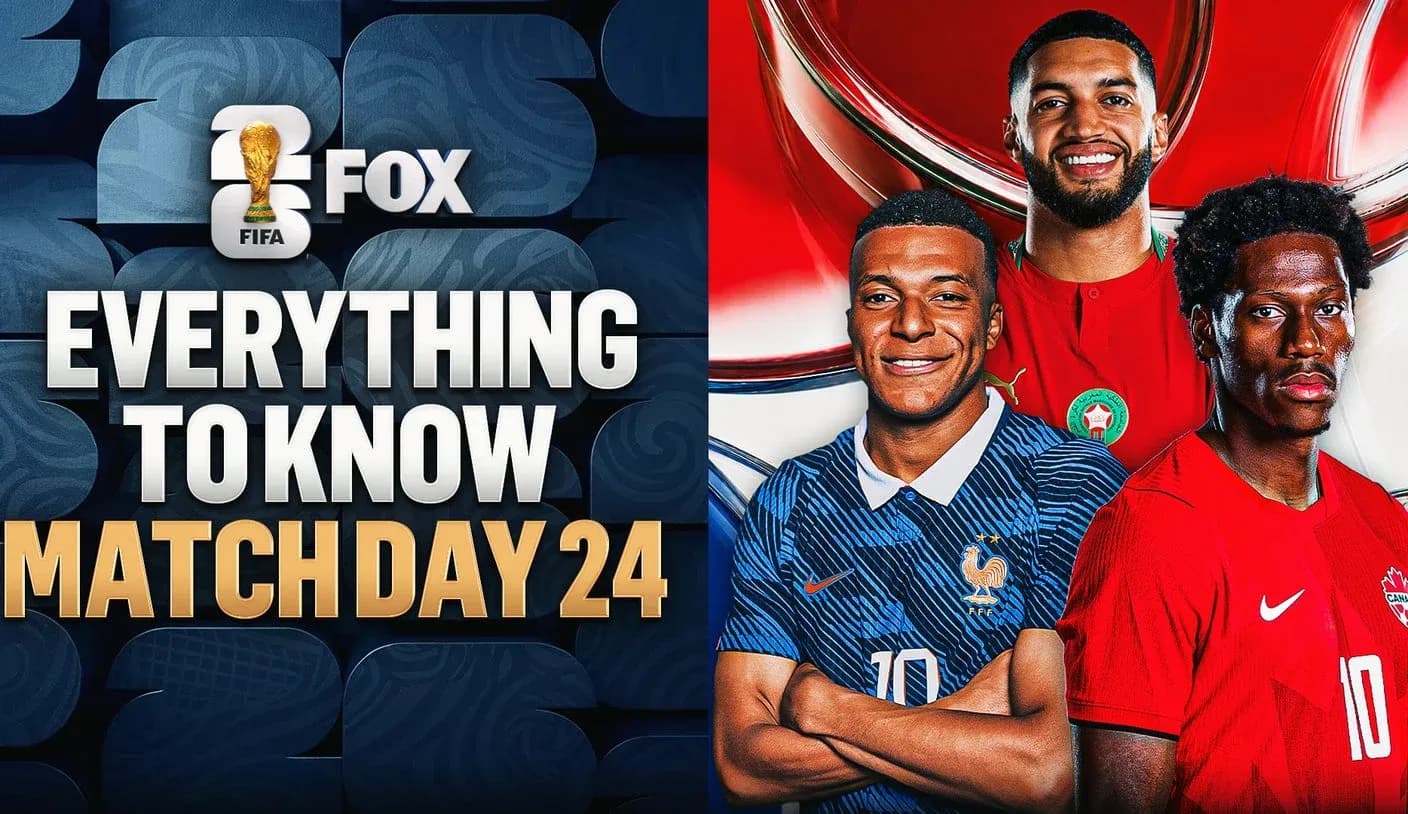
The 2026 World Cup steps into the knockout phase on a date heavy with symbolism. On July 4, while the host nation marks the 250th anniversary of its founding, two very different football stories will unfold: Canada’s bid to crash the party against a surging Morocco in Houston, and a fearless Paraguay side walking into the furnace against tournament juggernaut France in Philadelphia.
This is where the margins shrink, the stakes rise, and reputations either harden or crack.
Canada vs. Morocco – A rematch with much higher stakes
When: Saturday, July 4, 1 p.m. ET
Where: Houston
TV: FOX
Stream: FOX One (three-day free trial)
Canada and Morocco have been here together before, at least in spirit. Their last World Cup meeting came in the group stage in Qatar in 2022, a 2–1 win for Morocco that helped launch an historic semifinal run. Four years on, the stage is bigger, the stakes sharper: this time it’s the round of 16.
The trajectories could hardly be more different.
Canada arrived at this World Cup still carrying the weight of a miserable record: six matches played in its history, six defeats. Under Jesse Marsch, that old storyline has been ripped up. A semifinal berth at the 2024 Copa América hinted at a team learning how to live in the deep end, and now they’ve done something no Canadian side had managed before — win a World Cup knockout match to reach the last 16.
It has been anything but linear.
A flat, worrying draw with Bosnia and Herzegovina left questions hanging. Canada answered them with a roar, tearing apart Qatar 6–0 to secure passage from the group. Then came another stumble, a deflating loss to Switzerland in the finale. Again, the response was defiance: a gritty 1–0 win over South Africa, sealed late by Stephen Eustáquio, dragged them into this tie.
This is a team that seems to need the cliff edge to find its best self.
The forward line, on paper, is formidable. Jonathan David, Cyle Larin and Tajon Buchanan give Marsch a trio capable of hurting anyone, yet all three have blown hot and cold in this tournament. Against a Morocco side that thrives on control and quality, inconsistency will be punished. Canada needs each of them at full clarity and full conviction.
Then there is the Alphonso Davies question.
The Bayern Munich star finally appeared in the 75th minute against South Africa, his first minutes of the tournament after a hamstring injury. His presence alone changes the feel of the team, but the reality is harsh: he may still not be ready to start. If Davies is limited to another cameo, or absent altogether, Canada loses its most explosive outlet and its best answer to Morocco’s threats in wide areas.
And those threats are serious.
Morocco has walked into this World Cup carrying the weight of expectation, and so far it has worn it well. A 1–1 draw with Brazil in which the African side outplayed the five-time champions for long spells set the tone. A tight 1–0 victory over Scotland and a 4–2 win over Haiti completed a group stage that underlined depth, balance, and confidence.
Then came the wild ride against the Netherlands in the round of 32, one of the tournament’s standout matches.
The Dutch snatched the lead against the flow, only for Morocco to drag the game back into their orbit. Deep into stoppage time, central defender Issa Diop — who only switched allegiance from France to Morocco shortly before final rosters were locked — powered in the equalizer. From there, Morocco’s composure in the shootout matched the dominance they had shown in open play.
This is not a Cinderella story anymore. This is a fully formed contender.
Ismael Saibari has been one of the breakout forwards of the competition, scoring three times in the group stage and earning a move from PSV Eindhoven to Bayern Munich in the middle of the tournament. On the right, Achraf Hakimi remains a constant menace, one of the world’s elite fullbacks, relentless in his overlaps and ruthless when space opens. Brahim Díaz brings Real Madrid craft on the wing, while teenage midfielder Ayyoub Bouaddi has announced himself as one of the most exciting young players in the tournament, dictating tempo with a composure far beyond his age.
Morocco is the clear favorite. Canada, nominal co-host, surrendered any real home-field advantage by failing to win its group, but Houston should still feel Canadian in pockets, with traveling fans desperate to extend this run.
Key battle: Hakimi’s corridor of chaos
All eyes will be on the right flank.
Hakimi has not missed a minute of Morocco’s four matches, driving the team forward with his surges from deep. If Davies is unable to start, or if he is not close to top speed, that side of the pitch tilts heavily in Morocco’s favor. Canada will need help from its wide midfielders and forwards to double up, or Hakimi will spend the afternoon picking his moments, stepping into space, and turning a tight knockout game into his personal runway.
For Canada, the task is simple and brutal: produce the performance of a lifetime against a team that has forgotten how to be intimidated.
France vs. Paraguay – A giant and a giant-killer
When: Saturday, July 4, 5 p.m. ET
Where: Philadelphia
TV: FOX
Stream: FOX One (three-day free trial)
Just a few miles from where the Declaration of Independence was signed, France and Paraguay will contest a very different kind of statement. A place in the quarterfinals is on the line in Philadelphia, on what is expected to be an oppressive, heat-soaked night.
On one side, the pre-tournament favorite, stacked with stars and scoring for fun. On the other, a team that refuses to accept its place in the script.
Paraguay arrives having already ripped up two European plans. First came a 1–0 group-stage win over Türkiye, earned despite playing with 10 men for the entire second half. Then came the shock that sent a jolt through the tournament: a shootout triumph over Germany after a 1–1 draw stretched to 120 minutes.
Under Gustavo Alfaro, Paraguay has shown a remarkable ability to absorb a blow and stand taller. The 4–1 hammering by the USA in its opening match could have broken them. Instead, it sharpened them. Since then, they have turned matches into battles on their terms, built on discipline, structure, and a refusal to be pulled out of shape.
Against Germany, that identity was crystal clear. Die Mannschaft hogged the ball but rarely found clear air in front of goal. Paraguay’s lines stayed compact, the distances tight, the commitment absolute.
The spine has carried them. Matias Galarza has been outstanding, the heartbeat in midfield and the man for big moments. His loan at Atlanta United ended earlier in the World Cup, but his influence here has only grown: assist for Julio Enciso’s goal against Germany, a successful penalty in the shootout, and the winning strike against Türkiye. When Paraguay needs a play, Galarza keeps appearing.
Behind him, the back four of José Canale, Gustavo Gómez, Juan Cáceres and Júnior Alonso, plus goalkeeper Orlando Gil, has been the foundation of this improbable run. Blocks, clearances, smart fouls, calm interventions — the work that rarely makes headlines but wins knockout ties.
Now they face a different storm.
France has rolled into the last 16 looking every bit like the machine many expected. There is quality in every position, and at the sharp end, Kylian Mbappé is chasing history with cold efficiency. Six goals already, coming in three braces. In the one game he didn’t score, against Norway, he simply switched roles and delivered two assists.
He is hunting Lionel Messi’s World Cup goals record, and the chase has become one of the central threads of this tournament.
Yet Mbappé is not the only problem Paraguay must solve. Once Ousmane Dembélé clicked into gear, France shifted from dangerous to devastating. Before the second group game against Iraq, Dembélé had never scored at a World Cup. He changed that with a goal and an assist, then exploded with a hat trick against Norway. In the round of 32, he added another assist in a 3–0 dismantling of Sweden.
When Dembélé runs at defenders with this kind of confidence, France stretches the pitch to breaking point.
Behind them, the support cast is just as ruthless. Michael Olise has been one of the standout playmakers of the tournament, threading passes through tight seams and constantly finding Mbappé and Dembélé in stride. On the flank, Bradley Barcola has given France another direct, inventive option, prying open defenses with his dribbling.
For Paraguay, the formula doesn’t change, but the difficulty level spikes.
They will sit deep. They will trust their structure. They will try to turn the match into a grind, to slow the tempo and make every French attack feel like wading through traffic. They will need perfect concentration, aggressive but controlled defending, and a touch of chaos in their favor. The heat wave suffocating the East Coast could be an ally, dragging energy out of legs and adding an element of unpredictability to even the most polished side.
Player to watch: Olise, the lock-picker
Against a team that defends in a low, compact block, brute force is rarely enough. France will need incision, not just pressure, and that is where Olise comes in.
With five assists already, the Bayern Munich midfielder has been the quiet conductor behind Mbappé’s and Dembélé’s fireworks. His timing between the lines, his ability to disguise passes and break a defensive shell with one touch or one angled ball, makes him exactly the kind of player Paraguay will fear most.
If Paraguay’s wall is to be broken, the first crack is likely to come from his boot.
Two very different underdogs. Two very different favorites. One day charged with history, and a night in Philadelphia that could either confirm the established order or rip it apart again.

