.svg&w=384&q=75 "GoalGist logo")
World Cup 2023: Storms, Historic Wins and Political Protests
The World Cup caravan rolled through North America on Sunday with all the subtlety of a thunderclap. On and off the pitch, the tournament lurched from weather alerts to political protest, from history-making victories to selection headaches and personal dilemmas.
Storms over Philadelphia – and France on standby
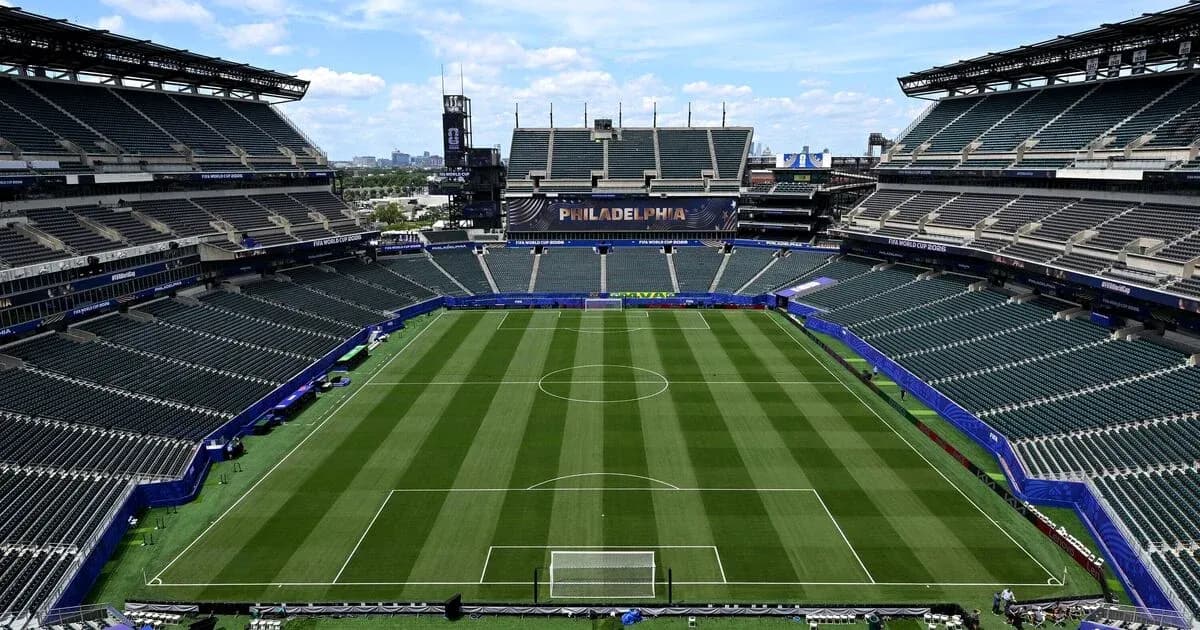
France’s late‑night meeting with Iraq in Philadelphia is under direct threat from the skies. Local forecasts predict violent thunderstorms over the city, with officials braced for lightning, damaging winds and even a risk of isolated tornadoes.
Under FIFA protocol, a single lightning strike within eight miles of the stadium is enough to halt play. Spectators would be ordered off the stands and into the concourses and emergency shelters, and then the clock starts: 30 minutes without another strike before anyone is allowed back out.
“They'll start to evacuate the stadium to the main concourse and seek emergency shelter,” explained Lauren Lambrugo, chief operating officer of Philadelphia Soccer 2026. “And then it has to wait 30 minutes prior to them bringing everybody back on the field.”
French outlet RMC Sport has already described the forecast as “apocalyptic”. The match, scheduled for a 10pm kick-off, now sits at the mercy of the radar.
Egypt finally arrive – Salah leads a nation out of the waiting room
In Vancouver, a wait that spanned generations ended in 45 frantic second‑half minutes. Egypt, serial nearly-men on the global stage, claimed their first ever World Cup win with a 3-1 comeback against New Zealand.
It had started badly. Finn Surman’s towering header from a corner – the kind coaches replay in training videos – gave New Zealand a half‑time lead and left Mohamed Salah and his side staring at another hard‑luck story.
Then the game flipped.
Ziko dragged Egypt level just before the hour, reward for relentless pressure that had been building since the break. New Zealand, who had contained Salah reasonably well in the first period, suddenly found waves of white shirts pouring forward.
The pressure told. Salah, inevitably, arrived.
A neat one‑two, a low, precise finish, and Egypt were not just level with history, they were sprinting past it. Trezeguet’s third sealed it, capping a second half in which New Zealand simply could not live with the tempo.
The scenes afterwards belonged to a country that had been waiting far too long. Footage from Vancouver showed Salah out in the streets, singing and dancing among supporters, the former Liverpool star at the centre of a celebration that stretched far beyond the stadium.
For New Zealand, the drought continues. Nine World Cup matches now, and still no win.
Cape Verde keep swinging – Uruguay wobble again
In Miami, Cape Verde’s debut World Cup story added another remarkable chapter with a 2-2 draw against Uruguay that left Marcelo Bielsa’s side under scrutiny and under pressure.
Kevin Pina lit the night up first. His free‑kick from around 30 yards was a thunderbolt, a rising laser that left Fernando Muslera grasping at air and sent Cape Verde’s fans into delirium.
Uruguay responded like a heavyweight stung. Ronald Araujo levelled with a diving header after his first effort had come back off the post, then turned provider moments later, nodding a deep cross back across goal for Agustín Canobbio to tuck away. Two goals in a flash, and it looked like the South Americans had finally imposed their will.
They hadn’t.
Helio Varela stepped off the bench and pounced on chaos. Muslera wandered into no man’s land, the ball broke loose, and Varela swept it into an empty net just three minutes after coming on. Another historic moment for Cape Verde, another self‑inflicted wound for Uruguay.
The 2-2 draw leaves Bielsa’s team on two points from two games, their dressing room already reported to be fractured, and their final group match against Spain now carrying the weight of a reckoning. Lose to the European champions, and if either Cape Verde or Saudi Arabia win their own fixture, Uruguay will likely be out. De Arrascaeta and Araujo – both yet to play a minute – have been ruled out of the Spain match and any potential round of 32 tie. The margin for error has almost vanished.
Cape Verde, by contrast, can now see the knockouts clearly. Beat Saudi Arabia and they are through. From debutants to genuine contenders in the space of a week.
Spain reset, Yamal delivers
Spain’s response to their opening‑match frustration was cold and ruthless. In Atlanta, they dismantled Saudi Arabia 4-0, the damage done in a blistering first 22 minutes.
Lamine Yamal, restored to the starting XI, changed the mood of the entire side. The Barcelona prodigy arrived at the back post to tap in a low ball from Mikel Oyarzabal and score his first World Cup goal – a moment he later called “special” in an interview with DAZN, recalling how he watched the last World Cup “in class at school”.
Oyarzabal, poor in the opener against Cape Verde, suddenly came alive. He laid on Yamal’s goal, then scored twice himself before the first hydration break, turning a potentially awkward night into a procession.
After the interval, Marc Cucurella’s effort deflected in off Hassan Al Tambakti for the eighth own goal of these finals. Spain thought they had a fifth late on, only for Ferran Torres to be pulled back for offside after a lengthy VAR check.
They never needed it. Spain cruised through the second half in third gear, boos ringing around the stadium only when play stopped for another drinks break under the closed roof. The European champions now have one foot firmly in the knockouts.
Belgium, Iran and a night that never caught fire
Across in Los Angeles, Belgium and Iran played out a 0-0 draw that left both teams stuck on two points from two games and Roy Keane unimpressed.
On ITV duty, the former Ireland captain branded the quality “rubbish”, highlighting poor passing, movement and decision‑making, and suggesting Iran had looked more comfortable when they were simply defending.
Iran did have the ball in the net through Mehdi Taremi, only for VAR to rule the forward offside. Later, Nathan Ngoy’s red card – for denying Taremi a clear goalscoring opportunity just inside the Belgian half – left Belgium clinging on with ten men.
They still could have stolen it. Maxim De Cuyper’s first‑time effort was straight at Alireza Beiranvand, and a wild goalmouth scramble somehow ended with Iran hacking the ball clear. By the final whistle, both sides knew the draw helped neither of them.
Iran’s World Cup story continues to be about more than football. Outside the stadium, fans again used the occasion to protest against the regime back home, insisting the national team “do not represent us” and calling for political change. Inside it, the players tried to separate the noise.
After another match in which Iran’s national anthem was booed, captain Alireza Jahanbakhsh stressed unity and respect for all Iranians “with whatever ideology, whatever preferences they have”, and insisted the squad’s duty was to “put our heart on the pitch” and try to make people happy through football.
Personal choices and public backlash – the Doku debate
Jeremy Doku did not feature for Belgium against Iran, officially due to a chest infection. His absence, though, came in the middle of a storm of a different kind.
The Manchester City winger has made clear he wants to leave the World Cup camp for the birth of his first child in the second week of July. “It’s my first child, so I would definitely want to be there,” he said, admitting that football brings “many other considerations” but insisting “nobody wants to miss the birth of their first child”.
That stance drew fierce criticism from French TV presenter France Pierron, who called the birth of a child “a disgusting moment” in which “the father is useless, he's just an extra”, and argued that leaving a World Cup was walking away from a once‑in‑a‑lifetime privilege. She has since been suspended and has apologised.
Inside the players’ fraternity, the reaction is very different. England striker Ollie Watkins, himself a father of two, backed Doku’s position unequivocally.
“It only happens once, your first child,” Watkins said. “Welcoming them into the world is a blessing, and you don't get that opportunity (again)… I don't think it's anyone else's business. If he goes back and does that, that's fair enough.”
The debate cuts to the heart of the modern game: where does professional duty end and personal life begin?
England: flags, fitness and a strict curfew
England’s camp, spread between Kansas City and Boston, has its own list of subplots.
First came the flag. An England flag featuring a submarine – a nod to Barrow AFC – was denied entry to the Three Lions’ opener against Croatia because FIFA rules ban military imagery inside stadiums. Barrow responded with a tongue‑in‑cheek social media post blurring out the submarine, but the incident underlined how tightly the tournament is being policed.
On the pitch, Thomas Tuchel has been juggling injuries and discipline. Declan Rice remains a doubt for Tuesday’s meeting with Ghana in Boston after hobbling off in the win over Croatia. Bukayo Saka, managing a long‑running Achilles issue, trained alone on Saturday but completed a full session with the group on Sunday, handing Tuchel a major selection call.
The England manager had suggested he might hold Saka back until the final group game against Panama. The winger, who also had to manage the problem during Arsenal’s title run‑in, insists he is fit and that the issue has not worsened. With a win against Ghana enough to secure a place in the knockouts – and potentially top the group – the temptation to start him will be strong.
Off the field, Tuchel has imposed a strict curfew. Defender Dan Burn revealed that some players had to leave a concert early to make it back in time, despite it being a friends‑and‑family day. Burn, who spent the day with his wife before donning cowboy hat and boots for a country gig by Ella Langley, joked about the lack of photographic evidence but made clear the rules are non‑negotiable.
“Ella was playing on West Palm Beach when we were there, but we wouldn't have got back for the curfew,” he said. This time, the schedule was kinder. The message from Tuchel was not.
England fans have already begun to filter into Boston, their arrival inviting immediate comparisons with the Tartan Army’s raucous presence earlier in the tournament. Whether the Three Lions’ support can match that energy – and whether Tuchel’s side can harness it without losing control – will become clear soon enough.
Brazil wary, Scotland ready
Elsewhere in the pack, Brazil are preaching respect before their Group C meeting with Scotland. Lucas Paqueta has made it clear that, even with a draw enough to send both sides through, Brazil will not be playing for a point.
“All the teams at the World Cup deserve respect,” he said. “We have great respect for Scotland, but we also know we need to play our game and follow what the coach asks of us. Regardless of the opponent, our goal in every match is to win.”
Scotland, buoyed by their own travelling support, will not mind that one bit.
Anthem boos, raw meat and the strange sideshows of a World Cup
World Cups always generate their own oddities. This one is no different.
ITV pundit Andros Townsend caused a stir online after posting a picture of what appeared to be raw beef on his plate, prompting a wave of baffled reactions. Curacao goalkeeper Eloy Room basked in the glow of his heroics against Ecuador after a historic 0-0 draw. And across the tournament, national anthems, political statements and the ever‑present VAR checks continue to remind everyone that this World Cup is about far more than 90 minutes.
On Sunday night, the drama stretched from a lightning threat in Philadelphia to street parties in Vancouver, from a free‑kick rocket in Miami to a teenage star in Atlanta living out a dream he once watched from a classroom.
The group stage is only just taking shape. The storms – literal and metaphorical – are only just rolling in.